

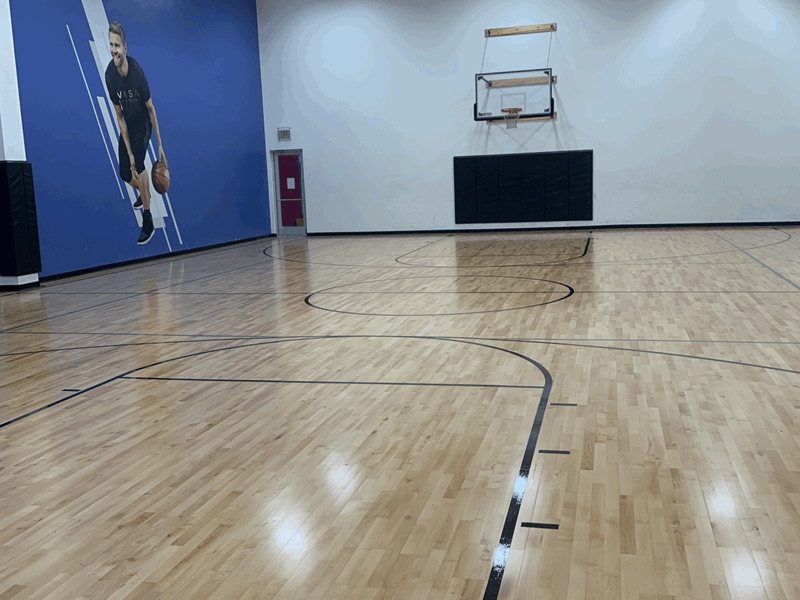
Safety is a primary concern for any indoor sports facility, and the flooring plays a central role in player well-being. Hardwood flooring, when properly specified and installed, offers several inherent safety advantages over alternative surfaces.
Shock absorption is the most critical safety factor. When a player lands from a jump or makes a sudden stop, the floor must absorb enough impact to reduce stress on the knees, ankles, and spine. Hardwood, particularly when installed over a resilient underlayment or floating system, provides excellent shock absorption. The combination of the wood itself and the subfloor system can achieve a vertical deformation of two to three millimeters, which is within the range recommended by most sports governing bodies.
Traction is equally important. A floor that is too slippery increases the risk of ankle sprains, knee injuries, and falls. A floor that is too sticky can cause hyperextension injuries when a player's foot catches during a quick change of direction. Hardwood with a proper finish strikes the ideal balance, providing enough grip for explosive movements while allowing smooth sliding for defensive shuffles.
Surface consistency is another safety consideration. Any bumps, lippage between planks, or uneven areas can cause tripping hazards. Professional installation ensures that lippage is kept below one-sixteenth of an inch, and the entire surface is sanded to a perfectly flat finish.
The finish itself contributes to safety. Modern sport floor finishes are formulated to be non-toxic and low-VOC, protecting both players and maintenance staff from harmful fumes. The finish also creates a barrier that prevents moisture from penetrating the wood, reducing the risk of mold growth, which can be a health hazard.
Compared to alternative surfaces, hardwood offers a unique combination of safety benefits. Poured rubber, for example, can be too soft, leading to energy loss and increased fatigue. Interlocking tiles can shift over time, creating tripping hazards. Hardwood, when well-maintained, provides a stable, consistent, and safe playing surface.
Facility owners should also consider the role of the subfloor system in safety. A well-designed underlayment not only improves shock absorption but also reduces sound, creating a quieter environment that allows better communication between players and coaches.
Leave a Reply