

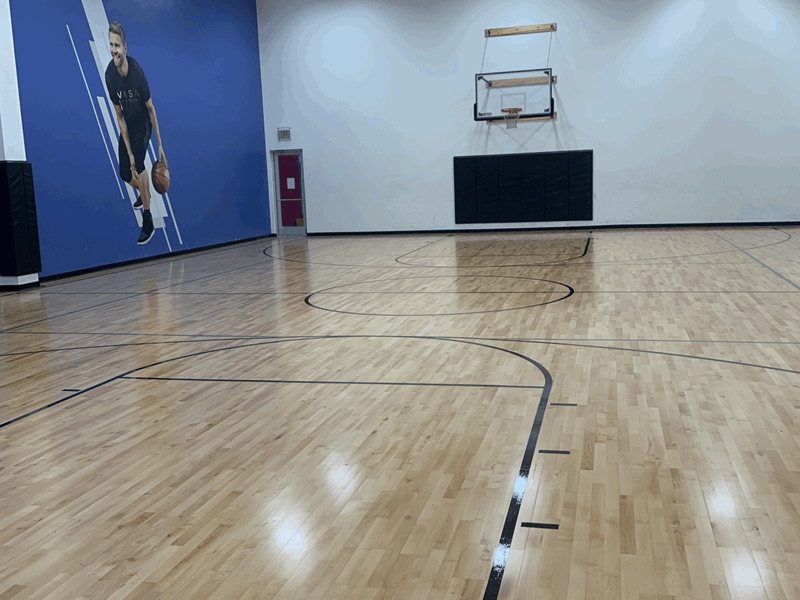
A great indoor basketball court hardwood floor is not just about looks. It is about performance. There are several measurable characteristics that separate a world-class playing surface from a mediocre one. Understanding these characteristics helps facility managers evaluate their floors and make informed decisions about maintenance and upgrades.
The first and most important characteristic is ball bounce consistency. When a basketball is dropped from a height of 72 inches, it should bounce back to a height between 49 and 54 inches. This is the standard set by most governing bodies. But consistency across the entire court is The floor was a simple wooden surface, and that was the beginning of a tradition that continues to this day.
In the early days, basketball was played on whatever surface was available. Many early games took place on wooden gymnasium floors that were also used for other activities like badminton, volleyball, and calisthenics. The floors were not designed specifically for basketball. They were often uneven, poorly finished, and unsuitable for the fast-paced game that was evolving.
The first dedicated basketball courts began appearing in the 1920s and 1930s, as the sport grew in popularity, especially at the college level. These courts featured wooden floors, but they were still far from the engineered systems we know today. The wood was typically thin, the subfloor was minimal, and there was no shock absorption. Players competed on hard, unforgiving surfaces that took a toll on their bodies.
The real transformation began in the 1950s. The Boston Garden installed one of the first purpose-built basketball court hardwood floors in 1954. This floor featured thicker wood, a proper subfloor, and a more consistent finish. It set the standard for what a basketball court floor should be. Other arenas followed suit throughout the 1950s and 1960s.
The 1970s brought further refinement. The NBA was expanding rapidly, and new arenas were being built with basketball as the primary sport. The hardwood floors of this era were thicker, more precisely installed, and featured better shock absorption. Maple became the dominant species during is essential.
Shock absorption must be maintained. Over time, the foam or rubber pads beneath the hardwood can compress and lose their effectiveness. When this happens, the floor becomes harder, and impact forces are transferred more directly to the players' bodies. Testing shock absorption every few years can catch this problem before it leads to injuries.
Temperature and humidity also affect safety. A floor that is too cold can make the finish brittle and more prone to cracking. A floor that is too hot can make the wood expand, potentially creating gaps or buckling. Both conditions create hazards. Maintaining a stable indoor environment is a safety imperative.
Lighting is not a floor issue per se, but it affects how players perceive the floor. Poor lighting can make it difficult to see the floor's condition, increasing the risk of stepping on a wet spot or a damaged area. Good, even lighting is an important complement to a safe floor.
The takeaway is clear: safety on an indoor basketball court hardwood floor is not accidental. It is the result of careful installation, regular maintenance, and ongoing monitoring. Every facility manager should treat floor safety as a top priority, not a afterthought.
Leave a Reply