

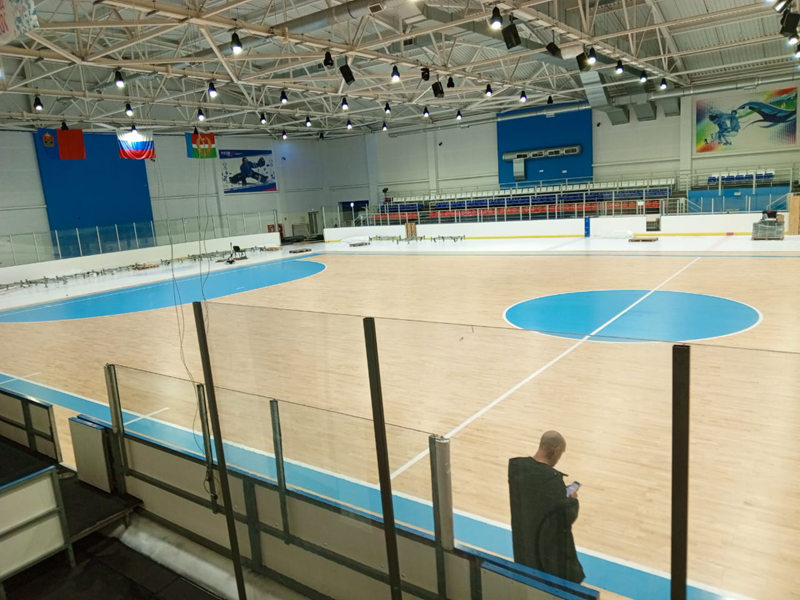
Proper ongoing maintenance is the key to ensuring that basketball court wood flooring retains its performance, safety, and appearance for decades. Without regular, careful care, even the highest quality wood floor will begin to show signs of premature wear, lose its consistent traction, and develop issues that can compromise player safety. A structured maintenance routine does not just keep the court looking good—it actively preserves the engineered properties that make wood such a great surface for basketball, extending the usable life of the floor and protecting the significant investment that goes into a quality indoor sports facility.
The most basic daily maintenance for basketball court wood flooring is regular cleaning to remove dirt, dust, and debris that gets tracked onto the court from shoes, equipment, and adjacent areas. Small particles of dirt act like sandpaper on the surface finish, gradually scratching away at the protective top layer and creating a dull, uneven texture that can reduce traction. Most facilities use specialized microfiber dust mops designed for sports floors, as these pick up fine particles without leaving behind lint or scratching the finish. It is important to avoid using overly wet cleaning methods, as excess water can seep into the seams between planks, causing the wood to swell, warp, or develop mold underneath the surface.
On a weekly or monthly basis, facilities perform more thorough deep cleaning using pH-neutral cleaning solutions specifically formulated for finished wood sports floors. These solutions are designed to remove stubborn scuff marks, sticky residue from spilled drinks, and built-up grime without damaging the protective finish or leaving behind a slippery residue. Staff must apply these solutions sparingly, using well-wrung mops to ensure that no excess moisture remains on the surface of the wood. This regular deep cleaning prevents the gradual buildup of materials that can alter the friction characteristics of the floor, ensuring that traction remains consistent and predictable for players at all times.
Over the course of several years, the top finish on basketball court wood flooring will gradually wear down in high-traffic areas like the key, the baseline, and near the team benches. When this wear becomes visible and the surface starts to lose its uniform texture, facilities perform a process called screening and recoating. This process involves lightly abrading the existing finish to create a rough surface that the new coat of finish can adhere to, without sanding all the way down to the bare wood. This is a much faster and less disruptive process than full sanding, and it restores the smooth, uniform texture of the playing surface, adding several more years of life to the existing floor.
Eventually, after many recoats, the finish will have built up to a point where a full sanding and refinishing is necessary. This process sands the entire surface of the wood down to fresh, bare wood, removing all accumulated finish, deep scratches, and minor imperfections. After sanding, a new series of finish coats are applied, leaving the floor looking and performing almost exactly like a brand new installation. A well-maintained basketball court wood flooring system can go through this full refinishing process multiple times over its lifespan, which is one of the biggest advantages of wood over synthetic surfaces that cannot be restored once they wear out.
Leave a Reply