

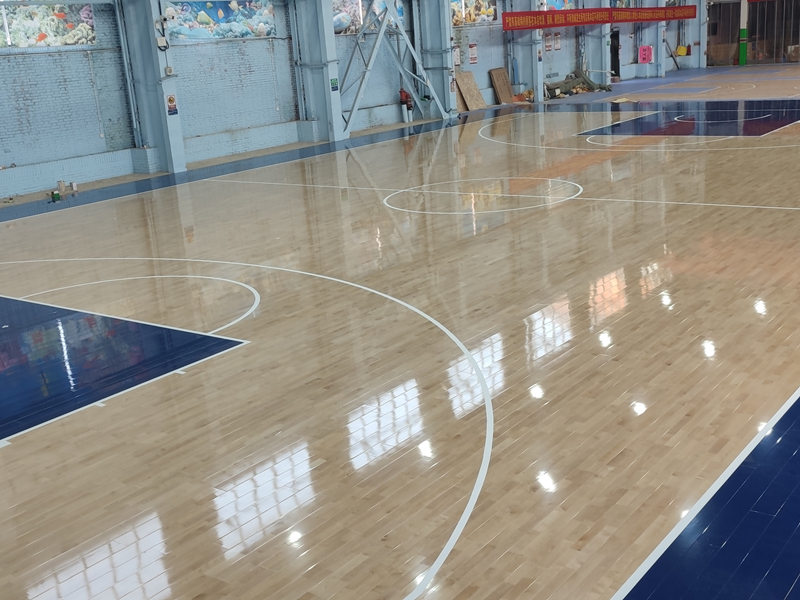
One of the most underappreciated benefits of high-quality basketball court wood flooring is its significant role in reducing sports injuries and supporting the long-term joint health of players. Basketball is a high-impact sport that involves constant jumping, sudden stops, and rapid changes of direction, all of which place enormous stress on the knees, ankles, and lower back. Over hundreds of hours of play, these repeated impacts can lead to chronic overuse injuries, but a properly engineered wood floor is designed to absorb a large portion of that stress, reducing the strain on athletes’ bodies and helping them stay healthy throughout long seasons of practice and competition.
The shock absorption properties of good basketball court wood flooring work by deforming slightly under the force of a player’s jump, slowing down the impact gradually rather than stopping it abruptly. This gradual deceleration reduces the peak impact force that travels up through the legs when a player lands, lowering the risk of acute injuries like ankle sprains and knee strains, as well as chronic issues like patellar tendonitis that develop from thousands of repeated impacts. Studies of athlete movement on different floor types have consistently shown that players report less fatigue after long practices on properly built wood courts, because their bodies do not have to absorb nearly as much hard, unyielding force from the surface below them.
Traction is another critical safety factor that is directly controlled by the surface of basketball court wood flooring. The ideal level of traction is a careful balance: if the floor is too slippery, players’ feet will slide out from under them during sudden stops, leading to falls and injuries. If the floor is too sticky, shoes will catch on the surface when players are trying to move quickly, causing awkward twists and turns that can also lead to sprains and tears. A well-maintained wood floor provides this perfect middle ground of traction, allowing players to plant their feet firmly when they need to stop, while still letting their shoes move smoothly across the surface during crossovers and directional changes. This predictable, consistent traction gives athletes the confidence to play aggressively without worrying that the surface will surprise them.
Unlike many synthetic surfaces, which can retain heat and become uncomfortably warm during long periods of intense play, wood has natural thermal properties that help to keep the surface at a more consistent, comfortable temperature. This not only makes the playing experience more pleasant but also reduces the risk of overheating and fatigue during long games or training sessions. Wood is also a naturally breathable material, which means that it does not trap moisture against the surface the way some non-porous synthetic materials do. Even when players sweat heavily during intense play, the wood surface can allow small amounts of moisture to evaporate naturally, rather than letting it pool on top and create slippery spots that increase the risk of falls.
Over the course of a player’s career, the difference in impact absorption between a good wood court and a harder, unforgiving surface adds up to thousands of fewer high-stress impacts on their joints. This long-term benefit is especially important for youth players whose bodies are still developing, as reducing unnecessary joint stress can help them avoid chronic pain and injury issues later in life. For all levels of play, from recreational pickup games to professional competitive matches, basketball court wood flooring acts as a silent partner in keeping athletes healthy, allowing them to focus on improving their skills and enjoying the game without unnecessary risk of preventable injury.
Leave a Reply