

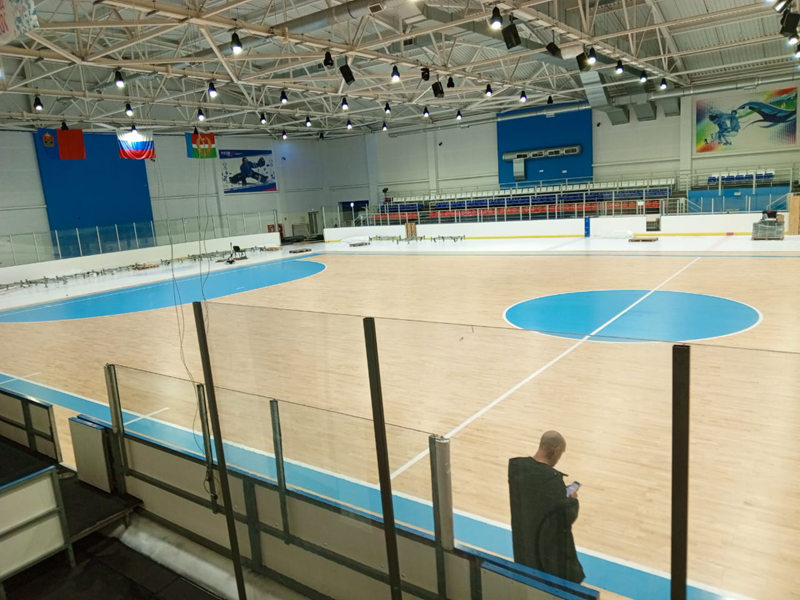
Indoor sports wooden flooring represents a significant investment, and like any major investment, it requires proper care and maintenance to protect its value and performance. A well-maintained sports wood floor can last 30 to 50 years or more, while a neglected floor can deteriorate in just a few years. Understanding the maintenance requirements is essential for any facility manager, coach, or building owner.
Daily maintenance is the foundation of a good care program. Every day that the floor is used, it should be swept or vacuumed to remove dust, dirt, and debris. This is critical because small particles of sand or grit can act like sandpaper on the finish surface, causing micro-scratches that degrade the floor over time. A soft-bristle broom or a microfiber dust mop is ideal for daily cleaning. Vacuum cleaners with beater bars should be avoided, as they can scratch the surface.
For deeper cleaning, a damp mop should be used with a pH-neutral cleaner specifically designed for sports wood floors. Regular household cleaners, especially those containing ammonia, bleach, or acidic compounds, should never be used on sports wood floors, as they can damage the finish and the wood itself. The mop should be damp, not wet — excess water is the enemy of any wood floor, as it can seep into the seams and cause swelling or warping.
One of the most important maintenance tasks is the monitoring of moisture levels. Indoor sports wooden flooring should maintain a moisture content between 6% and 10%. Facilities should invest in a moisture meter and check the floor regularly, especially during seasonal transitions when humidity levels can fluctuate dramatically. If the moisture content rises above 10%, the facility's dehumidification system should be activated. If it drops below 6%, a humidifier may be needed.
The finish coat on a sports wood floor will eventually wear down due to foot traffic, shoe abrasion, and cleaning. When the finish becomes too thin, the floor loses its traction and becomes more susceptible to damage. At this point, the floor should be recoated with a fresh layer of finish. This is typically done every three to five years, depending on the intensity of use. Recoating is a relatively simple process that involves sanding the surface lightly, applying a new coat of finish, and allowing it to cure.
Every 10 to 15 years, depending on the condition of the floor, a full sanding and refinishing may be necessary. This is a more involved process that involves removing the old finish and a thin layer of wood from the surface, then applying multiple new coats of finish. This process restores the floor to like-new condition and can extend its life by another decade or more.
Preventive maintenance is also important. Area mats should be placed at all entrances to trap dirt and moisture before it reaches the playing surface. Athletes should be required to wear clean, non-marking sports shoes — shoes with hard rubber soles or metal cleats can cause significant damage to the floor. Furniture, equipment, and other heavy objects should never be dragged across the floor; they should be lifted and carried.
Another often-overlooked aspect of maintenance is the protection of the floor from sunlight. Prolonged exposure to direct sunlight can cause the finish to yellow and the wood to fade. If the facility has large windows, UV-filtering film should be applied to the glass to minimize this effect.
In summary, the maintenance of indoor sports wooden flooring is not difficult, but it does require consistency and attention to detail. By following a regular maintenance schedule and addressing problems as they arise, you can ensure that your sports wood floor continues to perform at its best for decades, providing a safe, beautiful, and high-performing surface for athletes of all levels.
Leave a Reply