

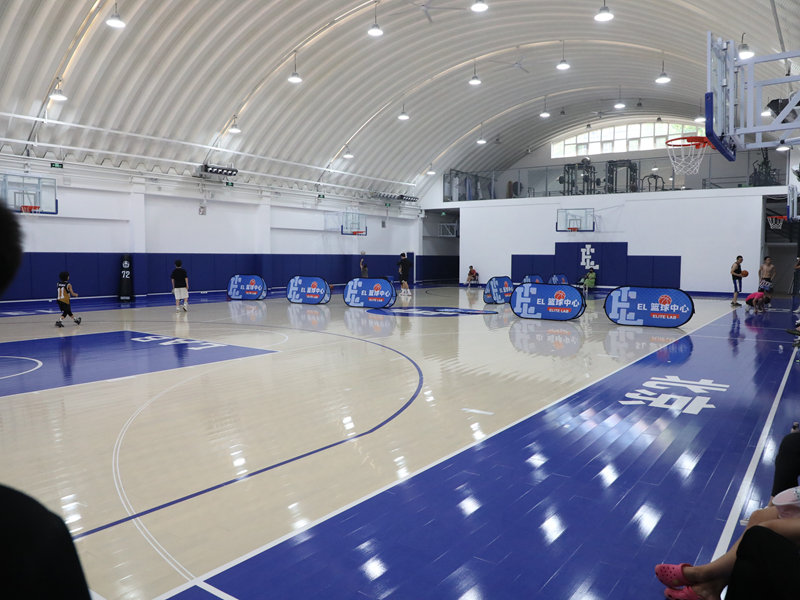
One of the greatest advantages of indoor sports wood flooring is its maintainability. Unlike many synthetic surfaces that must be replaced entirely when they wear out, a sports wood floor can be maintained, repaired, and refinished to extend its life indefinitely. However, this only works if you follow a proper maintenance program.
Daily maintenance is the foundation. Every day, the floor should be swept or vacuumed to remove dust, dirt, and debris. Abrasive particles left on the surface can scratch the finish and accelerate wear. For high-traffic facilities, a microfiber dust mop is often used between games or events to maintain traction and cleanliness. The floor should never be mopped with excessive water. Excess moisture is the number one enemy of sports wood flooring. If spills occur, they should be wiped up immediately.
Weekly maintenance involves a more thorough cleaning. A neutral pH cleaner specifically designed for sports wood floors should be used. Harsh chemicals, bleach, and acidic cleaners must be avoided because they can damage the finish and the wood itself. After cleaning, the floor should be inspected for any signs of wear, scuffing, or damage.
Monthly and quarterly maintenance includes deeper inspection and minor repairs. Scratches and scuff marks should be addressed promptly. Small scratches can often be buffed out, while deeper damage may require spot sanding and refinishing. The traction of the floor should also be tested periodically. Over time, the finish can become too smooth (reducing traction) or too rough (increasing injury risk). If traction falls outside the recommended range, the floor should be recoated.
The most significant maintenance event is refinishing. Every seven to ten years, depending on usage, the entire floor will need to be sanded down and refinished. This process removes the old finish and a thin layer of wood, exposing fresh hardwood beneath. A new finish is then applied. Each refinishing extends the life of the floor by. Yes, wood costs more upfront. But when you factor in the total cost of ownership over 20 to 30 years — including maintenance, refinishing, and replacement — wood is almost always the most economical choice.
The only scenario where an alternative might make sense is in a facility with extremely limited budget and very low usage expectations. Even then, wood should be considered as a long-term investment.
Leave a Reply