

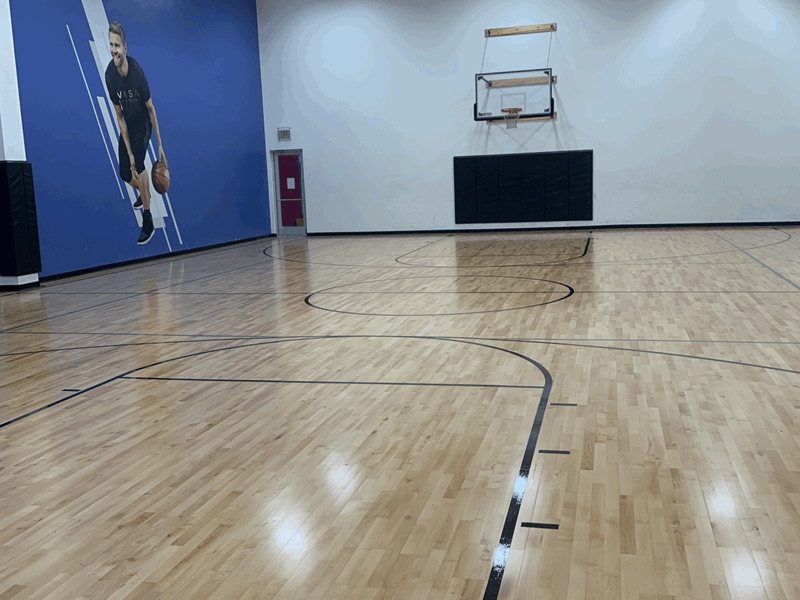
Injury prevention is one of the most important — and often most underestimated — functions of indoor sports wood flooring. Every year, thousands of athletes suffer preventable injuries that could have been mitigated or avoided entirely with the right playing surface. Understanding the biomechanics of sports injuries and how flooring influences them is essential for anyone responsible for athlete safety.
The most common sports injuries are those affecting the lower extremities — ankles, knees, hips, and lower back. These injuries typically occur during landing, cutting, pivoting, and sudden stops. The floor plays a direct role in each of these movements.
When an athlete lands from a jump, the floor must absorb a significant portion of the impact force. On a hard surface like concrete, nearly all of this force is transmitted directly into the joints. Over time, this repetitive loading leads to stress fractures, tendonitis, and cartilage damage. Sports wood flooring, with its engineered subfloor system, absorbs 30 to 50 percent of the impact force. This reduction may seem modest, but over thousands of landings per season, it makes a dramatic difference in joint health.
Cutting and piv contrast, synthetic flooring often produces significant waste during cutting and installation, and the materials themselves are not easily recyclable.
The use phase is where sports wood flooring truly shines environmentally. Because it can be refinished multiple times, the same floor can serve for 30 to 40 years. This means far fewer raw materials are consumed over time compared to synthetic floors that must be replaced every five to eight years. The cumulative environmental impact of repeated replacement — manufacturing, shipping, installation, and disposal — is enormous. Wood avoids all of this.
At end of life, wood flooring is biodegradable and can be repurposed. Old hardwood can be milled into new products, used as fuel, or composted. Synthetic floors, by contrast, typically end up in landfills where they can take hundreds of years to decompose.
There is also the indoor air quality dimension. Many synthetic floors off-gas volatile organic compounds for months or even years after installation. These chemicals can affect the health of athletes and building occupants. Sports wood flooring, especially when finished with water-based coatings, has very low VOC emissions, contributing to a healthier indoor environment.
Of course, no material is perfectly sustainable. Transportation of heavy hardwood does generate carbon emissions, and the finish coatings contain some petrochemical components. But when you look at the full picture — renewable sourcing, low-impact manufacturing, extreme longevity, recyclability, and healthy indoor air — indoor sports wood flooring is one of the most sustainable flooring options available for sports facilities.
Leave a Reply