

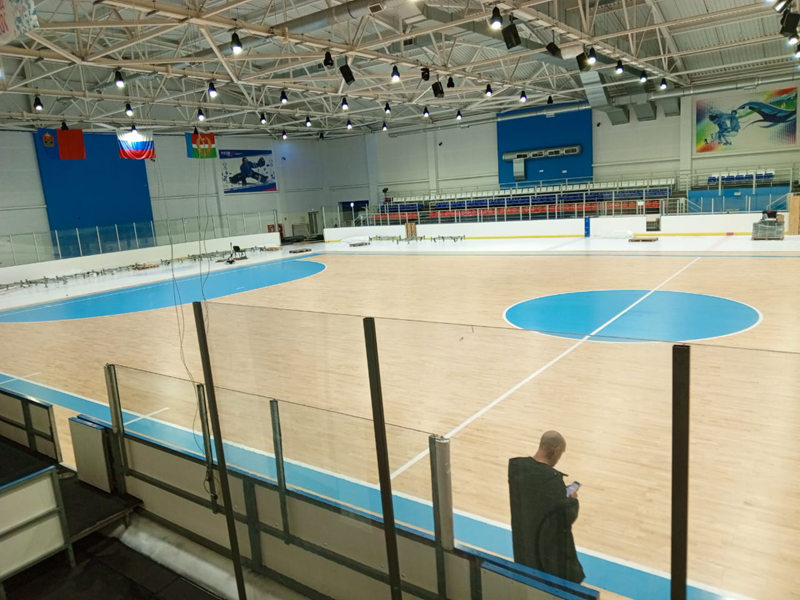
Proper maintenance is the key to extending the life of indoor sports wooden flooring and keeping it performing at its best. Without regular care, even the highest-quality floor will degrade over time, losing its shock absorption, friction properties, and visual appeal.
Daily maintenance is relatively simple but absolutely essential. The floor should be swept or vacuumed daily to remove dust, dirt, and debris. Sand and grit are the biggest enemies of sports wood flooring — they act as abrasives that wear down the finish and create a slippery surface. A microfiber mop or a dry dust mop is recommended. Wet mopping should be done sparingly and only with a slightly damp mop, never a soaking wet one. Excess water can seep into the joints between planks and cause swelling or warping.
Weekly maintenance should include a more thorough cleaning with a pH-neutral cleaner specifically designed for sports wood floors. Harsh chemicals, ammonia-based cleaners, and wax-based products should never be used, as they can damage the finish and alter the friction properties of the surface. After cleaning, the floor should be inspected for any scratches, scuffs, or areas where the finish has worn thin.
Monthly maintenance should include a friction test. Sports wood floors require a specific coefficient of friction — typically between 0.4 and 0.6 for most indoor sports. If the friction is too low, the floor becomes slippery and dangerous. If it is too high, it can cause excessive wear on athletic shoes and slow down ball movement. Professional friction testing equipment is available, or a facility can hire a certified technician to perform the test.
Annually, the floor should be inspected by a professional for any structural issues, such as loose planks, gaps, or subfloor problems. Any damaged planks should be replaced promptly to prevent further damage to surrounding areas. The finish should also be evaluated — if it has worn significantly, a recoat may be necessary.
One of the most important maintenance tasks is controlling the indoor environment. The temperature should be kept between 18°C and 24°C, and the relative humidity should be maintained between 40% and 60%. Fluctuations outside this range can cause the wood to expand, contract, or crack. HVAC systems should be monitored regularly to ensure stable conditions.
With consistent maintenance, an indoor sports wooden floor can last 20 to 30 years or more. Neglect, on the other hand, can reduce its lifespan to less than 10 years. The investment in proper care pays for itself many times over.
Leave a Reply