

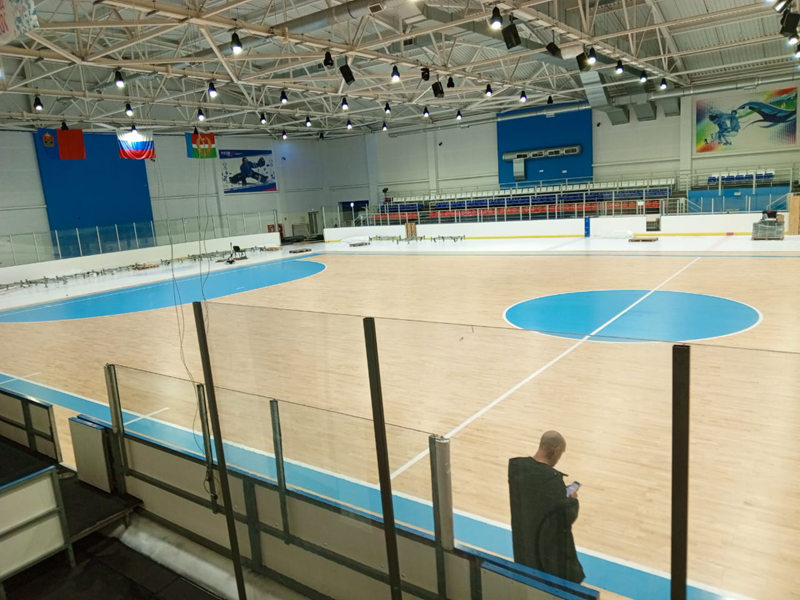
A properly installed indoor basketball court wooden floor can last for decades, but only if it is maintained correctly. Neglect is the number one enemy of any wood floor, and the high-traffic, high-impact environment of a basketball gym makes maintenance even more critical. This comprehensive guide covers everything you need to know about keeping your court in peak condition.
Daily maintenance is the foundation of a long-lasting floor. After every practice and game, the floor should be swept or dust-mopped to remove dirt, dust, and debris. This may seem obvious, but it is the step that is most often skipped. Dirt and grit act as abrasives on the wood surface, and over time they can dull the finish and create micro-scratches that compromise the playing surface. Use a soft-bristle broom or a microfiber dust mop — never use a hard-bristle broom, as it can scratch the finish.
For deeper cleaning, a damp mop should be used no more than once or twice a week. The mop should be only slightly damp, never wet. Excess water is the enemy of wood flooring because it can seep into the seams between planks and cause the wood to swell, warp, or delaminate. Use a pH-neutral cleaner specifically designed for wood floors. Avoid using vinegar, bleach, ammonia, or any harsh chemical cleaners, as these can strip the finish and damage the wood.
Spills should be cleaned up immediately. This is especially important for sugar-based drinks, which can become sticky and attract dirt if left on the floor. Use a clean, dry cloth to wipe up any liquid as soon as it is spilled. For stubborn stains, a small amount of mineral spirits can be used, but always test it in an inconspicuous area first to make sure it does not affect the finish.
The frequency of recoating depends on the amount of traffic the court receives. A court used for professional or collegiate play may need to be recoated every three to five years, while a recreational court may only need recoating every seven to ten years. Recoating involves lightly sanding the entire surface to remove the top layer of finish and then applying new coats of polyurethane. This process restores the gloss, protects the wood, and ensures consistent ball bounce.
Between recoating, spot repairs may be necessary. Scratches, dents, and gouges should be repaired as soon as they are noticed to prevent them from getting worse. Small scratches can be filled with a wood filler that matches the color of the floor, then sanded smooth and finished with a clear coat. Deeper gouges may require replacing individual planks, which is a more involved process but is still far less expensive than replacing the entire floor.
One of the most important maintenance tasks is monitoring the humidity and temperature in the gymnasium. Wood is a natural material that expands and contracts with changes in moisture and temperature. Ideal conditions for a basketball court wooden floor are a temperature between eighteen and twenty-four degrees Celsius and a relative humidity between thirty-five and fifty-five percent. If the humidity is too high, the wood will absorb moisture and expand, potentially causing the planks to buckle or cup. If the humidity is too low, the wood will dry out and shrink, creating gaps between the planks. Investing in a good HVAC system with humidification and dehumidification capabilities is one of the best things you can do to protect your floor.
Shoe marks are another common issue on basketball courts. Black rubber marks left by players' shoes can be removed with a specialized rubber mark remover or a magic eraser. For more stubborn marks, a small amount of denatured alcohol on a cloth can be effective. However, be careful not to use too much alcohol, as it can also affect the finish.
The free-throw areas and the paint should also be inspected regularly. The paint can chip or wear away over time, exposing the wood underneath. Any exposed wood should be sanded and refinished to prevent moisture damage. The paint itself should be touched up as needed to maintain clear, visible lines.
By following these maintenance guidelines, you can extend the life of your indoor basketball court wooden floor significantly. A well-maintained floor not only performs better but also looks better, which enhances the overall experience for players, coaches, and spectators alike.
Leave a Reply