

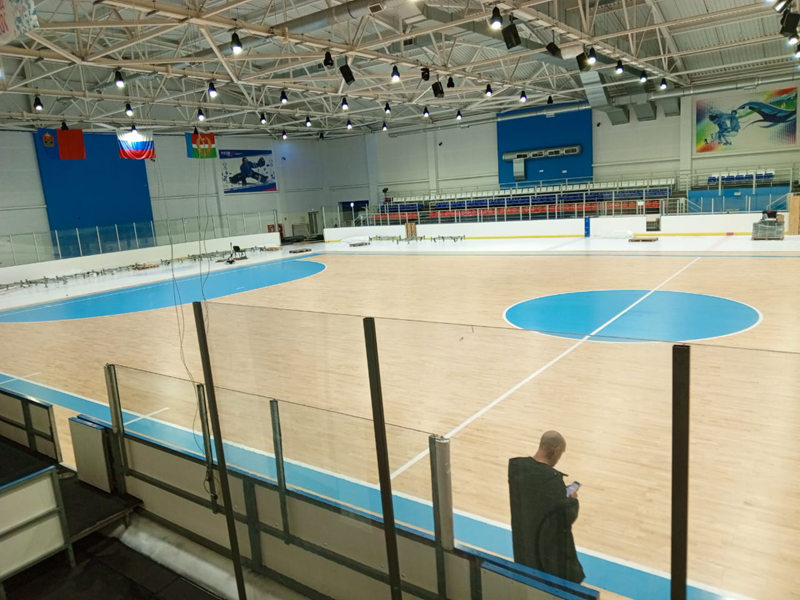
An indoor basketball wood floor is a significant investment, and like any investment, it requires ongoing care to protect its value. Without proper maintenance, even the highest-quality floor will deteriorate quickly, losing its performance characteristics and aesthetic appeal. This article covers the full spectrum of maintenance tasks, from daily cleaning to periodic refinishing.
Daily maintenance is the foundation of floor care. After every use, the floor should be swept or dust-mopped to remove dirt, dust, and sand. These abrasive particles are the number one enemy of any wood finish. When players run across them, they act like sandpaper, wearing down the protective coating and eventually the wood itself. A microfiber dust mop is the best tool for this task because it traps particles rather than pushing them around.
Spills must be cleaned up immediately. Water is the most common threat. If water sits on the surface for even a few minutes, it can seep into the seams between planks and cause the wood to swell. Use a dry mop or towel to absorb the liquid, then wipe the area with a slightly damp cloth. Never use a soaking wet mop on a basketball court. The excessive moisture will damage the finish and potentially the wood.
For deeper cleaning, a pH-neutral cleaner specifically designed for sports floors should be used. Harsh chemicals, bleach, ammonia, and wax-based cleaners must be avoided. These products can strip the finish, discolor the wood, or leave a residue that makes the floor slippery. A diluted solution of a sports floor cleaner, applied with a flat mop, is sufficient for most situations.
The frequency of refinishing depends on the level of use. A high school gym that sees daily varsity practices and weekly games may need to be refinished every three to five years. A recreation center with light use might go seven to ten years between refinishing. The key indicator is the gloss level. When the finish starts to look dull and the ball bounce becomes inconsistent, it is time to sand and refinish.
Refinishing is a major undertaking. The process involves sanding down the entire surface to remove the old finish and any worn wood, then applying new coats of finish. This typically requires the court to be closed for three to seven days. During this time, no games or practices can take place. Planning the refinishing schedule around the off-season is essential to minimize disruption.
Preventive maintenance can extend the life of the finish significantly. Applying a fresh coat of finish every two to three years, even if the floor does not look worn, acts as a protective barrier. This is much less expensive and less disruptive than a full refinishing. Many professional facilities use this approach as part of their annual maintenance budget.
Climate control is another often-overlooked factor. Indoor basketball courts should maintain a relative humidity between 35 and 55 percent and a temperature between 18 and 24 degrees Celsius. Extreme fluctuations cause the wood to expand and contract, which stresses the finish and can lead to gaps between planks. If your facility does not have HVAC control, investing in dehumidifiers or humidifiers is strongly recommended.
Footwear policy matters too. While you cannot control what every visitor wears, posting signage that prohibits black-soled shoes (which leave marks) and outdoor shoes (which bring in dirt and moisture) can make a noticeable difference. Providing shoe covers at the entrance is another simple measure that reduces wear.
In summary, maintaining an indoor basketball wood floor is not difficult, but it does require consistency. Daily sweeping, immediate spill cleanup, proper deep cleaning, climate control, and periodic refinishing are the five pillars of floor care. Follow them, and your floor will perform beautifully for decades.
Leave a Reply