

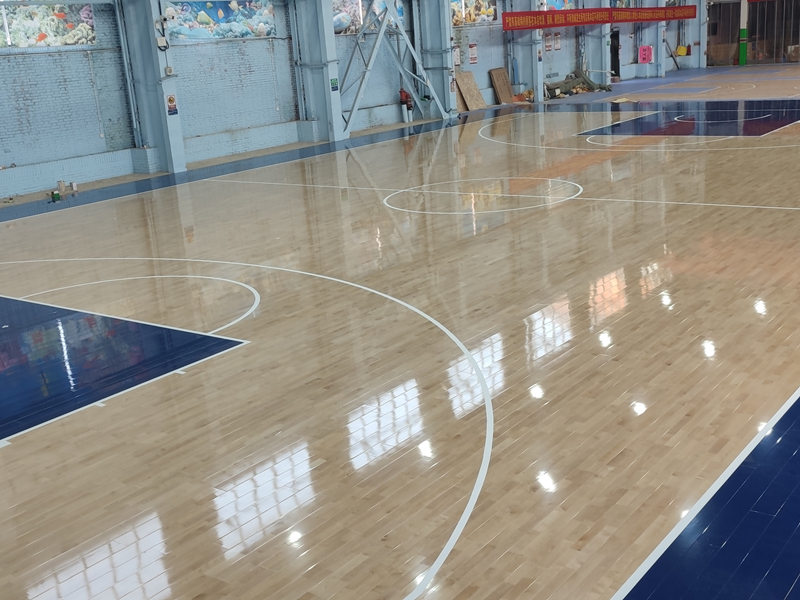
Introduction: The Ultimate Compromise
The multi-purpose gymnasium is one of the most challenging environments for flooring design. A single floor must accommodate basketball, volleyball, badminton, indoor soccer, dance, martial arts, aerobics, and sometimes even community events with tables and chairs. Each activity has different performance requirements, and finding a single" but is still functional
- Martial arts is the biggest compromise — the floor will feel cushioned rather than firm
This approach works for most school and community gyms where basketball is the dominant activity.
Solution 2: Dual-Zone Design
For facilities with clearly defined primary zones, consider different flooring systems in different areas:
- Basketball/Volleyball court area: Full sports wood floor with high shock absorption (rubber pad system, 45-50% SA)
- Dance/Martial Arts area: Thinner wood floor on firmer subfloor (20-25% SA), possibly with a different finish for more grip
- Badminton area: Standard sports wood floor (35-40% SA)
Transitions between zones must be carefully designed — flush, smooth, with appropriate expansion joints. This is more expensive but provides optimal performance everywhere.
Solution 3: Adjustable Systems
Some advanced facilities use modular subfloor systems that can be reconfigured:
- Removable shock pads that can be added or removed to change shock absorption
- Interlocking panel systems that can be rearranged for different court layouts
- Portable flooring sections that convert the space
These systems are expensive and complex but offer maximum flexibility. They're most common in university athletic facilities and high-end community centers.
Key Design Parameters for Multi-Purpose Floors
Regardless of approach, these parameters should be optimized:
1. Wood Species Selection
Hard maple remains the best all-around choice for on all equipment that contacts the floor.
- Cleaning frequency: Multi-purpose facilities need more frequent cleaning (daily vs. 2-3x/week for single-sport). Invest in a good auto-scrubber.
- Refinishing schedule: Expect to refinish every 6-8 years in multi-purpose vs. 10-12 years in single-sport.
Budget Considerations
Multi-purpose wooden flooring typically costs:
| Quality Level | Cost per m² | Expected Life | Best For |
|---|---|---|---|
| Economy | $60-80 | 10-15 years | Community centers, schools |
| Standard | $80-120 | 15-25 years | Most multi-purpose gyms |
| Premium | $120-180 | 25-40 years | Universities, high-end facilities |
The premium option pays for itself through longer life, less maintenance, and better performance across all activities.
Real-World Examples
Many successful multi-purpose facilities use the following approach:
- Maple surface (22mm select grade)
- Birch plywood subfloor (20mm)
- 10mm recycled rubber + 4mm PU foam shock system
- Water-based PU finish (4 coats, matte)
- Floating installation for flexibility
- Target: 45% shock absorption, 94% ball rebound, 0.5 COF
This configuration works well for basketball, volleyball, badminton, and light martial arts. For facilities with heavy martial arts or dance use, add a firmer zone or increase surface hardness.
Conclusion
Multi-purpose gymnasium flooring is a balancing act — but indoor sports wooden flooring is uniquely suited to the challenge
Wood is heavy — a fully installed sports floor weighs 80-120 kg/m². Transportation from mill to job site contributes to the carbon footprint.
Mitigation strategies:
- Source locally when possible (reducing transport distance)
- Optimize panel dimensions to maximize truck loading
- Use rail instead of truck for long distances (50-70% lower carbon per ton-km)
- Specify FSC/PEFC certified wood, which often comes from regional mills
Installation: Minimizing Impact
- Choose water-based adhesives (lower VOC, easier cleanup)
- Minimize packaging waste (specify bulk delivery, returnable packaging)
- Use recycled content in underlayment (recycled rubber from tires is common)
- Proper subfloor preparation reduces the need for additional leveling materials
Use Phase: The Long Game
The use phase is where wood flooring really shines environmentally:
- No replacement needed for decades: Unlike synthetic floors that need full replacement every 10-15 years, wood floors can be refinished 4-6 times. Each refinish extends the life by 8-12 years at a fraction of the carbon cost of replacement.
- Low maintenance chemicals: pH-neutral cleaners and water-based finishes mean minimal chemical impact
- Indoor air quality: Wood floors don't off-gas VOCs (unlike some synthetic floors). Properly finished wood contributes to healthy indoor air.
- Thermal properties: Wood has better insulating properties than concrete or tile, than volleyball to allow quick lateral movement)
- Color: Natural maple (no stain) for professional; light amber stain acceptable for collegiate
The finish must be:
- Consistent across the entire court (no tacky or slippery spots)
- Resistant to black shoe marks (gum rubber soles)
- Easy to clean (dust mop daily, damp mop between games)
- Durable enough to last 8-12 years before full recoating
The Subfloor System: Where Performance Lives
The surface wood is just the beginning. The subfloor system determines 90% of the floor's performance.
Standard Basketball Subfloor Configuration:
┌─────────────────────────────┐
│   Maple Surface (22-26mm)   │  ← Playing surface
├─────────────────────────────┤
│   Maple/Birch Plywood (18-24mm) │  ← Structural panel
├─────────────────────────────┤
│   Rubber/Foam Underlayment  │  ← Shock absorption
│   (10-16mm total)           │
├─────────────────────────────┤
│   Vapor Barrier (0.2mm PE)  │  ← Moisture protection
├─────────────────────────────┤
│   Wooden Subfloor/Joists    │  ← Structural base
└─────────────────────────────┘
Shock Absorption System Options:
- Natural Rubber Pads (10-12mm): Best performance, highest cost. Provides 45-53% shock absorption. Used30+ years and costs less per year than any synthetic alternative.
Whether you're building a new arena or renovating an existing gym, follow the standards, test the performance, and maintain the floor diligently. Your players — and your budget — will thank you.
Leave a Reply