

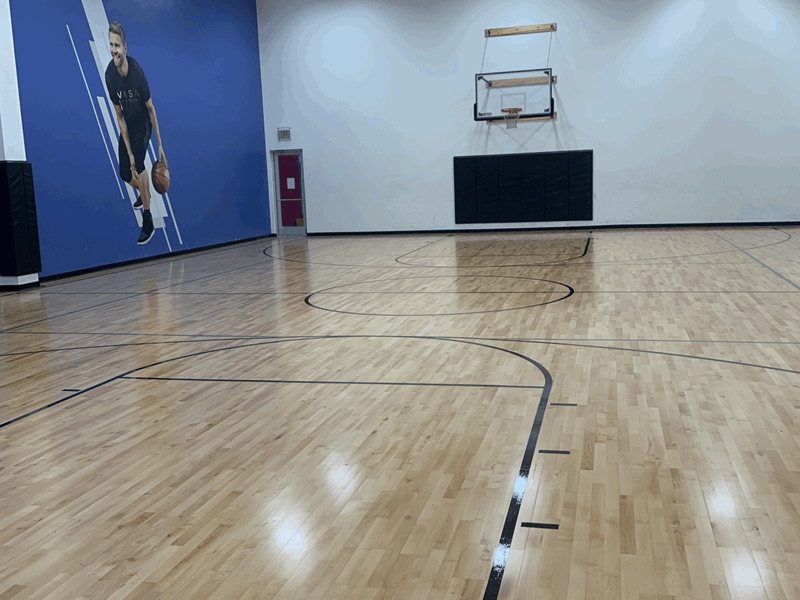
For decades, wood has been the dominant material for indoor basketball court flooring. But in recent years, synthetic alternatives have gained significant market share. These include surfaces made from polyvinyl chloride (PVC), polypropylene, and other engineered materials. So how do they compare? Let us take a detailed look.
The most obvious difference is cost. Synthetic floors are generally less expensive to purchase and install than wood floors. For facilities with tight budgets, this can be a compelling advantage. However, the total cost of ownership tells a different story. Synthetic floors typically need to be replaced every eight to fifteen years, depending on use. Wood floors, with proper maintenance, can last 25 to 40 years. When you factor in the cost of replacement, wood flooring is often more economical over the long term.
Ball response is where wood flooring has a clear advantage. On a properly maintained wood floor, the ball bounces with a consistent, lively energy return that players have come to expect. Synthetic floors can provide good ball response when new, but this tends to degrade over time as the surface wears. The bounce can become inconsistent, which affects gameplay.
Traction is another area where wood excels. Wood floors provide a natural, consistent grip that works well with basketball shoes. Synthetic floors can sometimes be too slippery, especially when dust accumulates on the surface. Some synthetic floors have textured surfaces to improve grip, but these can be abrasive on shoes and increase the risk of ankle injuries.
Shock absorption is more nuanced. High-quality synthetic floors can provide excellent shock absorption, sometimes even better than wood. However, this comes at the cost of ball response, as mentioned above. Lower-quality synthetic floors may not provide adequate shock absorption, making them harder on players' joints.
Durability is a mixed bag. Synthetic floors are resistant to moisture, which is an advantage in facilities where humidity control is difficult. However, they are susceptible to UV damage, which can cause fading and degradation if the facility has large windows. Wood floors, on the other hand, are sensitive to moisture but are not affected by UV light.
Aesthetics is where wood is simply unmatched. There is a warmth, richness, and visual appeal to a hardwood court that no synthetic surface can replicate. For professional arenas and facilities where appearance matters, wood is the clear winner.
Maintenance is easier with synthetic floors in some ways. They do not require refinishing, and they can be cleaned with standard floor cleaners. However, they do require more frequent deep cleaning to remove dust and debris that can affect traction.
In conclusion, synthetic alternatives have their place, particularly for facilities with limited budgets or specific environmental challenges. But for most applications, especially those where performance, durability, and aesthetics are priorities, wood flooring remains the superior choice.
Leave a Reply