

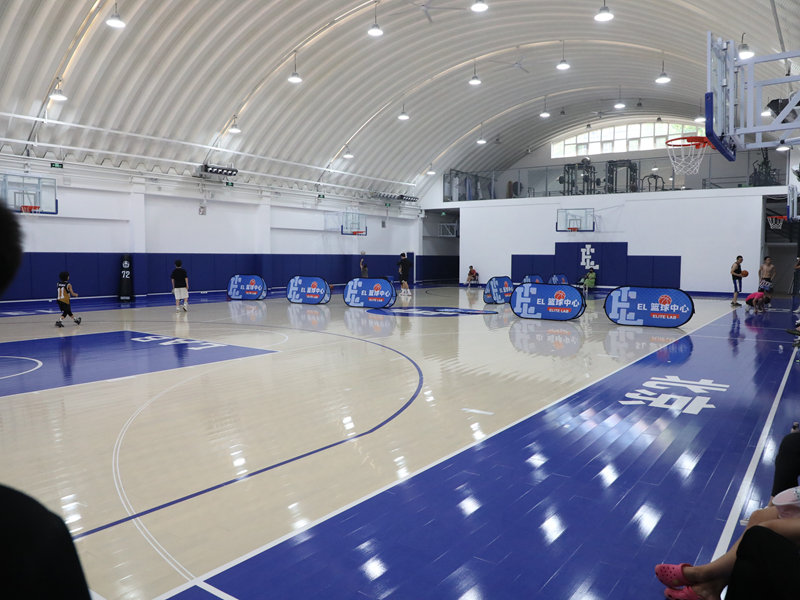
Shock absorption is one of the most important performance characteristics of any basketball court floor, and it is one of the areas where wood flooring truly excels. But what exactly is shock absorption, and how does wood flooring achieve it? The answer lies in the science of materials and construction.
Shock absorption refers to the floor's ability to reduce the impact forces that are transmitted to a player's body when they land from a jump, make a hard stop, or change direction. In basketball, players are constantly jumping and landing, and each landing generates a significant impact force. If the floor is too hard, these forces are transmitted directly up through the legs and into the joints, particularly the knees, hips, and ankles. Over time, this can lead to chronic injuries, including tendinitis, stress fractures, and joint degeneration.
Wood flooring achieves shock absorption through its multi-layer construction. The top layer is the hardwood wearing surface, which is hard and dense. This layer provides the ball response and traction that players need. But beneath the top layer is a middle layer made of softwood or plywood. This layer is much more flexible than the top layer, and it acts as a spring. When a player lands on the floor, the top layer distributes the impact force over a wider area, and the middle layer absorbs and returns a portion of that energy. This reduces the peak force that reaches the player's body.
The effectiveness of shock absorption is measured using a standard called the DIN (Deutsches Institut für Normung) test, which measures the vertical deformation of the floor under a standardized load. For indoor basketball courts, the ideal shock absorption value is between 35 and 50 percent. Wood flooring, when properly constructed, typically falls within this range, making it one of the best surfaces for impact reduction.
The subfloor also plays a role in shock absorption. A well-constructed subfloor with an appropriate underlayment can further enhance the floor's ability to absorb impact. Some systems include additional foam or rubber layers between the subfloor and the wood flooring to increase shock absorption even further.
It is worth noting that shock absorption and ball response are somewhat in conflict. A floor that absorbs too much impact will also absorb too much energy from the ball, resulting in a dead bounce. A floor that provides excellent ball response may transmit more impact to the player. The art of basketball court flooring design is finding the optimal balance between these two competing requirements. Wood flooring, with its carefully engineered multi-layer construction, achieves this balance better than any other material.
The science is clear: wood flooring is not just a traditional choice. It is a scientifically optimized surface that protects players while delivering the performance they expect.
Leave a Reply