

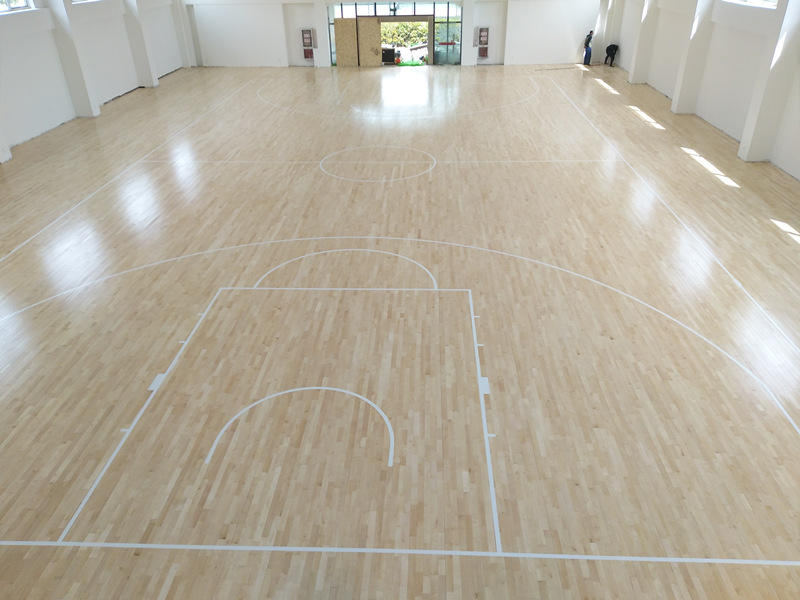
Selecting the right portable indoor basketball court wooden flooring requires balancing several competing factors: performance, durability, budget, and intended use. Getting this right ensures you invest in a system that delivers real value rather than a product that looks good on paper but disappoints in practice.
The first decision is the surface material. Real hardwood — typically maple, oak, or beech — offers the best ball bounce, the most authentic feel, and the highest durability. Maple is the gold standard for professional courts because of its tight grain, which provides consistent ball response and excellent grip. However, real hardwood portable systems are the most expensive. Engineered wood, which uses a thin hardwood veneer over a plywood or HDF core, is a more affordable alternative that still delivers good performance. Some systems use bamboo or other hardwoods, but these are less common and may not meet standard basketball performance requirements.
The second critical factor is the shock absorption system. This is what separates a true basketball court from a generic wooden floor. Look for systems with a minimum shock absorption rating that meets the standards set by sports governing bodies. The absorption layer can be foam, rubber, polypropylene honeycomb, or a combination. Foam is lightweight and affordable but compresses over time. Rubber is more durable and consistent but heavier and more expensive. Honeycomb structures offer excellent energy return but can be noisy. The best systems use a multi-layer approach — a base layer of foam for initial impact absorption and a top layer of rubber for energy return.
Thickness matters, but not in the way most people think. A thicker floor is not automatically better. What matters is the total system thickness including the substructure and shock absorption. A 20mm wood surface with a 10mm shock layer performs better than a 25mm wood surface with no shock absorption. Aim for a total system thickness of at least 30mm to 35mm for competitive play.
The connection system between panels determines how seamless the playing surface feels. Tongue-and-groove interlocking systems create the smoothest surface with minimal gaps. Click-lock systems are faster to install but may have slightly more movement between panels. Floating tile systems have the most gap but are the easiest to disassemble. For competitive play, tongue-and-groove is strongly recommended. For recreational or multipurpose use, click-lock may be sufficient.
Weight and portability are practical concerns. A heavier system generally performs better but is harder to move. If you plan to move the court frequently, look for systems under 20 kg/m². If the court will stay in one location most of the time, prioritize performance over weight.
Finally, consider the finish. UV-cured polyurethane finishes are the most durable and provide the best slip resistance. Water-based finishes are more environmentally friendly but may wear faster. The finish should be specifically rated for sports use — standard residential floor finishes are not designed to handle the lateral forces and ball impacts of basketball.
Leave a Reply