

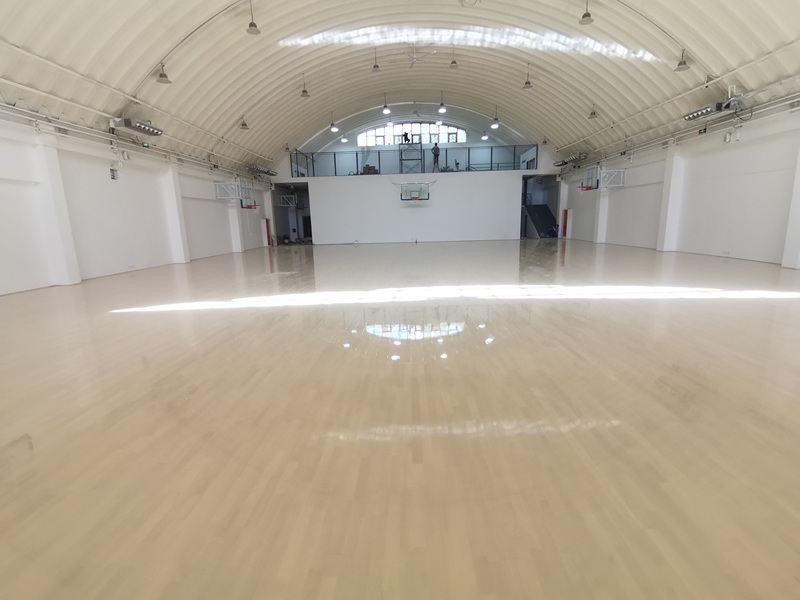
The surface on which athletes play has a direct and measurable impact on their performance, their risk of injury, and their overall experience. For basketball players, the floor is everything — it is where they run, jump, land, pivot, and compete. A well-designed wooden floor can enhance performance and protect athletes, while a poorly designed floor can do the opposite. This article explores the science behind how basketball court wooden flooring affects players.
The most obvious way the floor affects performance is through ball bounce. When a basketball hits the floor, the energy of the impact is absorbed by the surface and then returned to the ball. The amount of energy returned is called the ball's coefficient of restitution, and it is a critical factor in how the ball behaves. Professional basketball organizations specify a ball bounce height of between 120 and 140 centimeters when a ball is dropped from a height of 180 centimeters. This range is achievable only on a properly constructed wooden floor with the right combination of wood species, thickness, and subfloor padding.
If the ball bounce is too high, players will have difficulty controlling the ball, leading to more turnovers and missed shots. If the ball bounce is too low, the game will feel sluggish, and players will have to work harder to dribble and pass. Consistency is equally important — if the ball bounces differently in one area of the court than in another, players will lose confidence in their footwork and may hesitate to make plays. This is why the uniformity of the wood surface is so critical.
Shock absorption is the other key performance factor. When a player lands from a jump, the impact force can be several times their body weight. A good wooden floor with a proper subfloor padding system can absorb a significant portion of this force, reducing the stress on the player's knees, ankles, and spine. The standard for competitive basketball courts is a vertical deformation (the amount the floor compresses under load) of between 2.3 and 3.5 millimeters. This range provides enough give to protect joints without making the floor feel too soft or unstable.
Studies have shown that playing on a surface with adequate shock absorption can reduce the incidence of overuse injuries such as patellar tendinitis, shin splints, and stress fractures. These injuries are common in basketball because of the repetitive jumping and landing that the sport requires. A hard surface like concrete can dramatically increase the risk of these injuries, while a well-cushioned wooden floor can significantly reduce it.
The friction between a player's shoe and the floor surface also affects performance and safety. Too little friction, and players will slip when they try to change direction or stop suddenly. Too much friction, and players will experience excessive shear force on their joints, increasing the risk of knee and ankle injuries. Wooden floors with a proper finish provide an optimal level of friction — enough grip for quick movements but not so much that it creates harmful shear forces. This is one reason why the finish on a basketball court floor is so important.
The visual appearance of the floor also plays a role in performance. Studies in sports psychology have shown that athletes perform better in well-lit, clean, and aesthetically pleasing environments. A bright, well-maintained wooden floor creates a positive atmosphere that can boost player confidence and focus. Conversely, a dark, scuffed, or dirty floor can create a negative impression that affects morale.
Temperature also matters. A cold floor can cause muscles to tighten, reducing flexibility and increasing the risk of strains and pulls. Wooden floors are naturally warmer underfoot than concrete or synthetic surfaces, which helps keep muscles loose and ready for action. This is another reason why wood is the preferred surface for competitive basketball.
In conclusion, the floor is not just a passive surface — it is an active component of the game. Investing in a high-quality wooden floor with the right specifications for ball bounce, shock absorption, friction, and appearance is one of the best things you can do to enhance player performance and protect athlete health. The cost of a good floor is always less than the cost of treating injuries and losing games.
Leave a Reply