

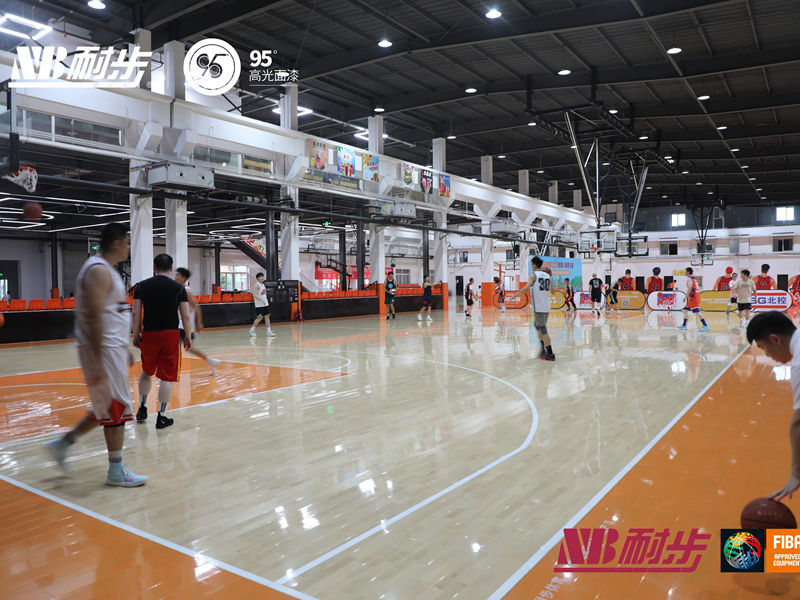
Digital printing technology has emerged as a revolutionary force in the production of modular sports wooden flooring, fundamentally transforming not just how these surfaces look but how they perform under the rigorous demands of athletic competition. Unlike conventional printing methods that rely on pre-manufactured printing cylinders with fixed patterns, modern digital printing systems receive design data directly from computer files, allowing for unprecedented control over every single element that appears on the flooring surface. This direct digital transfer process eliminates many of the traditional constraints that limited manufacturers in the past, opening up new possibilities for creating sports wooden flooring that meets the exact specifications required for different types of sports activities, from professional basketball competitions to community yoga studios.
One of the most significant performance transformations brought by digital printing to modular sports wooden flooring is the ability to create precisely calibrated surface textures that enhance athletic performance rather than merely serve a decorative purpose. By controlling the deposition of printing materials at a microscopic level, manufacturers can create subtle variations in surface topography that optimize the friction coefficient across different areas of the playing court. For instance, areas that experience high levels of foot traffic during fast-paced sports can be printed with micro-textures that provide enhanced grip, while other sections can maintain a smoother surface that facilitates smooth movement and ball roll. This level of precision was simply impossible to achieve with traditional surface treatment methods, where texture application was largely a random result of mechanical sanding processes.
Digital printing also dramatically improves the durability and longevity of modular sports wooden flooring surfaces. The printing inks used in modern systems are formulated to bond at a molecular level with the specially prepared wood substrate, creating a surface layer that resists scuffing, fading, and wear even after thousands of hours of intense athletic activity. Unlike surface coatings that can gradually wear away to reveal bare wood underneath, digitally printed patterns penetrate uniformly across the entire surface layer, ensuring that the visual appearance remains consistent even after years of heavy use. This extended service life directly translates to lower long-term maintenance costs for sports facility operators, who no longer need to invest in frequent re-coating or refinishing projects that traditionally disrupted venue operations.
The environmental benefits of digital printing in modular sports wooden flooring production represent another important performance transformation. Because digital systems only deposit the exact amount of ink required for each specific design, there is minimal material waste compared to traditional printing processes that require extensive cleaning of cylinders and large volumes of excess ink for setup. This efficiency reduces the overall environmental footprint of manufacturing sports wooden flooring, aligning with the growing global emphasis on sustainable construction materials for public facilities. The transformation brought by digital printing extends far beyond simple aesthetics, creating a new generation of modular sports wooden flooring that performs better, lasts longer, and operates more sustainably than any previous generation of athletic flooring surfaces.
Leave a Reply