

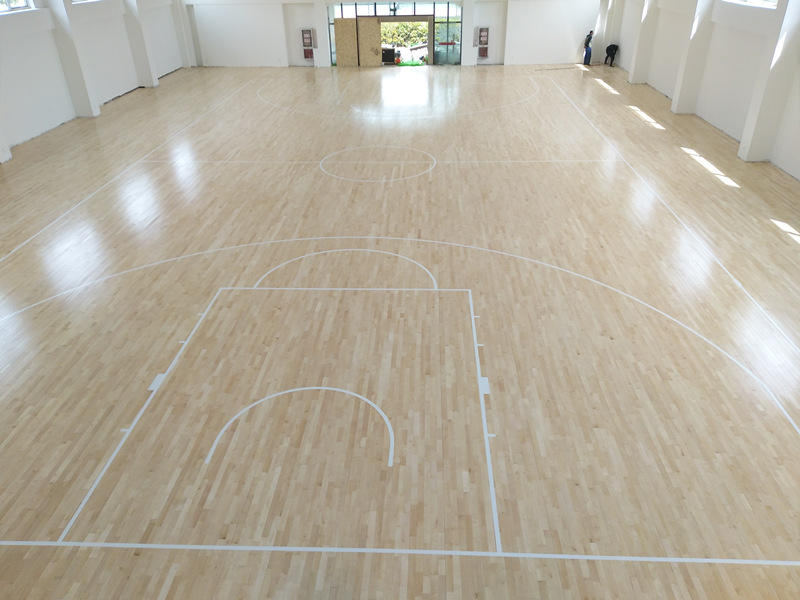
Understanding the technical principles that govern printed modular sports wooden flooring reveals the remarkable engineering that goes into creating surfaces that balance aesthetic beauty with the extreme functional demands of competitive sports. At its core, the process begins with careful preparation of the wood substrate, where each individual modular panel is sanded to an exact flatness tolerance, then coated with a specialized primer layer that creates the ideal surface for subsequent printing operations. This primer layer is engineered to have precise surface tension properties that allow printing inks to spread evenly without beading or running, while also creating a strong chemical bond between the natural wood fibers and the printed surface layer that will follow. The quality of this initial preparation stage directly determines the final quality of the finished sports wooden flooring, as even minor imperfections in substrate preparation can become visible in the final printed surface.
The printing process itself operates on principles of precision material deposition, where specialized print heads move systematically across the surface of each modular sports wooden flooring panel, depositing tiny droplets of specially formulated ink at exact pre-determined positions. Each droplet is measured to a precise volume, ensuring consistent color density across the entire panel surface, and the positioning system is accurate to within a fraction of a millimeter to ensure that patterns align perfectly across the edges of adjacent panels. This level of precision is essential for modular flooring systems, where hundreds of individual panels must fit together to create a single continuous surface with no visible breaks or misalignments in the printed pattern. The technical challenge is amplified by the natural variations in wood itself, as the printing system must compensate for subtle differences in wood density and grain direction to maintain perfectly uniform results across every panel produced.
After the printing materials have been applied to the modular sports wooden flooring surface, a carefully controlled curing process takes place that transforms the liquid ink into a solid, highly durable surface layer. This curing process typically involves a combination of controlled heat exposure and ultraviolet light irradiation, which triggers chemical cross-linking reactions within the printed materials. These reactions cause the individual molecules in the ink to bond together into a strong, continuous polymer network that is highly resistant to abrasion, chemical spills, and the constant impact of athletic footwear. The curing parameters are precisely calibrated to ensure that the printed layer achieves exactly the right balance of hardness and flexibility – hard enough to resist scuff marks from heavy sports equipment, yet flexible enough to move with the natural expansion and contraction of the underlying wood as it responds to changes in temperature and humidity.
The final stage in the technical process involves applying a transparent topcoat over the printed surface, which is itself often applied using advanced printing technology to create additional functional benefits. This topcoat can be engineered with micro-scale surface structures that optimize the slip resistance of the sports wooden flooring, creating exactly the right coefficient of friction that allows athletes to make quick turns and sudden stops without risking slips or falls. The entire system works together according to carefully calibrated technical principles, resulting in a modular sports wooden flooring product that meets the strict international standards for athletic performance while delivering visual quality that rivals the most beautiful natural wood surfaces available anywhere.
Leave a Reply