

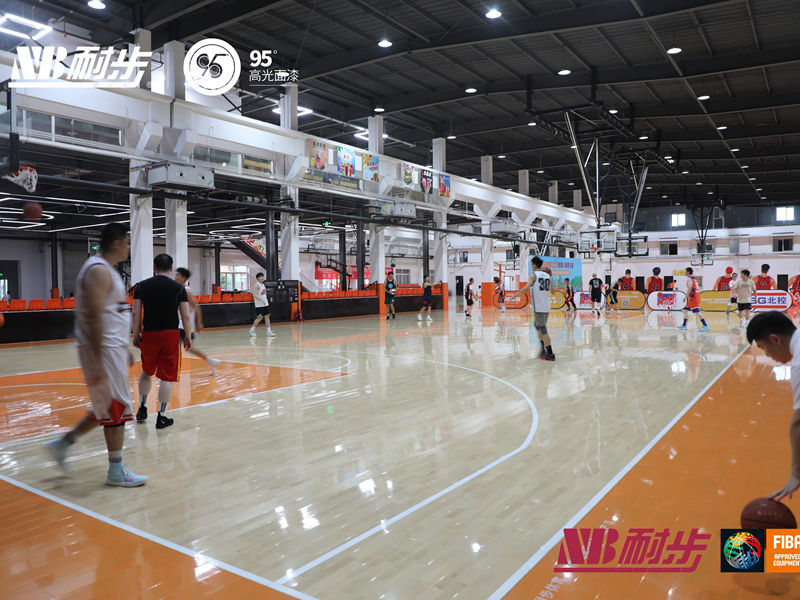
The debate between hard maple and white oak for indoor basketball court flooring has existed for decades. Both species are dense, durable hardwoods that can withstand the rigors of competitive play, but they differ in ways that matter.
Hard maple, specifically sugar maple, has been the dominant choice for professional basketball since the sport's early days. Its Janka hardness rating sits at approximately fourteen fifty, making it one of the hardest domestic wood species available. This hardness translates directly into resistance against dents, scratches, and gouges from shoe soles and ball impacts. The tight, uniform grain of hard maple also produces a smooth, consistent playing surface that players and coaches love.
White oak, by comparison, has a Janka hardness of around thirteen sixty, slightly softer than hard maple. However, white oak offers a distinct advantage in moisture resistance due to its closed cellular structure. This makes it less prone to swelling or warping in environments where humidity control is imperfect. For facilities in regions with extreme seasonal humidity swings, white oak can be a more reliable long-term choice.
In terms of appearance, hard maple has a creamy, blonde tone that brightens the entire gymnasium. It is the look that most people associate with a professional basketball court. White oak has a slightly darker, more golden hue with a more pronounced grain pattern. Some facility owners prefer this warmer look, especially in recreational or multi-purpose gyms where the court also hosts other activities.
Traction is a subtle but important difference. Hard maple tends to provide slightly better grip when finished properly, which is critical for the quick lateral movements that define basketball. White oak can feel marginally smoother under foot, though this difference is often negligible with a quality finish.
Refinishing is where hard maple has a clear edge. Because it is so dense, hard maple floors can be sanded and refinished six to ten times over their lifetime. White oak, while still refinishable, typically yields fewer refinishing cycles due to its slightly lower density.
The verdict depends on your priorities. If you want the classic look and maximum durability, hard maple is the answer. If moisture stability and a warmer aesthetic matter more, white oak deserves serious consideration.
Leave a Reply