

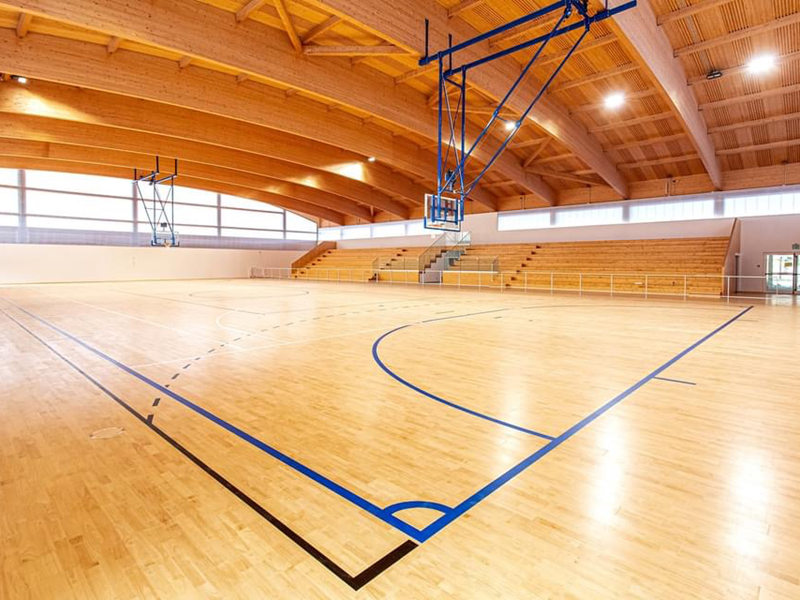
When it comes to building or renovating an indoor basketball court, the flooring you choose will define the entire experience. Hardwood remains the gold standard for competitive and recreational play, but selecting the right one requires understanding several critical factors.
The first decision you will face is the species of wood. Hard maple is by far the most popular choice for professional and collegiate courts. Its density, hardness, and consistent grain make it ideal for high-impact sports. White oak is another strong contender, offering similar durability with a slightly different aesthetic. Birch, while less common, provides a lighter color and decent performance for facilities that prioritize appearance alongside function.
Beyond species, you must consider the construction type. Solid hardwood planks are milled from a single piece of timber, offering maximum durability and the ability to be sanded and refinished multiple times over their lifespan. Engineered hardwood, on the other hand, consists of a thin veneer of hardwood bonded to multiple layers of plywood or high-density fiberboard. Engineered options are more dimensionally stable, meaning they resist warping and cupping in environments with fluctuating humidity.
Thickness is another parameter that demands attention. Most competitive indoor courts use flooring that is at least twenty millimeters thick, though some professional facilities go as thick as twenty-two or even twenty-five millimeters. Thicker flooring provides better shock absorption and a more forgiving surface for players' joints.
Finish matters more than most people realize. The type of finish applied to the floor affects not only its appearance but also its traction, durability, and maintenance requirements. A high-quality polyurethane finish with a matte or semi-gloss sheen is standard for basketball courts. Too much gloss creates glare that can affect player vision, while too little can make the floor feel rough and increase the risk of abrasions.
Cost is always a factor. Hardwood flooring for a full-size indoor court represents a significant investment, often ranging from fifteen to thirty dollars per square foot installed, depending on species, thickness, finish, and labor. However, when you factor in the lifespan of a well-maintained hardwood court, which can exceed thirty years, the long-term value becomes clear.
Ultimately, the best hardwood flooring for your indoor basketball court is the one that balances performance, durability, aesthetics, and budget. There is no single perfect answer, but by understanding these variables, you can make a decision that serves your facility well for decades.
Leave a Reply