

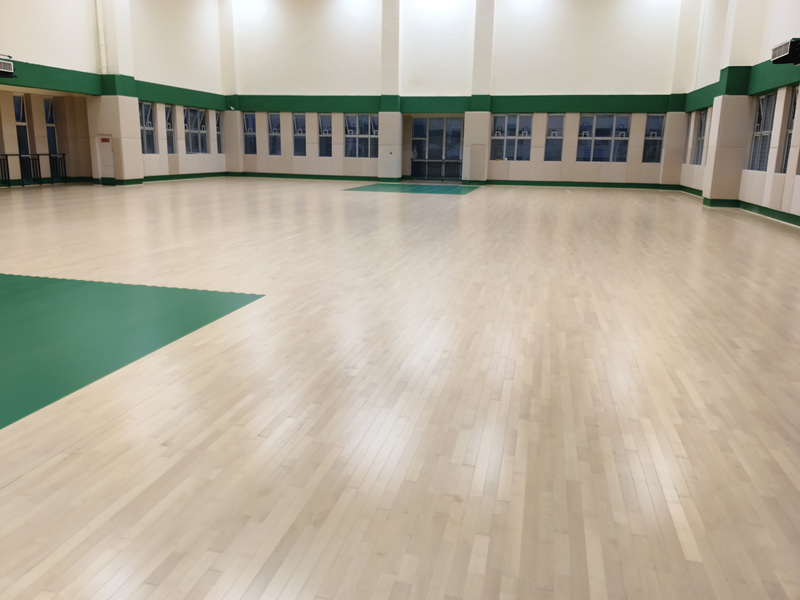
Sustainability is no longer a nice-to-have feature. It is a requirement for modern facilities, and demountable sports wood flooring has several environmental advantages that make it a strong choice for green-conscious organizations.
The most obvious environmental benefit of demountable sports wood flooring is its reusability. Because the floor can be disassembled and reinstalled, it does not need to be discarded when a facility is renovated or relocated. A fixed hardwood floor that is torn out during a renovation typically ends up in a landfill. A demountable floor is simply moved to a new location and reinstalled. This dramatically reduces waste.
The wood used in sports floors is typically sourced from sustainably managed forests. Reputable suppliers use wood certified by organizations that ensure responsible forestry practices. Hard maple, the most common species for basketball courts, grows abundantly in North America and is a renewable resource when harvested responsibly.
The finish applied to sports wood floors has also become more environmentally friendly over the years. Traditional polyurethane finishes contained volatile organic compounds (VOCs) that contributed to indoor air pollution. Modern water-based polyurethane and UV-cured finishes have significantly lower VOC levels, making them safer for players, staff, and the environment.
The shock absorption layer in demountable systems is often made from recycled materials. Many foam pads are manufactured using recycled polyurethane, and rubber mats are frequently made from recycled tires. This gives a second life to materials that would otherwise end up in a landfill.
Because demountable floors can be refinished rather than replaced, they have a longer useful life. A well-maintained sports wood floor can last 20 to 30 years with periodic refinishing. Each refinishing cycle extends the life of the floor by another 10 to 15 years. This is far more sustainable than replacing a vinyl or synthetic floor every five to seven years.
The energy required to manufacture a demountable sports wood floor is also worth considering. While the initial production of hardwood and the various layers does require energy, the long lifespan and reusability of the system mean that the environmental cost per year of use is relatively low. When you compare this to synthetic floors that must be replaced frequently, the wood floor is the more sustainable choice over its lifetime.
For facilities pursuing green building certifications, demountable sports wood flooring can contribute to earning points in several categories, including materials reuse, regional materials, and low-emitting products. This makes it not just an environmentally responsible choice but also a strategically smart one for organizations that value sustainability.
Leave a Reply