

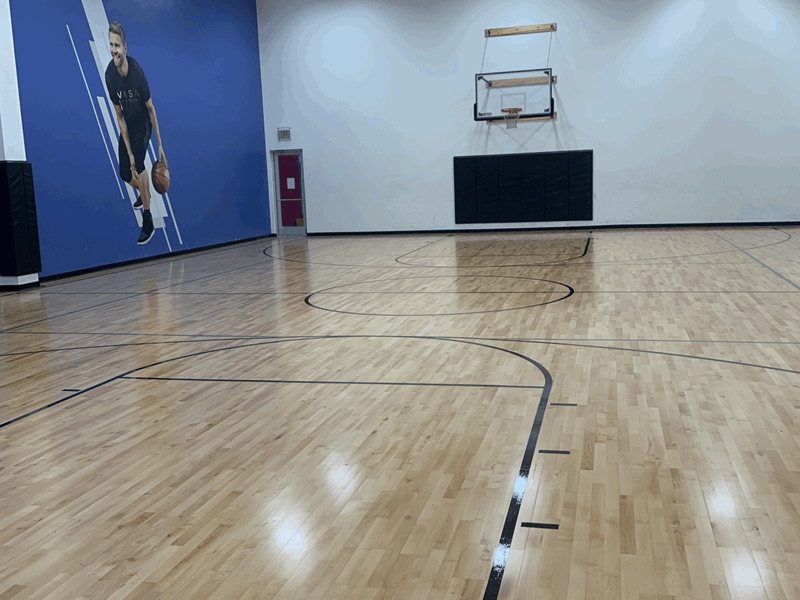
Modern basketball court wood flooring can be an extremely environmentally responsible choice for indoor sports facilities, especially when sourced, installed, and maintained using sustainable practices. Unlike many synthetic flooring materials that are made from non-renewable petroleum-based products and end up in landfills at the end of their relatively short lifespan, wood is a natural, renewable resource that can be harvested and managed in ways that support long-term forest health. When you choose a properly sourced wood court, you are selecting a flooring system that has a far lower overall environmental impact than most alternative options.
Sustainable forestry practices ensure that for every tree harvested to make basketball court wood flooring, at least one new tree is planted in its place, and the overall health and biodiversity of the forest is maintained over time. Well-managed forests act as massive carbon sinks, absorbing carbon dioxide from the atmosphere as the trees grow. The carbon that is stored in the wood of a mature tree remains trapped in the finished wood floor for the entire lifespan of the court, keeping it out of the atmosphere for decades or even centuries. This means that a properly sourced wood basketball court is actually carbon negative, storing more carbon than was emitted during the harvesting, milling, and installation process.
Another major environmental advantage of basketball court wood flooring is its extremely long usable lifespan. A well-maintained wood court can easily last 50 years or more, and many historic basketball courts around the world have been in continuous use for over a century. Synthetic sports floors, by comparison, typically need to be completely replaced every 10 to 20 years, which means that over the same 50-year period, a facility would need to dispose of and install 3 to 5 separate synthetic floors. This creates a massive amount of waste that ends up in landfills, and requires far more raw material and energy input over the lifetime of the facility. Even when a wood court eventually reaches the end of its usable life, the wood can be reused for other construction projects, repurposed to make furniture, or even recycled as biomass for energy production, ensuring that almost no part of the material goes to waste.
The finishing and maintenance products used on modern basketball court wood flooring have also become far more environmentally friendly in recent years. Low-VOC and zero-VOC water-based finishes are now widely available, which release almost no harmful volatile organic compounds into the indoor air after application. This creates a much healthier indoor air quality environment for players and facility users, with no strong chemical odors lingering after the finish is applied. These modern finishes are also formulated to be extremely durable, which means that the time between recoating cycles can be extended, reducing the amount of finishing material that needs to be applied over the entire lifespan of the floor.
When you add up all these factors—renewable sourcing, carbon storage, long lifespan, minimal waste, and low-emission finishing—it becomes clear that high-quality basketball court wood flooring is one of the most sustainable choices available for an indoor sports surface. For facilities that want to reduce their environmental footprint while still providing the best possible playing experience for athletes, a properly managed wood court is an investment that delivers environmental benefits for generations.
Leave a Reply