

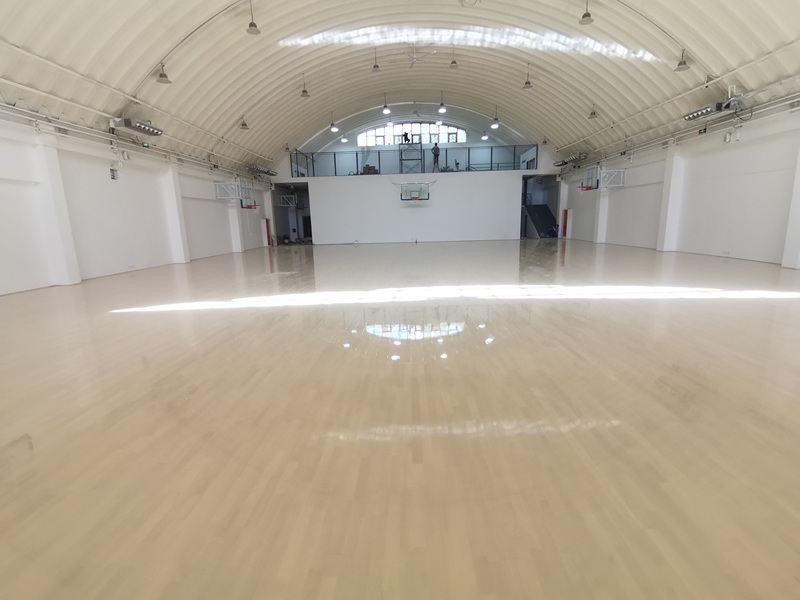
The history of basketball court wood flooring is closely tied to the evolution of the sport of basketball itself, from its humble beginnings in a small gymnasium in the late 19th century to the global professional sport it is today. When the game was first invented, there were no purpose-built sports floors, and early games were played on whatever hard, flat surface was available—often rough wooden gym floors that were originally designed for general multi-purpose use. These early floors were uneven, unforgiving, and had no special engineering for athletic performance, but players quickly discovered that wood was far better to play on than concrete or dirt.
As basketball grew in popularity through the early 20th century, facilities started to build dedicated courts specifically for the sport, and they began to experiment with different wood types and installation methods to create a better playing surface. Early 20th century courts often used simple, thick wood planks nailed directly to the floor joists, with no special underlayment system to provide shock absorption. These floors were very hard by modern standards, but they still offered better traction and ball bounce than any other available surface. Many of the legendary early basketball arenas from this era had wood floors that became iconic parts of the sport’s history, with their own unique character and quirks that players grew to love.
It was not until the mid-20th century that engineers started to develop the modern layered basketball court wood flooring systems that we use today. Sports scientists began to study how different floor designs affected athlete performance and injury rates, and they discovered that adding a resilient cushion layer between the wood planks and the subfloor dramatically improved shock absorption. This led to the development of the "floating" floor system, where the wood surface is not rigidly attached directly to the building structure, but instead rests on a network of resilient pads that allow the entire surface to move slightly and absorb impact. This innovation revolutionized the playing experience, making the sport far easier on players’ bodies.
Through the late 20th century, further refinements were made to every part of the system: new sanding techniques created even smoother surfaces, advanced finish technologies improved durability and traction, and precision manufacturing methods made wood planks far more dimensionally stable than they had ever been before. Designers also started to experiment with different plank orientations and layout patterns, discovering that certain configurations could further improve the uniformity of the floor’s performance across the entire court. Today, the best modern basketball court wood flooring systems represent over a century of accumulated knowledge about wood science, athletic performance, and sports engineering, combining the timeless natural qualities of wood with cutting-edge technical design.
What is most remarkable about this evolution is that even with all the technological advances, the core material at the heart of the court has remained essentially the same. Players today still experience the same fundamental connection to natural wood that the very first basketball players felt over a hundred years ago, even though the modern version of the floor is far safer, more consistent, and more durable than anything that existed in the sport’s early days. This continuity is part of what makes wood basketball courts such a beloved part of the sport’s cultural heritage.
Leave a Reply