

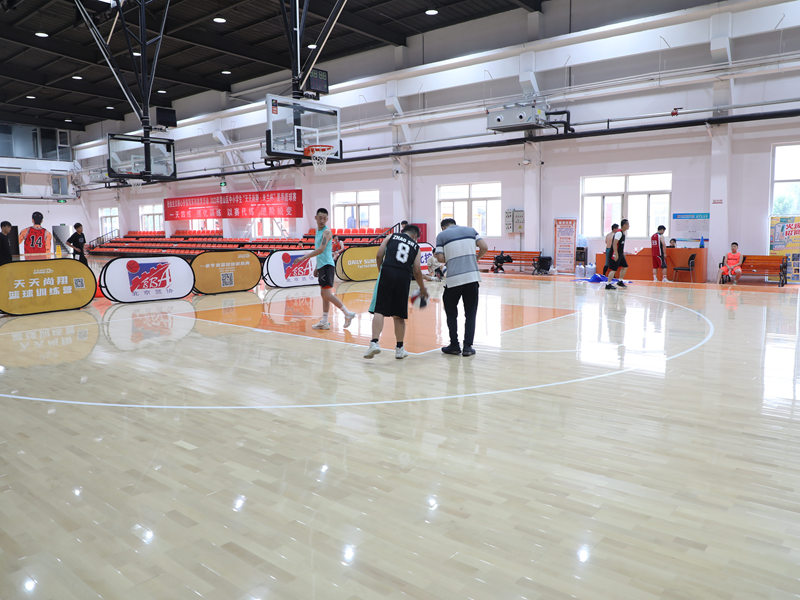
When facility managers budget for a new gymnasium floor, they typically look at the installation cost—$12-22 per square foot—and make their decision based on that number. But the installation cost is just the beginning. The true cost of gymnasium wooden flooring includes maintenance, refinishing, energy costs, and the cost of premature replacement if you choose a cheaper alternative.
In this article, we'll do a comprehensive 30-year cost analysis comparing premium maple, mid-range oak, and budget synthetic flooring. The results might surprise you.
Scenario: 5,000 Square Foot Gymnasium
Let's compare three options for a standard high school gymnasium:
Option A: Premium Hard Maple (the gold standard)
- Material: North American hard maple, 3/4" wear layer, 2.25" wide planks
- Installation: Floating system with 1/2" rubber shock pad
- Finish: UV-cured
- Installation cost: 18/sqft=90,000
Option B: Mid-Range Red Oak (the budget wood option)
- Material: Red oak, 3/4" wear layer, 2.25" wide planks
- Installation: Floating system with 3/8" rubber shock pad
- Finish: Water-based polyurethane
- Installation cost: 13/sqft=65,000
**Option), it costs less to maintain over its lifetime. Oak needs more frequent recoating (every 3 years vs. every 4-5 years for maple's UV finish), more frequent refinishing (every 10 years vs. every 12-15 years), and has higher annual maintenance costs due to faster wear.
Synthetic flooring looks cheapest initially, but the 30-year total is significantly higher because:
- It needs complete replacement every 8-12 years (PVC degrades, fades, and loses performance)
- Repair costs are higher (individual tiles must be replaced when damaged)
- Maintenance is more labor-intensive (seams trap dirt, require special cleaning)
- There's no refinishing option—once it's worn, it's done
Hidden Costs That Aren't in the Spreadsheet
1. Injury Costs
Studies show that proper shock-absorbing floors reduce injury rates by 30-50%. For a high school with 500 athletes using the gym, the average injury-related cost (medical bills, lost playing time, liability) is estimated at 200−500perinjury.Abetterfloorthatpreventseven10injuriesperyearsaves2,000-5,000 annually—$60,000-150,000 over 30 years.
2. Energy Costs
Wooden floors with proper subfloor insulation can reduce heating/cooling costs compared to concrete floors. A well-insulated wood floor system can save $50 (2018)**
- Installed PVC interlocking tiles for 7/sqft(35,000 total)
- Tiles began peeling and discoloring after 4 years
- Replaced with maple after 7 years ($85,000)
- Total cost: $120,000 for 14 years of service
- Equivalent annual cost: $8,571/year
Westfield High School, Indiana (2015)
- Installed maple floor for 16/sqft(80,000 total)
- Refinished once at year 12 ($10,000)
- Still in perfect condition at year 15
- Projected 30-year cost: $110,000
- Equivalent annual cost: $3,667/year
The maple floor cost 57% less per year than the synthetic floor—and provided better performance, safer conditions, and a more beautiful facility.
Conclusion
The true cost of gymnasium flooring isn't the installation price—it's the total cost of ownership over the life of the floor. When you factor in maintenance, refinishing, replacement, injury prevention, energy savings, and resale value, premium maple flooring is not just the best performing option—it's often the most economical one too.
Don't let the sticker price fool you. Invest in the best floor you can afford, and it will pay you back many times over.
Leave a Reply