

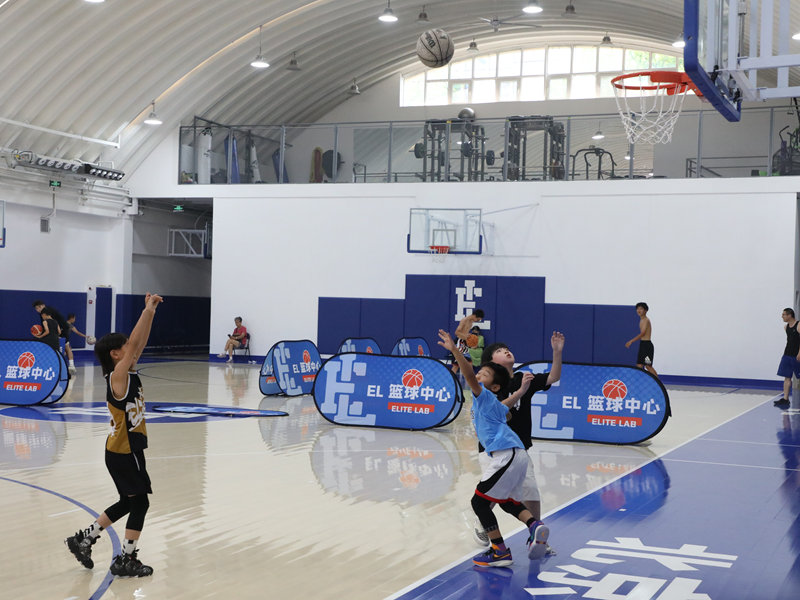
- Widest flooring options: Any wood species, any finish system, any shock pad
- Longest lifespan: 30-50+ years with proper maintenance
- Best performance: Controlled environment means consistent ball bounce, friction, and shock absorption
Disadvantages:
- Highest construction cost: Building an enclosed facility costs 2-3x more than a covered court
- Energy costs: Heating, cooling, and lighting add ongoing expenses
- Limited capacity: Indoor facilities are constrained by building size
Best Flooring for Indoor:
- 3/4" hard maple with floating system
- UV-cured finish for durability
- SBR rubber shock pad (3/8" to 1/2")
- Expected lifespan: 40-50 years
Outdoor/Covered Gymnasium Flooring: The Challenge
Outdoor and covered courts (with roof but no walls) present unique challenges for flooring.
Challenges:
1. Moisture
This is the #1 enemy of outdoor wood floors. Rain, dew, snow, and humidity can all damage wood. Even covered courts get wet from wind-driven rain and condensation.
Solutions:
- Use moisture-resistant species (white oak, teak, or treated birch)
- Install a high-quality vapor barrier
- Use marine-grade adhesives
- Apply penetrating oil finishes (rather than surface finishes) that allow wood to breathe
- Ensure excellent drainage around the court
2. UV Exposure
Sunlightroof but no walls) are the most popular outdoor option. They protect from rain but still expose the floor to:
- Humidity fluctuations
- Wind-driven moisture
- Temperature swings
- UV exposure
Best Flooring for Covered Courts:
- Option 1: Treated maple with marine-grade system
- 3/4" maple, kiln-dried to 6-8% MC
- Marine epoxy adhesive
- Saturated felt vapor barrier
- Penetrating oil finish (like Osmo or Rubio Monocoat)
- SBR rubber shock pad with drainage channels
- Lifespan: 15-25 years
- Option 2: Synthetic sports tiles
- Interlocking PP (polypropylene) tiles with drainage holes
- No wood, no moisture concerns
- UV-stabilized
- Lifespan: 10-15 years
- Performance: Good but not as good as wood (less shock absorption, different ball behavior)
- Option 3: Hybrid system
- Wood wear layer over synthetic shock pad
- Combines wood aesthetics with synthetic durability
- Newer technology, 10-15 year track record
- Cost: $15-20/sq ft
True Outdoor (No Cover): The Extreme
Fully outdoor courts with no roof are the most challenging. Only a few options work:
- Synthetic interlocking tiles (PP or PVC) — the most common choice
- **Artificial turf with rubber inf remain the gold standard for performance, durability, and aesthetics. But outdoor and covered courts are viable options when budget or space constraints demand it. The key is choosing the right flooring system for the environment—and being realistic about maintenance requirements and lifespan.
Don't put indoor maple flooring on an outdoor court and expect it to last. And don't put cheap plastic tiles in a beautiful indoor gym when maple would transform the space. Match the floor to the environment, and you'll be happy for decades.
Leave a Reply