

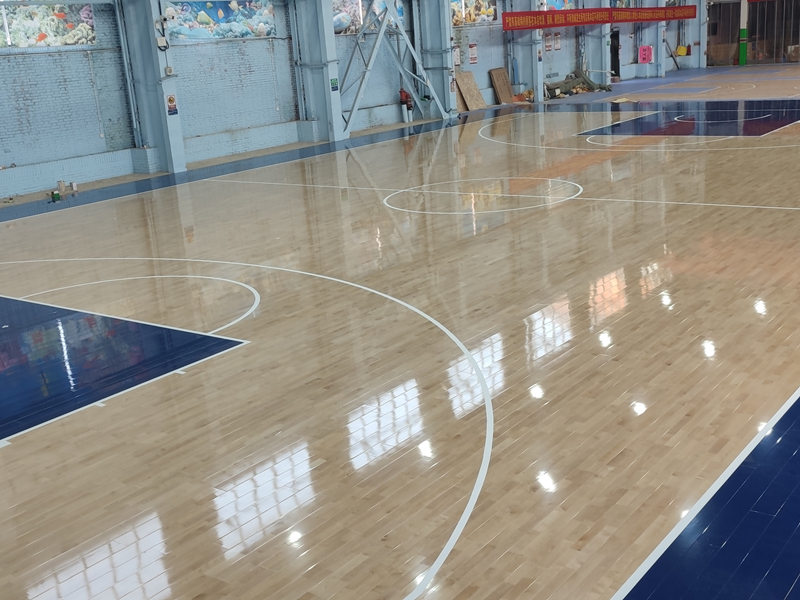
Indoor sports wooden flooring comes in a variety of types, each with its own unique characteristics, advantages, and ideal applications. Understanding the differences between these types is essential for making the right choice for your facility. In this article, we will compare the most common types of indoor sports wooden flooring.
Solid wood sports flooring is made from a single piece of hardwood, typically 20 to 22 millimeters thick. This is the traditional choice for professional sports facilities and is widely regarded as the best option for high-performance sports like basketball. Solid wood flooring offers excellent shock absorption, ball rebound, and durability. It can be sanded and refinished multiple times, which extends its lifespan significantly. However, solid wood flooring is more expensive than other options and is more susceptible to moisture-related problems if not properly installed and maintained.
Engineered wood sports flooring is made from multiple layers of wood that are bonded together with adhesives. The top layer is a hardwood veneer, while the core layers are made from softer, less expensive woods. Engineered flooring is more dimensionally stable than solid wood, which means it is less likely to warp, cup, or buckle in response to changes in humidity and temperature. This makes it a good choice for facilities in climates with significant seasonal variations. Engineered flooring is also typically less expensive than solid wood, making it a popular choice for schools, community centers, and recreational facilities. However, it cannot be sanded and refinished as many times as solid wood, which limits its lifespan.
Finger-jointed sports flooring is made by joining smaller pieces of wood together using interlocking joints, similar to the fingers of two hands clasping together. This construction method allows for the efficient use of wood and produces a very consistent product. Finger-jointed flooring is often less expensive than solid wood and offers good performance characteristics. It is a popular choice for multi-purpose halls and training facilities. However, the joints can be a weak point if the adhesive fails, so quality control is critical.
Bamboo sports flooring is an increasingly popular alternative to traditional hardwood. Bamboo is a grass, not a wood, but it has similar hardness and durability characteristics. Bamboo flooring is highly sustainable, as bamboo grows much faster than trees. It is also very hard and resistant to wear, making it a good choice for high-traffic facilities. However, bamboo does not have the same shock absorption properties as hardwood, and its ball rebound characteristics are not as consistent. It is best suited for sports that do not require extreme performance, such as fitness classes or dance studios.
Laminated sports flooring, also known as floating flooring, consists of a wear layer bonded to a core material, which is then laid over an underlayment. The panels are not glued or nailed to the subfloor, which makes installation faster and easier. Laminated flooring is a good choice for temporary or semi-permanent installations, such as event spaces or portable courts. However, it does not offer the same performance or durability as traditional solid wood or engineered wood flooring.
Parquet sports flooring is made from small wooden blocks that are arranged in a decorative pattern, such as herringbone or basketweave. While parquet flooring is beautiful, it is not typically used for high-performance sports because the joints between the blocks can create an uneven surface that affects ball bounce and player movement. It is more commonly used for decorative purposes or in facilities where aesthetics are more important than performance.
When comparing these types, the most important factors to consider are performance requirements, budget, climate, and intended use. For professional sports facilities where performance is paramount, solid wood is the clear winner. For schools and community centers where budget is a concern, engineered wood or finger-jointed flooring may be the better choice. For temporary or event-based installations, laminated flooring offers the best balance of cost and convenience.
In conclusion, each type of indoor sports wooden flooring has its own strengths and weaknesses. By understanding the differences and matching the floor quicker changes of direction.
Ball rebound is another critical performance factor that is directly influenced by the flooring. Wooden floors provide a consistent and predictable bounce, which allows athletes to develop precise timing and coordination. In basketball, for example, a consistent ball bounce is essential for dribbling, passing, and shooting. When the bounce is unpredictable, as it often is on synthetic or concrete surfaces, athletes must constantly adjust their movements, which slows them down and increases the risk of errors.
Traction and grip are essential for virtually all indoor sports. Wooden flooring provides an optimal level of grip that allows athletes to push off the ground with maximum force. The surface is smooth enough to allow quick footwork but textured enough to prevent slipping. This balance is crucial for sports that involve rapid acceleration, deceleration, and lateral movement, such as basketball, volleyball, and badminton.
The flatness and consistency of a professionally installed wooden floor also contribute to performance. A level surface ensures that the ball rolls true and that athletes can move freely without having to compensate for bumps or dips. On an uneven surface, athletes must constantly adjust their footing, which can lead to fatigue, loss of balance, and increased risk of injury.
Wooden flooring also has a positive psychological effect on athletes. The natural beauty of wood creates a warm, professional atmosphere that can boost confidence and motivation. Studies have shown that athletes perform better in environments that they find aesthetically pleasing and comfortable. The look and feel of a wooden sports floor can make athletes feel like they are playing in a professional venue, which can enhance their focus and determination.
The acoustic properties of wooden flooring also play a role in performance. Wood sports flooring, such as polyvinyl chloride (PVC) or polyurethane, is a popular alternative to wood. Synthetic floors are generally less expensive than wood and are available in a wide range of colors and designs. They are also easier to install and require less maintenance. However, synthetic floors do not offer the same level of shock absorption or ball rebound as wood. The surface can become slippery when wet, and the ball bounce is often inconsistent. Synthetic floors also tend to degrade over time, losing their performance characteristics after a few years of heavy use.
Rubber flooring is another option that is commonly used in gyms and fitness centers. Rubber provides good shock absorption and is comfortable to stand on for long periods. However, rubber does not offer good ball rebound, making it unsuitable for ball sports. The surface can also be too grippy, which can cause athletes to twist their ankles when making quick direction changes. Rubber floors are also prone to discoloration and can develop an unpleasant odor over time.
Carpet is sometimes used in indoor sports facilities, particularly for activities like dance, gymnastics, and martial arts. Carpet provides excellent shock absorption and is soft and comfortable. However, carpet is completely unsuitable for ball sports, as the ball does not bounce at all. Carpet also traps dirt and moisture, which can lead to hygiene problems and unpleasant odors.
Tile flooring, typically made from ceramic or porcelain, is sometimes used in sports facilities. Tile is durable, easy to clean, and resistant to moisture. However, like concrete, it offers very little shock absorption and provides a hard, inconsistent ball bounce. Tile can also be slippery when wet, which increases the risk of injuries.
When in volatile organic compounds (VOCs), which reduces air pollution and improves indoor air quality.
Indoor air quality is an important consideration for any sports facility. Synthetic floors can off-gas chemicals for years after installation, contributing to poor indoor air quality and potential health problems for athletes and spectators. Wooden floors, especially those finished with natural oils, do not off-gas harmful chemicals and actually help to regulate humidity, improving the overall air quality in the facility.
The transportation impact of wooden flooring is also worth considering. Wood is a relatively lightweight material compared to concrete or stone, which means it requires less energy to transport. Many wood flooring manufacturers source their wood locally, further reducing the carbon footprint associated with transportation.
Finally, the end-of-life disposal of wooden flooring is far more environmentally friendly than that of synthetic materials. Wood is biodegradable and can be composted or burned for energy with minimal environmental impact. Synthetic materials, on the other hand, can release toxic chemicals when burned and do not biodegrade.
In conclusion, indoor sports wooden flooring is one of the most environmentally responsible choices available for sports facilities. From its renewable sourcing and carbon sequestration to its longevity, recyclability, low emissions, and biodegradability, wood offers a clear advantage over synthetic alternatives. By choosing wooden flooring, facility owners can reduce their environmental impact while providing their athletes with the best possible playing surface.
Leave a Reply