

Modular indoor sports wood flooring is designed to be versatile, but not all sports are equally well-served by every floor configuration. Understanding which sports benefit most from modular wood floors — and which require specific performance characteristics — helps facility managers make the right investment.
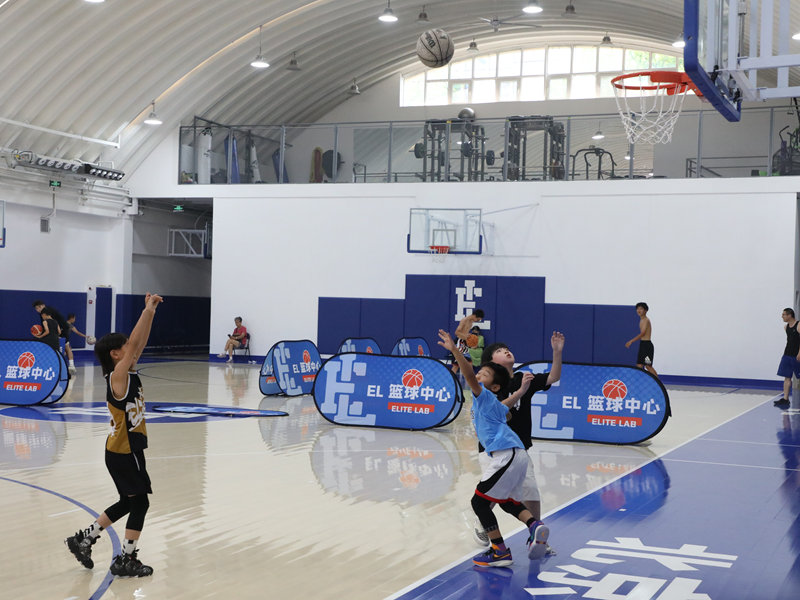
Basketball is perhaps the sport most commonly associated with modular wood flooring. The game demands a surface with excellent ball bounce, consistent friction, and reliable shock absorption. Professional and collegiate basketball facilities almost universally use modular wood floors because they meet FIBA standards and can be configured for multiple courts in a single gymnasium. The ability to quickly change court markings or convert the space for other events is a major advantage for schools and community centers.
Volleyball is another ideal sport for modular wood floors. The surface must provide good shock absorption to protect players' joints during diving and jumping, while also offering the right amount of friction for quick lateral movements. Indoor volleyball courts built on modular systems can be easily reconfigured for other sports when not in use for volleyball.
Badminton and table tennis also perform excellently on modular wood floors, though these sports typically require a slightly different surface finish with lower friction to allow the shuttlecock or ball to slide smoothly. Many modular systems offer interchangeable surface finishes or can be customized for these sports.
Handball is a high-impact sport that demands the highest levels of shock absorption. Modular floors with spring-mounted systems are ideal for handball, meeting the stringent IHF standards for impact reduction and ball bounce.
Multipurpose use is where modular flooring truly shines. A single modular floor system can serve basketball, volleyball, badminton, futsal, gymnastics, dance, and even fitness classes — all in the same space, on the same day. The ability to quickly change court lines and reconfigure the space makes modular floors the only practical option for facilities that need to host multiple sports.
Gymnastics and dance require a different set of performance characteristics — specifically, a surface with controlled slip and high shock absorption. Some modular systems offer specialized panels or surface treatments for these disciplines.
Futsal and indoor soccer can also be played on modular wood floors, though the surface must be carefully calibrated for ball roll and player traction.
The key takeaway is that modular indoor sports wood flooring is not limited to a single sport. Its engineered versatility makes it suitable for virtually any indoor sport, provided the right configuration is selected. For facilities that need to serve multiple sports or multiple users, modular is not just a good option — it is the only option that makes practical sense.
Leave a Reply