

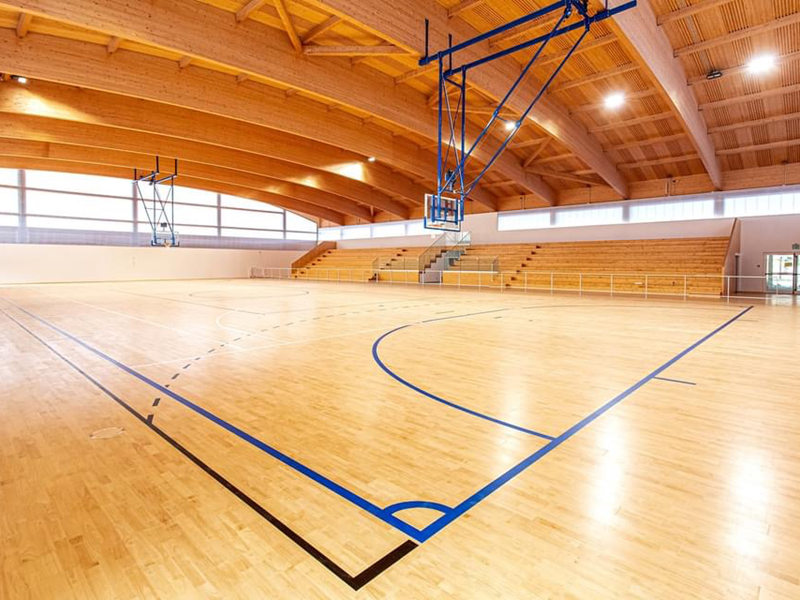
Indoor sports wooden flooring is a specialized type of flooring system designed specifically for athletic activities performed inside buildings. Unlike residential hardwood or commercial laminate, sports wooden flooring is engineered to meet the demanding physical requirements of competitive and recreational sports. It provides athletes with a surface that offers optimal shock absorption, ball rebound, friction control, and energy return. These characteristics are not optional extras — they are fundamental to how the floor performs under the stress of fast-paced movement, sudden direction changes, and repeated impact.
The importance of indoor sports wooden flooring cannot be overstated. In professional and semi-professional settings, the floor is often the single most critical piece of equipment. A basketball player's ability to stop on a dime, a volleyball player's jump height, and a badminton player's footwork all depend heavily on the surface beneath their feet. A poorly designed or maintained floor can lead to inconsistent ball behavior, increased injury risk, and a degraded athletic experience.
The material itself is typically made from hardwoods such as maple, oak, beech, or birch. These species are chosen for their density, grain structure, and ability to withstand repeated loading without splintering or warping. The flooring is usually installed in a floating or fixed system, with multiple layers including a subfloor, elastic pads, and the finished wood surface. Each layer serves a specific function in the overall performance of the system.
Indoor sports wooden flooring also plays a significant role in venue aesthetics. A well-maintained hardwood sports floor has a clean, professional appearance that enhances the atmosphere of any arena, gymnasium, or training facility. It signals quality and seriousness, which is important for facilities that host competitions or attract serious athletes.
Beyond performance and aesthetics, indoor sports wooden flooring has practical advantages. It is durable, with a lifespan that can exceed 20 to 30 years when properly maintained. It is also relatively easy to clean and can be refinished multiple times, making it a cost-effective long-term investment. Compared to synthetic alternatives, wood offers a more natural feel and better environmental credentials when sourced responsibly.
In summary, indoor sports wooden flooring is not just a surface — it is a performance system. It directly influences how athletes move, how the ball behaves, and how safe the playing environment is. Choosing the right flooring system is one of the most important decisions any sports facility manager or architect can make.
Leave a Reply