

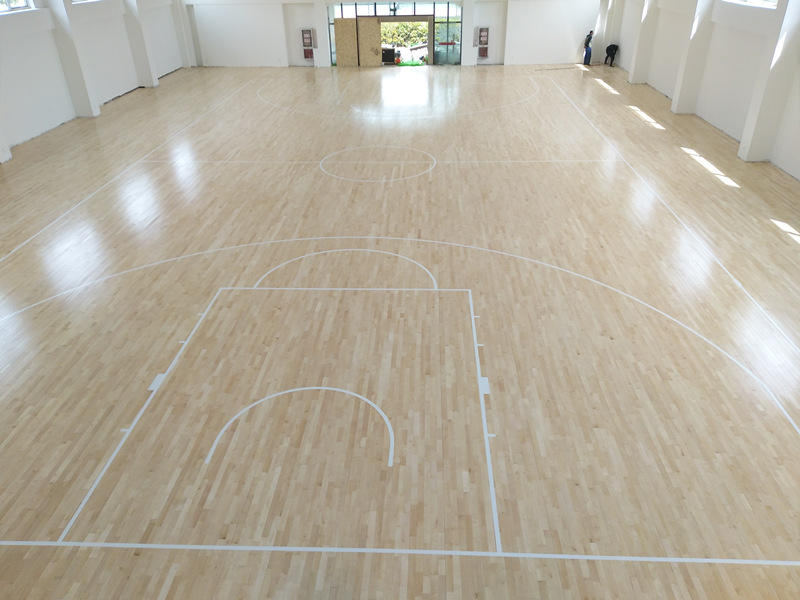
Not all wood is created equal, and this is especially true when it comes to basketball court flooring. The species of wood used for the top layer of the floor has a direct impact on performance, durability, appearance, and cost. Understanding the differences between the most common species can help you make an informed decision when selecting flooring for your court.
Maple is the undisputed champion of basketball court wood. It is used in the vast majority of professional and collegiate arenas around the world. The reason is simple: maple is incredibly hard, with a Janka hardness rating of around 1450. This means it resists dents, scratches, and wear extremely well. Maple also has a very tight, uniform grain pattern, which gives the floor a clean, consistent appearance. The light, creamy color of maple is also ideal for painting court lines, as the markings stand out clearly against the background. There are two main varieties of maple used: hard maple (also known as sugar maple) and soft maple (also known as red maple). Hard maple is the preferred choice for courts because of its superior hardness and density.
Oak is the second most popular choice. It is slightly less hard than maple, with a Janka rating of around 1360 for red oak and 1500 for white oak. Oak has a more pronounced grain pattern, which gives the floor a distinctive, rich look. Some facilities prefer oak for its aesthetic appeal, even though it is marginally less durable than maple. Oak is also more widely available in certain regions, which can make it a more practical choice depending on your location.
Birch is used less frequently but is gaining popularity in some markets. It has a Janka hardness of around 1260, making it softer than both maple and oak. However, birch has a very fine, even grain and a light color similar to maple. It is a good option for facilities that want a maple-like appearance at a lower cost. The trade-off is that birch will not last as long under heavy use and may require more frequent refinishing.
Ash is another species that is occasionally used. It has a Janka rating of around 1320 and a distinctive grain pattern with contrasting light and dark tones. Ash is strong and flexible, which gives it good shock absorption properties. However, it is less common in basketball court applications because its grain can be inconsistent, which may affect the uniformity of the finish.
Beech is sometimes used in European facilities. It is similar to birch in appearance and hardness, with a Janka rating of around 1300. Beech has a very tight grain and takes finishes well, making it a viable option for courts that prioritize appearance.
When choosing a wood species, consider the following factors. First, think about the level of use. High-traffic courts, such as those in schools and community centers, should use the hardest available species, which is hard maple. Second, consider the budget. Maple is typically the most expensive option, while birch and ash can be more affordable. Third, think about aesthetics. If appearance is a priority, oak and ash offer more visual character than maple.
Ultimately, the wood species you choose will define the look, feel, and lifespan of your court. Take the time to research each option, and if possible, visit facilities with different species to see how they perform in person.
Leave a Reply