

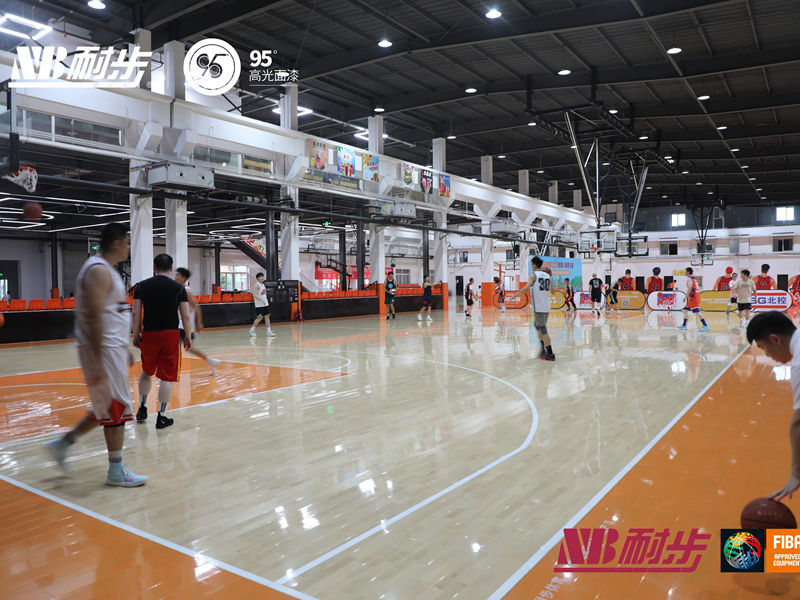
Choosing the right species of wood for your indoor sports flooring is one of the most important decisions you'll make. The species you select affects everything from performance and durability to appearance and cost. In this article, we explore the most popular wood species used for indoor sports flooring, their characteristics, and their best applications.
Maple (Acer Saccharum) — The King of Sports Flooring
Maple is the undisputed champion of indoor sports wooden flooring, used in over 90% of professional basketball courts worldwide, including all NBA arenas.
Characteristics:
- Janka Hardness: 1,450 lbf (very hard)
- Color: Light, creamy blonde to slightly reddish
- Grain: Tight, uniform, and consistent
- Density: Approximately 44 lbs per cubic foot
Why Maple Dominates:
Maple's uniform grain and light color create a clean, professional look. Its high hardness resists dents and scratches from athletic shoes. The consistent ball bounce and predictable traction make it ideal for fast-paced sports like basketball.
Grades of Maple:
- Select Grade: Minimal color variation, no mineral streaks. Used for professional arenas.
- #1 Common Grade: Slight color variation, small knots allowed. Used for school gymnasiums.
- #2 Common Grade: More color variation, larger knots. Used for recreational facilities.
Oak (Quercus) — The European Favorite
Oak is the most popular sports flooring species in Europe, widely used for handball courts, volleyball courts, and multi-purpose halls.
Characteristics:
- Janka Hardness: 1,360 lbf (red oak) / 1,380 lbf (white oak)
- Color: Golden to medium brown
- Grain: Pronounced, with distinctive ray flecks
- Density: Approximately 47 lbs per cubic foot (white oak)
Advantages:
Oak is slightly harder than maple and has excellent wear resistance. Its pronounced grain gives it a distinctive, attractive appearance. It's also more readily available in Europe, reducing shipping costs for European buyers.
Beech (Fagus Sylvatica) — The Budget-Friendly Option
Beech is a popular choice in Europe and Asia for sports flooring, particularly in schools and community centers.
Characteristics:
- Janka Hardness: 1,300 lbf
- Color: Light pinkish-brown to pale yellow
- Grain: Straight, fine, and uniform
- Density: Approximately 44 lbs per cubic foot
Advantages:
Beech offers a good balance of performance and cost. It's easier to steam-bend than maple, making it suitable for curved installations. However, it's slightly softer than maple and may show wear faster under heavy use.
Birch (Betula) — The Northern Alternative
Birch is used primarily in Northern Europe and Russia for sports flooring.
Characteristics:
- Janka Hardness: 1,260 lbf
- Color: Pale yellow to light brown
- Grain: Fine and even
- Density: Approximately 40 lbs per cubic foot
Advantages:
Birch is lighter in color than maple, creating a bright, modern look. It's a good option for facilities that want a lighter aesthetic. However, it's the softest of the common sports flooring species and may require more frequent maintenance.
Ash (Fraxinus) — The Emerging Choice
Ash has been gaining popularity as a sports flooring species, particularly in Europe.
Characteristics:
- Janka Hardness: 1,320 lbf
- Color: Light brown to pale yellow
- Grain: Pronounced, with dramatic figure patterns
- Density: Approximately 45 lbs per cubic foot
Advantages:
Ash offers a unique, dramatic grain pattern that sets it apart from maple. It has excellent shock absorption properties and good elasticity, making it comfortable for athletes.
Bamboo — The Sustainable Alternative
While not a traditional hardwood, strand-woven bamboo has emerged as a sustainable alternative for sports flooring.
Characteristics:
- Janka Hardness: 1,380–1,500 lbf (comparable to maple)
- Color: Honey to amber
- Grain: Linear, with occasional node marks
- Sustainability: Rapidly renewable (3-5 year harvest cycle)
Advantages:
Bamboo is one of the most sustainable flooring options available. It's extremely hard and durable, with performance characteristics similar to maple. However, it can be more expensive and may not meet all international sports federation standards.
How to Choose the Right Species
| Factor | Best Choice |
|---|---|
| Professional basketball | Maple (Select Grade) |
| Multi-purpose European hall | Oak or Beech |
| School gymnasium | Maple (#1 Common) or Beech |
| Budget-conscious project | Beech or Birch |
| Sustainable/green building | Bamboo or FSC-certified Maple |
| Unique aesthetics | Ash or Birch |
Conclusion
The species you choose for your indoor sports wooden flooring should be based on your specific needs, budget, and aesthetic preferences. Maple remains the top choice for most applications, but oak, beech, birch, ash, and bamboo all offer compelling alternatives. Always consult with a flooring professional to ensure your choice meets the performance standards required for your sport.
Leave a Reply