

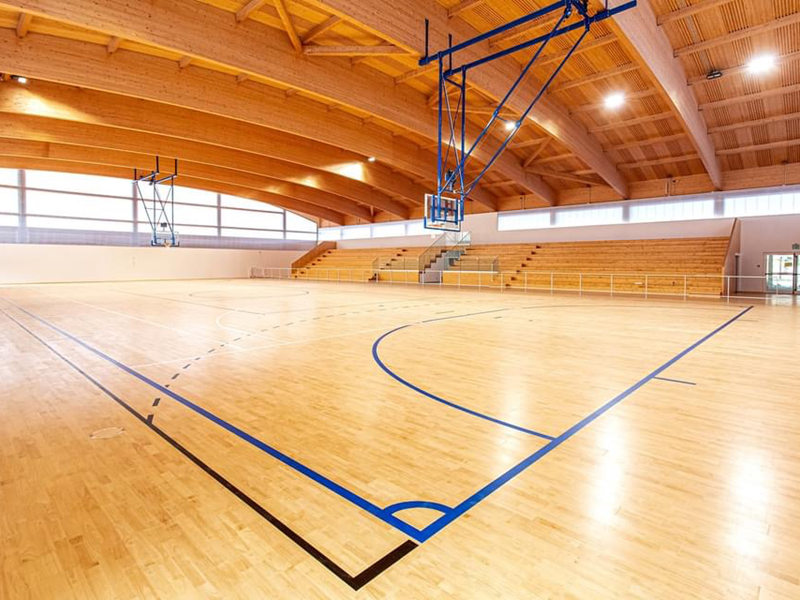
Basketball is one of the most popular sports in the world, played by millions of people across every continent. Whether it's a professional NBA arena, a college gymnasium, or a neighborhood recreation center, the surface on which the game is played makes an enormous difference in performance, safety, and overall enjoyment. Among all the flooring options available — concrete, synthetic tiles, rubber surfaces — wooden flooring remains the gold standard for basketball courts. In this comprehensive guide, we will explore everything you need to know about basketball court wooden flooring, from its history and types to installation, maintenance, cost, and why it continues to dominate the world of sports surfacing.
A Brief History of Basketball Court Flooring
When Dr. James Naismith invented basketball in 1891, the game was played on a wooden gymnasium floor. Since those early days, wood has been the preferred surface for basketball. The first NBA games were played on wooden courts, and even today, every NBA arena uses some form of hardwood flooring. Over the decades, the technology behind basketball court wood flooring has evolved dramatically. What was once a simple arrangement of planks nailed to joists has become a highly engineered, multi-layered system designed to optimize ball bounce, shock absorption, and player safety.
Why Wood Is the Best Choice for Basketball Courts
There are several compelling reasons why wood remains the top choice for basketball courts:
- Ball Bounce Consistency: Wood provides a uniform and predictable ball bounce, which is essential for competitive play. The ball bounces at a consistent height and angle on hardwood, allowing players to develop muscle memory and make precise passes, shots, and dribbles.
- Shock Absorption: Modern basketball court wood flooring systems include cushioning layers that absorb the impact of players' feet, reducing stress on joints and lowering the risk of injuries such as shin splints, knee pain, and ankle sprains.
- Durability: High-quality hardwood flooring can last 20 to 50 years with proper maintenance. It can withstand the heavy foot traffic, sliding, and impact that basketball demands.
- Aesthetics: There is nothing quite like the look and feel of a polished hardwood basketball court. The warm tones, the gleam of the finish, and the classic lines create an atmosphere that inspires both players and spectators.
- Traction: Properly finished wood provides excellent traction for players, allowing them to make quick cuts, stops, and changes of direction without slipping.
Types of Wood Used for Basketball Courts
Not all wood is created equal when it comes to basketball courts. The most commonly used species include:
- Hard Maple (Acer saccharum): This is the most popular choice for professional and collegiate basketball courts. Hard maple is extremely dense, has a fine, uniform grain, and offers excellent durability. It is also light in color, which makes it easy to see the ball and creates a bright, clean appearance.
- White Oak (Quercus alba): White oak is another excellent option, known for its strength and distinctive grain pattern. It is slightly less dense than hard maple but still provides outstanding performance.
- Red Oak (Quercus rubra): Red oak is more affordable than hard maple and white oak. It has a more pronounced grain pattern and a slightly redder tone. While it is not as commonly used in professional settings, it is a popular choice for recreational and school gymnasiums.
- Bamboo: Although technically a grass, bamboo is increasingly being used as an eco-friendly alternative to traditional hardwood. It is extremely hard and durable, with a similar appearance to maple.
- Beech and Birch: These European hardwood species are sometimes used in international basketball settings. They offer good performance but are less common in North America.
The Anatomy of a Basketball Court Wood Flooring System
A modern basketball court wood flooring system is not just a layer of wood nailed to the ground. It is a sophisticated, multi-layered construction designed to meet the specific demands of basketball. The typical system consists of the following layers (from bottom to top):
- Subfloor: This is the base layer, usually made of plywood or OSB (Oriented Strand Board), that is attached to the concrete slab or joist structure.
- Moisture Barrier: A plastic or rubber sheet that prevents moisture from rising up from the concrete and damaging the wood.
- Shock Pads / Cushioning Layer: Foam or rubber pads that are placed between the subfloor and the hardwood to provide shock absorption. This is critical for player safety.
- Hardwood Planks: The actual playing surface, typically 3/4-inch thick hardwood planks (usually maple) that are milled, sanded, and finished to exacting standards.
- Finish: The top layer of polyurethane or other protective coating that provides traction, durability, and the glossy appearance associated with basketball courts.
Installation Process
Installing a basketball court wood floor is a complex process that requires skilled professionals. The general steps include:
- Subfloor Preparation: The concrete slab must be level, dry, and clean. Any imperfections must be corrected before installation begins.
- Moisture Barrier Installation: A moisture barrier is laid over the subfloor to protect the wood from moisture.
- Cushioning Layer Installation: Shock pads are installed according to the manufacturer's specifications. This layer is crucial for meeting DIN (Deutsches Institut für Normung) or FIBA shock absorption standards.
- Plank Layout and Installation: The hardwood planks are laid in a specific pattern (usually a staggered or herringbone layout) and fastened to the subfloor using nails, screws, or a floating system.
- Sanding: After installation, the entire floor is sanded multiple times to create a perfectly smooth, level surface. This is one of the most critical steps in the process.
- Finishing: The floor is coated with a sports-grade polyurethane finish. Multiple coats are applied, with sanding between each coat, to create a durable, high-traction surface.
- Line Painting: The court lines, logos, and markings are painted on the finished floor.
Maintenance Requirements
To keep a basketball court wood floor in top condition, regular maintenance is essential:
- Daily Mopping: The floor should be mopped daily with a damp (not wet) mop to remove dust, dirt, and sweat.
- Weekly Deep Cleaning: A sports-specific cleaner should be used weekly to remove built-up grime and maintain the finish.
- Annual Sanding and Refinishing: The floor should be sanded and refinished at least once a year (or more frequently in high-traffic facilities) to maintain traction and appearance.
- Humidity Control: The gymnasium should be climate-controlled to maintain a relative humidity of 35-50% and a temperature of 60-70°F. Excessive humidity can cause the wood to expand and warp.
Cost Overview
The cost of a basketball court wood flooring system varies widely depending on the quality of materials, the size of the court, and the region. Here is a rough estimate:
| Quality Level | Cost per Sq. Ft. | Total Cost (NBA-size court: ~4,700 sq. ft.) |
|---|---|---|
| Budget (School/Rec) | 8−12 | 37,600−56,400 |
| Mid-Range (College/Club) | 12−18 | 56,400−84,600 |
| Premium (Professional) | 18−30+ | 84,600−141,000+ |
Conclusion
Basketball court wooden flooring is more than just a surface — it is a high-performance system engineered to enhance the game, protect the players, and provide a stunning visual experience. Whether you are building a new facility or renovating an existing one, investing in quality hardwood flooring is an investment in the future of your basketball program. With proper installation and maintenance, a wood basketball court can serve you faithfully for decades.
Leave a Reply