

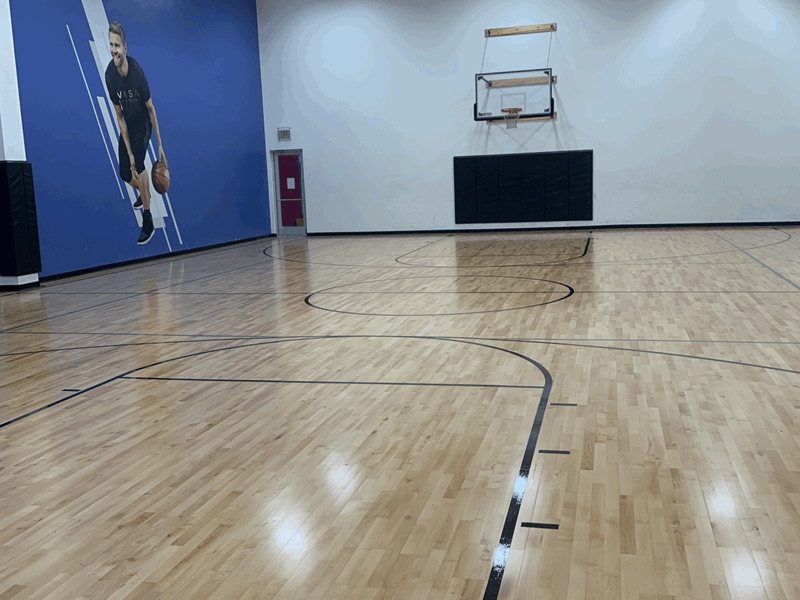
Anyone who has priced an indoor basketball wood floor knows that the sticker price can be startling. A full system, including subfloor preparation, underlayment, hardwood, finish, and line painting, can cost anywhere from a few thousand to tens of thousands of dollars depending on the size of the court and the quality of the materials. But the sticker price is only the beginning. The true cost of indoor basketball wood flooring includes installation, maintenance, refinishing, and the cost of downtime. This article breaks down every dollar.
The material cost is the most visible expense. Hardwood planks for a standard basketball court typically range from moderate to high per square meter, depending on the species, grade, and supplier. The underlayment or shock pad system adds another significant cost. Premium multi-layered systems can cost as much as the hardwood itself. The finish, whether applied on-site or pre-finished, is another line item. And then there is the labor cost for installation, which for a professional crew can be substantial.
For a standard high school gymnasium, the total installed cost typically falls in the range of several thousand to over ten thousand dollars. A college or professional facility with premium specifications can easily exceed fifty thousand dollars coat of finish every two to three years adds another moderate expense.
The hidden cost that many facility managers overlook is downtime. When a court is being refinished, it cannot be used. For a school that relies on its gym for physical education classes, after-school sports, and community events, a week of downtime can disrupt schedules and even require renting alternative facilities. For a professional team, every day of downtime is a day of lost training and preparation. This opportunity cost can be significant, though it is rarely included in budget discussions.
Energy costs are another factor. Climate control is essential for maintaining the floor, and running HVAC systems in a large gymnasium is expensive. A facility that maintains proper humidity and temperature year-round will spend considerably more on energy than one that does not. However, this is an investment in the floor's longevity. Skipping climate control to save money on energy will accelerate wear and lead to more frequent refinishing, which costs more in the long run.
Repair costs should also be factored in. Individual planks can be damaged by heavy equipment, dropped weights, or improper maintenance. Replacing a single plank is not difficult, but it requires matching the wood, sanding, and refinishing to blend with the surrounding surface. If damage is widespread, the cost can add up quickly.
When you add all of these costs together over a 20-year period, the total cost of ownership for an indoor basketball wood floor can be two to three times the initial installation cost. This is not meant to discourage anyone from investing in a quality floor. It is meant to encourage smart planning. should actively protect players, was born.
The 1980s and 1990s saw rapid advances in finish technology. Water-based polyurethane finishes replaced oil-based products, reducing VOC emissions and improving durability. Pre-finished hardwood, where the planks are coated at the factory under controlled conditions, became widely available. This eliminated the variability of on-site finishing and produced a more consistent surface.
The 2000s brought the era of performance engineering. Flooring systems became multi-layered assemblies with precisely calibrated shock pads, sleepers, and hardwood. Testing protocols became more rigorous, and governing bodies like FIBA and the NBA published detailed specifications that every court had to meet. The floor was no longer just a surface. It was a system.
Today, indoor basketball wood flooring is the result of over a century of refinement. Every layer, every material, every specification exists because of lessons learned on the court. The modern floor provides consistent ball bounce, excellent shock absorption, reliable grip, and a beautiful appearance. It protects athletes and enhances the game.
Looking ahead, the next frontier is likely smart flooring, with embedded sensors that measure impact forces, player movement, and surface conditions in real time. While still in early stages, this technology could revolutionize how courts are maintained and how injuries are prevented. But no matter how advanced the technology becomes, the foundation will always be the same: a well-engineered system of subfloor, underlayment, hardwood, and finish. The evolution continues, but the principles remain.
Leave a Reply