

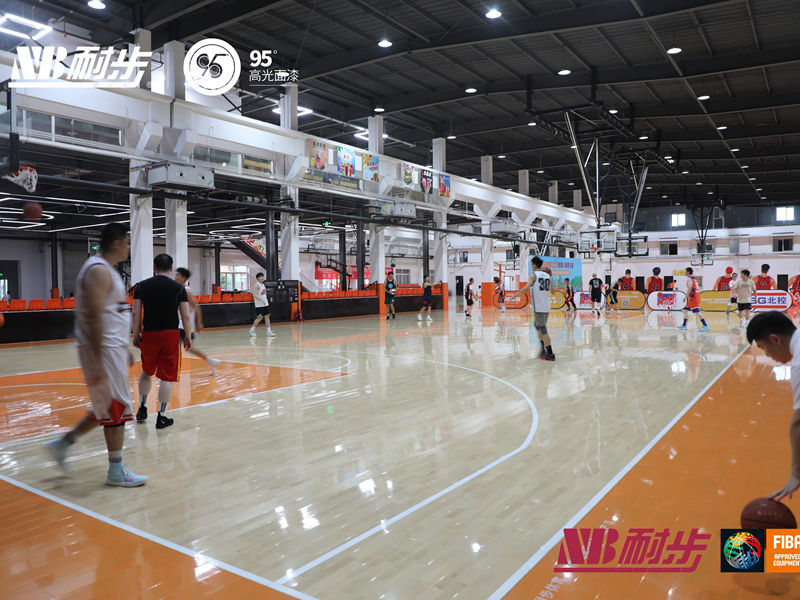
Introduction: Why Shock Absorption Matters
Every time an athlete lands from a jump, pivots sharply, or plants a foot to change direction, forces travel through the body — particularly through the ankles, knees, hips, and spine. The playing surface plays a crucial role in either amplifying or mitigating these forces. This is where shock absorption becomes one of the most important performance characteristics of indoor sports wooden flooring.
Shock absorption is not just a comfort feature — it is a health and performance imperative. Research consistently links hard, non-absorptive surfaces to higher rates of overuse injuries, including stress fractures, tendonitis, and joint degeneration. Conversely, surfaces with appropriate shock absorption can reduce impact forces by 30-50%, significantly lowering injury risk while maintaining the responsiveness athletes need for peak performance.
Understanding Shock Absorption: The Physics
Shock absorption in flooring is measured as the percentage of impact force that the surface absorbs (rather than reflecting back to the athlete). The standard test method (EN 14904 or ASTM F355) involves dropping a standardized mass from a specified height onto the floor and measuring the force with a force plate embedded in the test surface.
The formula is:
Shock Absorption (%) = [(F1 - F2) / F1] × 100
Where:
- F1 = Impact force on a reference surface (typically concrete)
- F2 = Impact force on the test floor surface
A floor that absorbs 50% of the impact force would return half the force to the athlete, compared to 100% on concrete.
Target Values for Different Sports
Different sports have different shock absorption requirements based on the nature of the movements involved:
| Sport | Recommended Shock Absorption | Priority |
|---|---|---|
| Basketball | 35-53% | High (jumping, landing) |
| Volleyball | 35-50% | High (jumping, diving) |
| Handball | 35-50% | Moderate-High |
| Badminton | 20-35% | Moderate (lateral movement) |
| Tennis (indoor) | 30-45% | Moderate |
| Multi-purpose | 35-50% | Moderate |
Note: These values are general guidelines. Specific governing bodies (FIBA, FIVB, IHF) may have additional or more specific requirements.
The Role of the Subfloor System
Here's a critical insight that many people miss: the solid hardwood surface layer itself contributes very little to shock absorption. A 20mm maple surface has a shock absorption value of only about 2-3%. The vast majority of shock absorption comes from the subfloor system — specifically, from resilient materials placed between the subfloor and the structural base.
This is why two floors with identical surface wood can have dramatically different shock absorption values. The difference lies entirely in what's underneath.
Common Shock Absorption Technologies
- Rubber Pads and Mats: Natural or synthetic rubber pads (typically 6-15mm thick) placed under the subfloor panels. Rubber provides excellent energy absorption and is the most traditional approach. Natural rubber offers superior performance but at higher cost. Recycled rubber (often from tires) is a cost-effective alternative with good performance.
- Polyurethane Foam: Closed-cell polyurethane foam pads offer consistent, tunable shock absorption. They are lighter than rubber and easier to install, but may compress over time under heavy loads.
- Polypropylene Honeycomb Structures: These innovative systems use a honeycomb geometry to provide shock absorption through structural deformation rather than material compression. They offer excellent long-term consistency because the geometric structure doesn't degrade like foam.
- Spring Systems: Mechanical spring systems (similar to those used in some running tracks) can provide very high shock absorption values (50%+). However, they add significant height to the floor system and are more commonly used in specialized athletic training facilities.
- Combination Systems: Many modern installations use layered approaches — for example, a rubber base layer combined with a foam top layer — to fine-tune both shock absorption and ball rebound.
The Shock Absorption vs. Ball Rebound Trade-Off
This is the central engineering challenge of sports flooring design. Shock absorption and ball rebound are inversely related: the more energy a floor absorbs (good for joints), the less energy it returns to the ball (bad for gameplay).
Consider a basketball: when it hits the floor, some energy is lost to deformation of the ball, some is lost to the floor surface, and the rest is returned as rebound. If the floor absorbs too much energy, the ball doesn't bounce high enough — players complain that the ball is "dead" or "mushy." If the floor absorbs too little, the impact forces on the player's body are excessive.
The sweet spot for basketball is typically:
- Shock Absorption: 35-53%
- Ball Rebound: 90-96% (relative to concrete)
Achieving both simultaneously requires careful selection and calibration of the subfloor system. High-performance rubber compounds and precisely engineered foam systems can achieve this balance, while cheaper materials often force a compromise.
Vertical Deformation: The Hidden Factor
Vertical deformation (also called deflection) measures how much the floor surface moves downward under a point load. It is measured in millimeters and is critical for both performance and safety.
Excessive vertical deformation (>2.3mm for basketball) creates an unstable playing surface where the ball behaves unpredictably and athletes feel "sunk in." Insufficient deformation (<0.5mm) means the floor is too rigid and transmits excessive shock.
The ideal range for most ball sports is 0.5-2.3mm vertical deformation. This range ensures the floor feels responsive and stable while still providing adequate cushioning.
Real-World Examples
To illustrate the impact of subfloor design, consider these typical configurations:
Configuration A — Economy System:
- 18mm plywood subfloor, nailed to joists
- No shock pad
- Result: ~3% shock absorption, 97% ball rebound
- Verdict: Excellent ball behavior, terrible for joints. Suitable only for light recreational use.
Configuration B — Standard Sports System:
- 22mm maple surface on 18mm plywood
- 10mm recycled rubber pads
- Result: ~45% shock absorption, 93% ball rebound
- Verdict: Excellent all-around performance. The most common configuration for school and community gyms.
Configuration C — Premium Professional System:
- 26mm select-grade maple surface on 24mm birch plywood
- 12mm natural rubber base + 6mm polyurethane foam top layer
- Result: ~50% shock absorption, 95% ball rebound
- Verdict: Ideal for professional and collegiate facilities. Maximum comfort without sacrificing performance.
Testing and Certification
Reputable sports flooring systems should be tested and certified according to recognized standards:
- EN 14904 (European standard for sports flooring)
- DIN 18032-2 (German standard, widely referenced)
- ASTM F355 (American standard for shock absorption)
- FIBA Approved Venue Standards (for basketball)
- FIVB Standards (for volleyball)
When specifying a floor, always request test reports from accredited laboratories. Be wary of manufacturers who claim performance values without third-party verification.
The Athlete's Perspective
What does shock absorption actually feel like? Athletes who have played on both hard and well-cushioned wood floors report significant differences:
- Knee comfort: The most commonly cited benefit. Players on well-cushioned floors report less knee soreness after games and practices.
- Ankle stability: Paradoxically, appropriate cushioning can improve ankle stability by allowing the joint to move through its natural range without being stopped abruptly by a hard surface.
- Fatigue: Players on shock-absorbing floors report less overall fatigue, particularly in the legs, after extended play.
- Confidence: Knowing the floor will protect their joints allows athletes to jump and land more aggressively, potentially improving performance.
Long-Term Performance of Shock Absorption
One concern with resilient underlayment materials is long-term degradation. Foam pads can compress permanently under sustained loads, reducing shock absorption over time. Rubber maintains its properties longer but can harden in cold environments.
Quality systems are designed to maintain at least 80% of their initial shock absorption after 10 years of normal use. Regular testing (every 2-3 years) can verify that the floor continues to meet performance requirements.
Conclusion
Shock absorption is arguably the single most important performance characteristic of indoor sports wooden flooring — more important than appearance, more important than cost. A floor that looks beautiful but transmits excessive force to athletes' bodies is a failed floor, regardless of its aesthetics.
The good news is that modern sports flooring technology can achieve excellent shock absorption (40-50%) while maintaining outstanding ball rebound (93-96%) and surface characteristics. The key is investing in a quality subfloor system with properly engineered resilient materials, and verifying performance through accredited testing.
When specifying indoor sports wooden flooring, always prioritize shock absorption and ball rebound as primary criteria, with aesthetics and cost as secondary considerations. Your athletes' joints will thank you.
Leave a Reply