

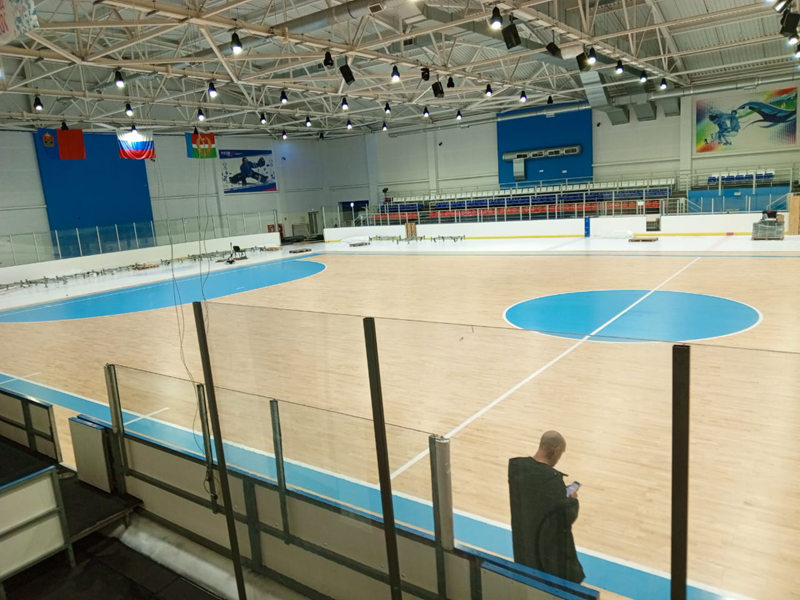
Owning a detachable indoor sports wood floor is one thing. Keeping it in peak condition for years is another. The good news is that maintenance for these systems is dramatically simpler than for fixed floors. The bad news is that many facility managers still make avoidable mistakes that shorten the floor's lifespan. Let us talk about what actually works.
The single most important maintenance task is daily cleaning. After every use, the floor should be swept or dust-mopped to remove dirt, dust, and debris. This sounds basic, but it is the foundation of everything else. Dirt and grit act as abrasives on the wood surface, and over time, they wear down the finish and expose the raw wood to moisture and damage. A ten-minute sweep after each session can add years to the life of your floor.
For deeper cleaning, a damp mop with a pH-neutral cleaner specifically designed for sports floors is the way to go. Never use excessive water, harsh chemicals, or household cleaners. These can strip the finish, damage the wood, or leave a residue that affects ball rebound and surface friction. The cleaner should be applied sparingly, and the floor should be dried promptly after mopping.
One of the great advantages of detachable flooring is that spot repairs are simple. If a panel gets a deep scratch or a dent, you can lift it out, sand it down, refinish it, and put it back. This is not possible with a fixed floor, where a damaged section often means replacing a large area. Keeping a small inventory of spare panels is a smart investment for any facility with a detachable floor.
The shock-absorption layer underneath the panels also needs occasional attention. Over time, foam or rubber underlayment can compress unevenly, especially in high-traffic areas. Most systems allow you to lift individual panels and inspect the underlayment. If a section has compressed beyond acceptable limits, it can be replaced without disturbing the rest of the floor.
Seasonal maintenance is also worth considering. In climates with significant humidity changes, the wood panels will expand and contract slightly. Detachable systems are designed to accommodate this movement, but it helps to ensure that the expansion gaps around the perimeter of the floor are clear and unobstructed. Blocked gaps can cause panels to buckle or lift.
Refinishing the top surface of the hardwood is something that will need to be done periodically, typically every five to eight years depending on usage intensity. Because the panels are detachable, this process is much easier than with a fixed floor. You can remove all the panels, sand and refinish them in a controlled environment, and reinstall them. The floor essentially comes back looking brand new.
Finally, keep a maintenance log. Record every cleaning, every repair, every refinishing. This history is invaluable for tracking the floor's condition over time and for making informed decisions about when to replace panels or underlayment.
Leave a Reply