

When basketball was first invented in the late 19th century, the game was played on all kinds of surfaces that were never designed for the sport. Early courts were set up in church halls, YMCA gyms, and empty armories, with floors made of hard pine planks, rough concrete, or even packed dirt in some smaller communities. Players wore basic canvas sneakers with very little traction, and injuries from slips, falls, and hard impacts were extremely common. Back then, no one was thinking about specialized floor systems; people just cleared a space, hung up two peach baskets, and started playing. But as the sport grew in popularity, it became clear that the surface the game was played on needed serious improvement.
The first major shift toward dedicated indoor basketball court wood floors came in the 1920s and 1930s, when organized leagues began to form across North America. Gym managers started to realize that the right kind of wood surface could make the game safer and more enjoyable for players. They began using harder varieties of wood that could stand up to heavy foot traffic, sanding the surfaces smooth and applying simple sealants to keep the wood protected. These early wood floors were still very basic by modern standards, often nailed directly to the concrete base of the gym with no cushioning layer at all. But even this simple upgrade made a huge difference, reducing splinters, making the ball bounce more consistently, and giving players much better control over their movements.
By the 1950s and 1960s, as basketball became a major professional sport, engineers started to study how wood floors interacted with the human body. They began to experiment with layered systems, adding a network of wooden sleepers between the concrete base and the top wood planks. These sleepers created a small air gap under the floor, which made the surface slightly more flexible, allowed for better air circulation to prevent moisture buildup, and gave the floor a much more forgiving feel underfoot. This was the era when the classic "springy" basketball court floor that many older fans remember first became common. Players loved the way these floors felt, and the improved shock absorption led to a noticeable drop in serious knee and ankle injuries across the league.
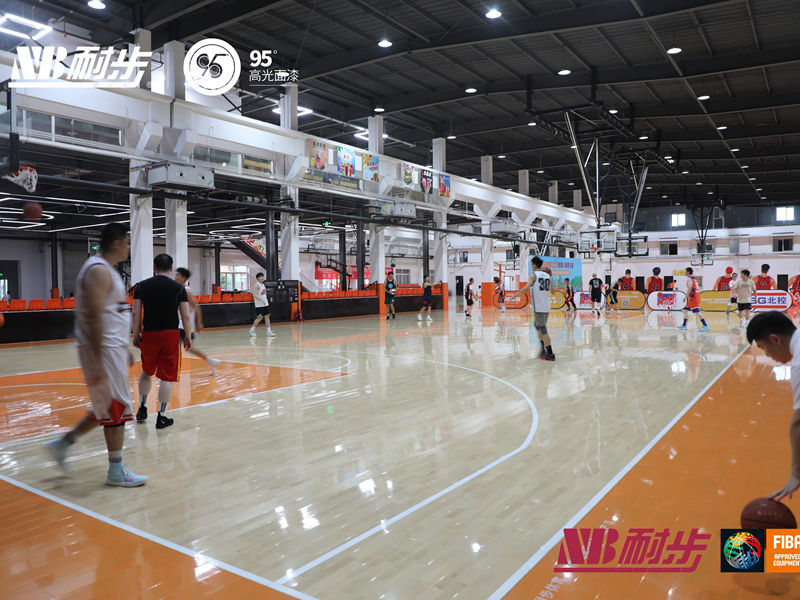
In the last 40 years, the evolution of indoor basketball court wood floors has accelerated dramatically. Modern systems no longer rely just on wooden sleepers; they incorporate specialized rubber pads, layered plywood subfloors, and precision-engineered components that create a perfectly consistent level of shock absorption across the entire court. Today’s wood floors are tested to meet strict international standards for everything from ball bounce consistency to slip resistance. What started as a random, improvised playing surface has turned into a highly specialized piece of sports infrastructure, refined over more than a century of experience to meet the exact needs of one of the most fast-paced, dynamic sports in the world.
Leave a Reply