

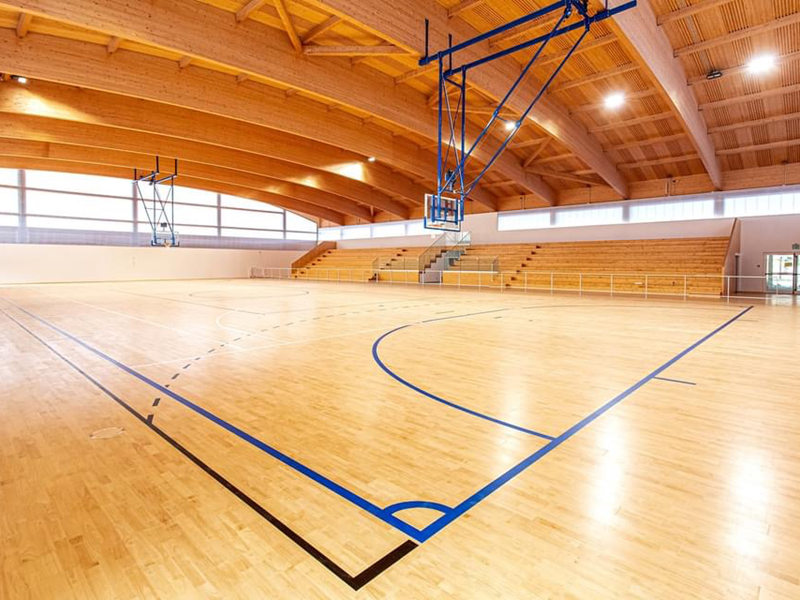
An indoor basketball court wood floor is far more than a flat surface to run on. It is a carefully engineered system that directly shapes every movement a player makes during a game. From the moment a player steps onto the court, the wood floor begins to interact with their feet, absorbing the force of every jump, cushioning the impact of sudden stops, and providing just the right amount of grip to prevent unnecessary slips. Professional players often say that they can feel the difference between a well-installed wood floor and a low-quality alternative within the first few minutes of warm-ups. This immediate sensory feedback is not a trivial detail; it directly influences their confidence, their willingness to push their physical limits, and their overall performance on the court.
The performance benefits of a high-quality wood floor extend far beyond basic comfort. When players make a sharp cut to the left or right, the surface must hold their foot in place without sticking so much that it restricts natural movement. When they leap for a rebound, the substructure beneath the wood planks compresses slightly to absorb the shock, rather than sending that harsh impact straight up through their ankles and knees. Over the course of a full game, these small, consistent cushioning effects add up to significantly less physical fatigue. Players who compete on well-maintained wood floors often report that their legs feel fresher in the fourth quarter, allowing them to maintain their speed, agility, and focus right up until the final buzzer.
This level of performance support does not happen by accident. Every layer of the wood floor system is designed with player biomechanics in mind. The top surface of the wood is treated to a precise level of smoothness, not so polished that it becomes slippery, and not so rough that it wears down the soles of basketball shoes too quickly. The way the planks are laid out, the gaps left between them to accommodate natural expansion, and the way they are secured to the subfloor all work together to create a uniform playing experience across every square foot of the court. There are no unexpected soft spots, no areas that feel harder than others, and no hidden imperfections that could cause a player to trip at a critical moment in a game.
Even for amateur and recreational players, the quality of the wood floor makes a huge difference in how much they enjoy the sport. A good wood floor makes casual pickup games feel more engaging, reduces the soreness that many people feel after a long session of playing, and lowers the risk of minor injuries that can keep people off the court for weeks. For young athletes who are still developing their skills and growing their bodies, playing on a properly designed wood floor helps them build good movement habits without putting unnecessary strain on their developing joints. In every level of the sport, from youth leagues to professional arenas, the indoor basketball court wood floor acts as a silent, reliable partner that supports every player’s best performance.
Leave a Reply