

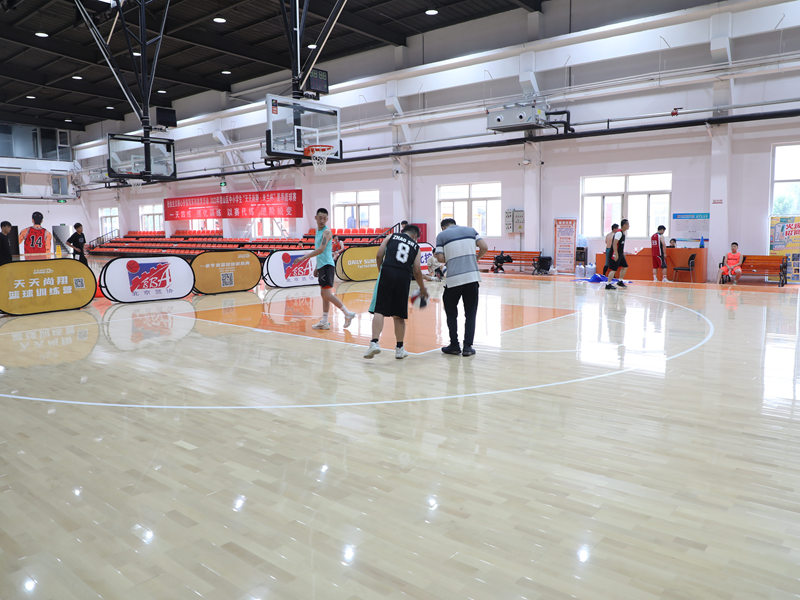
In an era of growing environmental awareness, the sustainability of building materials is a top concern for facility managers, architects, and building owners. Indoor sports wooden flooring, when sourced and installed responsibly, is one of the most environmentally friendly flooring options available. This article examines the environmental credentials of indoor sports wooden flooring.
Wood as a Renewable Resource
The most fundamental environmental advantage of indoor sports wooden flooring is that wood is a renewable resource. Trees can be replanted and harvested on a sustainable cycle, making wood a far more sustainable choice than synthetic materials derived from petroleum. When forests are managed responsibly, the harvest rate can be matched or exceeded by the growth rate, ensuring a perpetual supply.
Certification and Responsible Sourcing
Many manufacturers of indoor sports wooden flooring now offer products certified by the Forest Stewardship Council (FSC) or the Programme for the Endorsement of Forest Certification (PEFC). These certifications guarantee that the wood comes from forests that are managed according to strict environmental, social, and economic standards. Choosing FSC or PEFC certified wood ensures that your flooring does not contribute harder and recover faster.
Traction and Movement Efficiency
The friction between an athlete's shoes and the floor surface is critical for performance. Too little traction and the athlete slips; too much and the athlete cannot change direction quickly. Indoor sports wooden flooring provides an optimal level of traction that allows for explosive starts, quick cuts, and controlled stops. The finish on the floor plays a key role here — a properly maintained matte finish provides consistent grip regardless of humidity or sweat levels.
Ball Bounce Consistency
For ball sports like basketball, volleyball, and handball, the consistency of the ball bounce is directly linked to the quality of the floor. Indoor sports wooden flooring provides a uniform, predictable bounce that allows athletes to develop muscle memory and timing. On inconsistent surfaces, athletes must constantly adjust, which reduces performance and increases the risk of errors.
Energy Return
High-quality indoor sports wooden flooring provides excellent energy return. When an athlete pushes off the floor, the wood flexes slightly and then returns to its original shape, propelling the athlete forward with minimal energy loss. This energy return is what gives wood floors their characteristic "springy" feel, which athletes love and which contributes to faster, more efficient movement.
Psychological Impact
The psychological impact of playing on a premium surface should not be underestimated. Athletes perform better when they feel confident in their environment. The look, feel, and sound of a professional hardwood court create an atmosphere of excellence that motivates athletes to perform at their best. Studies in sports psychology have shown that the quality of the playing environment can measurably affect performance outcomes.
**Temperature Regulation5%.
Surface Friction
The coefficient of friction (COF) of the floor surface should be between 0.4 and 0.6 for most sports. A COF below 0.4 is too slippery, while a COF above 0.6 is too grippy. The COF is measured using a standardized tribometer.
Finish Thickness
The total finish thickness should be between 40 and 60 microns. This includes all coats of polyurethane or UV finish. A finish that is too thin will wear quickly, while a finish that is too thick can become slippery and may not flex with the wood.
Expansion Gaps
An expansion gap of 10mm to 15mm must be left around the perimeter of the floor to allow for natural wood movement. These gaps are covered by baseboards or skirting.
By understanding and specifying these technical parameters, you can ensure that your indoor sports wooden floor meets the highest performance standards.
Leave a Reply