

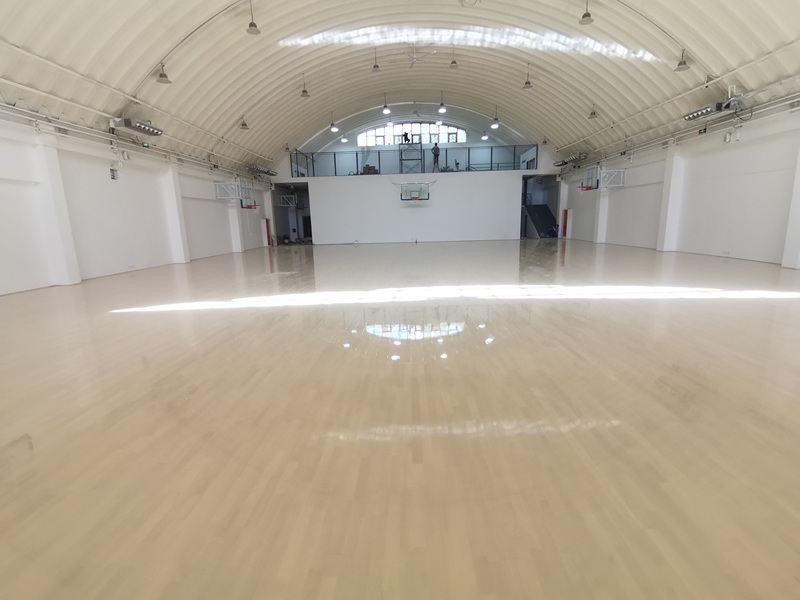
In an era of growing environmental awareness, it is important to consider the ecological footprint of every building material we use. Basketball court wooden flooring is often perceived as an environmentally friendly option because wood is a natural, renewable resource. But is it really as green as it seems? In this article, we will examine the environmental impact of basketball court wooden flooring from production to disposal, and explore what the industry is doing to become more sustainable.
Wood as a Renewable Resource
The most significant environmental advantage of wooden flooring is that wood is a renewable resource. Unlike concrete, steel, or synthetic materials, wood comes from trees that can be replanted and regrown. When harvested from sustainably managed forests, the environmental impact of wood production is relatively low.
The Forest Stewardship Council (FSC) and the Sustainable Forestry Initiative (SFI) are two organizations that certify wood products from responsibly managed forests. These certifications ensure that the wood comes from forests where harvesting rates do not exceed regrowth rates, biodiversity is protected, and the rights of local communities are respected.
Many basketball court flooring manufacturers now offer FSC-certified hard maple and red oak. Choosing certified wood is one of the easiest ways to ensure that your court is environmentally responsible.
The Carbon Footprint of Production
While wood is renewable, the production process still has a carbon footprint. Trees must be harvested, transported, milled into planks, dried, and finished. Each of these steps consumes energy and produces emissions.
The drying process is particularly energy-intensive. Freshly cut wood contains a lot of moisture and must be kiln-dried to a moisture content of 6 to 8 percent before it can be used for flooring. This process can take several weeks and requires significant amounts of energy, often from natural gas or electricity.
However, when compared to the production of synthetic flooring materials, the carbon footprint of wooden flooring is generally lower. Synthetic surfaces are made from petroleum-based products, and their production involves energy-intensive chemical processes that release significant greenhouse gases.
The Finish and Chemicals
The finish applied to a basketball court floor can have environmental implications. Traditional polyurethane finishes are made from petroleum-based chemicals and can release volatile organic compounds (VOCs) into the air. VOCs contribute to indoor air pollution and can cause health problems for players and facility staff.
Fortunately, the industry has moved toward more eco-friendly finishes. Water-based polyurethane finishes are now the standard for most basketball court applications. They contain significantly fewer VOCs than traditional finishes and are much safer for indoor air quality.
Some manufacturers are also exploring bio-based finishes made from plant oils and other natural ingredients. These finishes offer excellent performance with an even lower environmental impact.
Longevity and Waste Reduction
One of the best environmental arguments for wooden flooring is its longevity. A quality hardwood basketball court can last for 30 to 50 years or more with proper maintenance. This means fewer replacements and less waste over time.
When a wooden court does reach the end of its life, the wood can often be repurposed or recycled. Old planks can be used for furniture, decorative wall panels, or other projects. The wood can also be chipped and used as mulch or biomass fuel.
In contrast, synthetic basketball court surfaces typically need to be replaced every 5 to 10 years, and the old material often ends up in a landfill. The environmental cost of this constant replacement is significant.
Recycled and Reclaimed Wood
An emerging trend in basketball court flooring is the use of recycled or reclaimed wood. Reclaimed wood comes from old buildings, barns, or other structures that are being demolished. By using reclaimed wood, the demand for new timber is reduced, and the environmental impact of production is minimized.
Some manufacturers are also using recycled wood fibers in composite flooring products. These products combine recycled wood with plastics or resins to create a durable, eco-friendly surface.
The Bottom Line
When all factors are considered, wooden basketball court flooring is one of the most environmentally responsible choices available. It is made from a renewable resource, has a lower carbon footprint than synthetic alternatives, can be finished with low-VOC products, and lasts for decades with minimal waste.
By choosing FSC-certified wood, water-based finishes, and working with environmentally conscious manufacturers, you can build a basketball court that is not only great for the game but also great for the planet.
Leave a Reply