

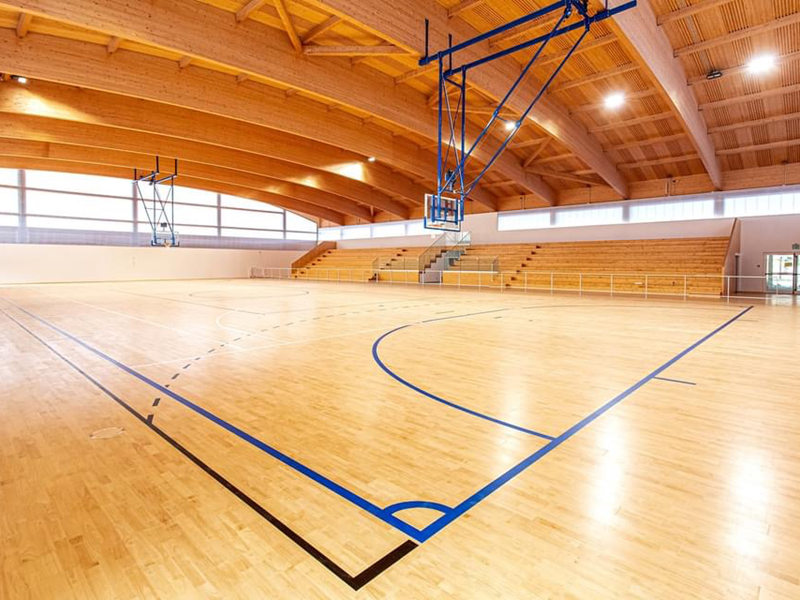
When it comes to building or renovating an indoor basketball court, the choice of flooring is one of the most critical decisions you will ever make. Among the many options available today, interlocking wooden flooring has emerged as a leading solution for facilities of all sizes. This comprehensive guide walks you through everything you need to know about this flooring system, from its basic construction to its long-term performance, so you can make an informed decision for your court.
Interlocking indoor basketball court wooden flooring refers to a modular system in which individual floor panels are designed to connect with one another without the need for glue, nails, or permanent adhesives. Each panel typically features a tongue-and-groove or click-lock mechanism on all four edges, allowing them to snap together seamlessly. The top surface of each panel is made from real hardwood or high-quality engineered wood, while the underside is constructed from materials like polypropylene or rubber to provide shock absorption and structural support.
The appeal of this system lies in its simplicity. Unlike traditional solid wood flooring, which requires professional installation, subfloor preparation, and lengthy curing times, interlocking panels can be laid by a competent DIY enthusiast or a small crew in a fraction of the time. This dramatically reduces labor costs and allows the court to be ready for use much sooner.
One of the most important aspects of any basketball court floor is its ability to absorb impact. When players jump, land, and change direction, enormous forces are transmitted through their bodies and into the floor. A floor that is too hard can lead to joint injuries, while a floor that is too soft can compromise ball bounce and player performance. Interlocking wooden flooring systems are specifically engineered to strike a balance. The wood surface provides the firm, responsive feel that players expect, while the interlocking base layer incorporates cushioning materials that reduce the stress on knees, ankles, and lower backs.
Another significant advantage is portability. Because the panels are not permanently attached to the subfloor, the entire court can be disassembled and relocated if needed. This makes interlocking flooring ideal for schools, community centers, and multi-purpose gyms where the space may need to serve different functions at different times. You can lay the basketball court on Monday and remove it by Friday to make room for a volleyball tournament.
Durability is another hallmark of this flooring type. The hardwood surface is finished with multiple layers of UV-resistant coating that protects against scuffs, scratches, and moisture damage. Even under heavy daily use, a well-maintained interlocking wooden floor can last for many years without showing significant wear. The modular design also means that if a single panel becomes damaged, it can be replaced individually without disturbing the rest of the court.
In terms of aesthetics, interlocking wooden flooring delivers a premium look that is virtually indistinguishable from traditional hardwood. The wood grain patterns, color variations, and overall warmth of real hardwood are all preserved, giving the court a professional appearance that enhances the playing experience and the facility's overall image.
Whether you are a school administrator looking to upgrade your gym, a sports facility manager planning a new construction, or a homeowner dreaming of a private court, interlocking indoor basketball court wooden flooring offers a practical, attractive, and high-performing solution that checks every box.
Leave a Reply