

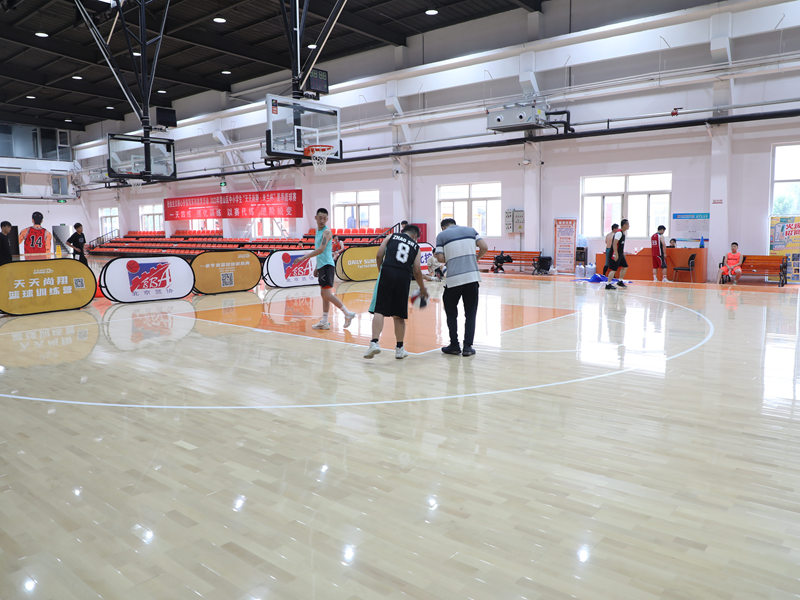
The unique acoustic experience of playing on indoor basketball court wood flooring is a subtle but beloved part of the sport that most players do not even consciously notice, until they play on a different type of court. The sound of a basketball dribbling on a well-maintained wood floor has a warm, rich tone, rather than the sharp, high-pitched "ping" that you get when a ball bounces on a hard synthetic surface. This soft, resonant sound lets players feel the connection between their hand, the ball, and the court, making it easier to control the power and speed of their dribble. Many experienced players say that they can tell exactly how fast their dribble is, just by listening to the sound the ball makes when it hits the wood, creating a natural rhythm that helps them get into the flow of the game.
The sound of basketball shoes making contact with the wood floor is another iconic part of the indoor basketball experience. The soft, consistent squeak that happens when a player makes a sharp cut or stops suddenly is not a sign that the floor is dirty or slippery, but a sign that the friction level is perfectly calibrated. That sound is a signal that the shoe is gripping the surface exactly as it should, and generations of basketball players associate that familiar squeak with the feeling of being on a proper, high-quality court. On synthetic floors, the sound of shoes sliding is often harsh and scratchy, or completely silent, which breaks that familiar connection that players have with the game. Even the sound of players’ footsteps running across the court on a wood floor is soft and steady, rather than the loud, heavy thud that echoes across a hard concrete or rubber surface.
The natural sound-dampening properties of wood also make the entire venue feel far more comfortable for everyone inside. In a large, crowded gym during a big game, the wood floor absorbs a large portion of the sound that would otherwise bounce off the walls and ceiling, creating a balanced acoustic environment where players can hear their teammates calling for passes, and coaches can communicate clearly from the sideline. On a hard, non-wood floor, the echo can be so loud that players have to yell at the top of their voices just to be heard by someone standing a few feet away, creating a chaotic, tiring environment for players and spectators alike. The warm, balanced acoustics of a wood basketball court make every game feel more intimate, more connected, and more enjoyable for everyone who steps inside the venue.
Leave a Reply