

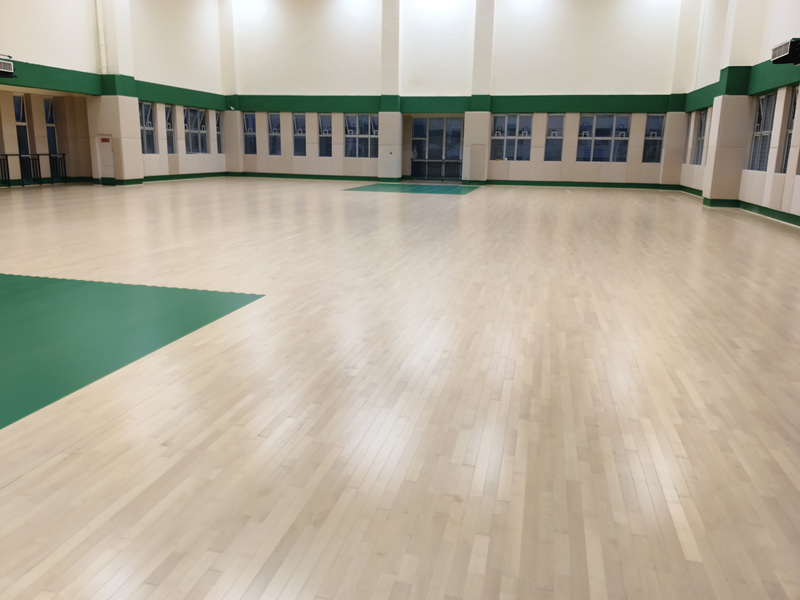
Indoor basketball court wood flooring is designed to adapt to a wide range of different climate conditions, as long as it is properly installed and maintained, making it a suitable choice for venues in almost every part of the world. In regions with very humid, hot summers, the wood floor system is engineered to handle the extra moisture in the air without warping or buckling. The small, controlled expansion gaps that are built into the installation around the edges of the court give every plank enough space to swell very slightly when the humidity rises, so the pressure does not build up and cause the floor to lift up in the middle. The hidden ventilation system between the layers of the floor also lets any excess moisture that gets near the wood circulate away, preventing it from being trapped against the planks.
In regions with very cold, dry winters, the wood floor handles the low humidity levels equally well. The carefully controlled drying process that the wood goes through before installation ensures that when the air inside the venue gets very dry during the heating season, the planks shrink in a slow, even, predictable way. The small gaps that open up between the planks in the dry season are narrow, uniform, and completely normal, and they will close back up completely when the humidity rises again in the spring. These seasonal gaps are never large enough to create a tripping hazard, and they do not affect the performance of the playing surface at all. Unlike some synthetic flooring materials that can become brittle and crack when the temperature drops, wood remains flexible and resilient even at cool indoor temperatures, retaining all of its natural shock absorption properties.
Venues in regions with extreme seasonal changes in humidity and temperature only need to take one simple extra step to keep their wood floor in perfect condition: maintain a consistent indoor environment as much as possible. They use simple humidifiers during the dry winter months to keep the relative humidity inside the venue at a steady level, and dehumidifiers in the summer to pull excess moisture out of the air. These small, low-cost adjustments eliminate the extreme swings in humidity that would otherwise force the wood to expand and shrink more than it needs to. With this simple care, a wood basketball floor can adapt perfectly to even the most extreme local climate, delivering consistent, safe performance for decades without any major issues.
Leave a Reply