

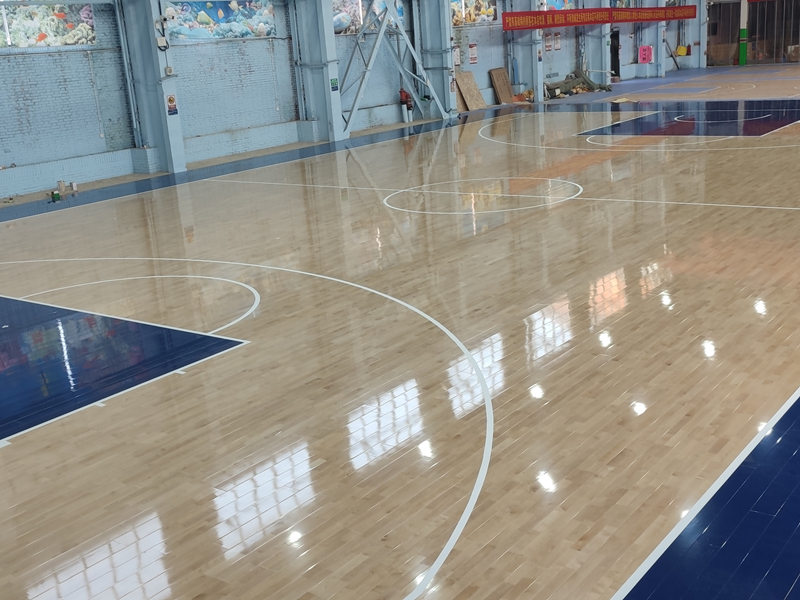
When planning a new athletic facility or renovating an existing one, the flooring decision is one of the biggest. Sports wood flooring is the most popular choice for serious athletic use, but it is not the only option. Understanding how it compares to alternatives helps you make a decision based on facts, not assumptions.
The most common alternative is synthetic sports flooring, such as PVC or rubber rolls. These are cheaper upfront and require almost no maintenance. They are also uniform in appearance and easy to install. However, they do not absorb impact as well as wood. The ball bounce is different, the sound is different, and the feel under the feet is different. For professional-level sports, synthetic floors are generally considered inferior. They are better suited for recreational use, multi-purpose rooms, and facilities with very high traffic where durability is the only priority.
Concrete floors with an epoxy coating are the cheapest option of all. They are extremely durable and easy to clean. But they offer zero shock absorption, which means every landing sends full impact force into the athlete's joints. They are also very slippery when wet and very loud under shoes. Concrete floors are fine for warehouses and parking garages, but they are a poor choice for any space where people are running, jumping, or playing sports.
Carpet tiles are sometimes used in training facilities and gyms where the primary activity is not ball sports. They are quiet, comfortable, and inexpensive. But they trap moisture, are difficult to clean, and do not provide any meaningful shock absorption. They also wear out quickly under heavy foot traffic.
Tile floors, whether ceramic or porcelain, are hard, easy to clean, and visually appealing. But like concrete, they offer no shock absorption. They are also cold underfoot and can be slippery. Tile is occasionally used in gymnasiums for non-court areas, but never for the main playing surface.
Sports wood flooring wins on performance. It provides the best combination of shock absorption, ball bounce, friction, sound, and appearance. It is more expensive than synthetics or concrete, but it is also the only option that meets the standards required for competitive sports. The real question is not whether wood is better. It is whether your facility needs performance-grade flooring or can get by with something cheaper.
Leave a Reply