

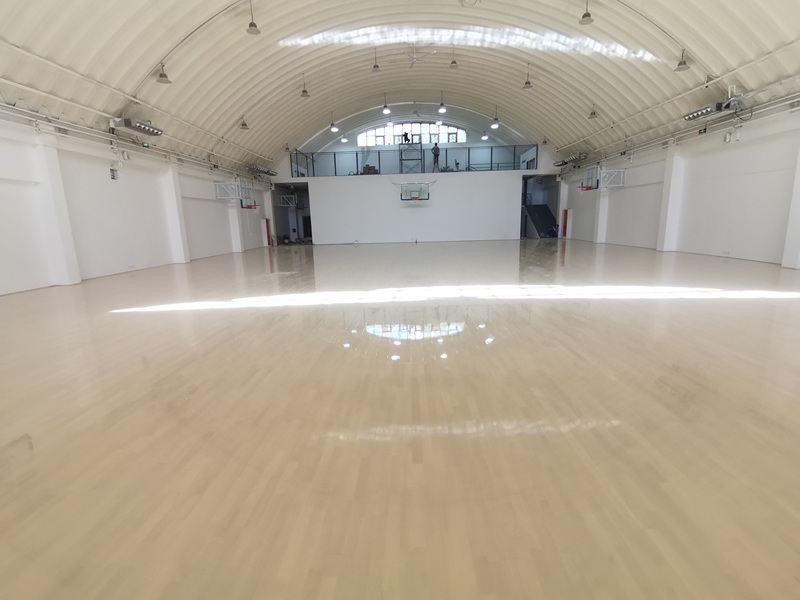
Shock absorption is one of the most important performance characteristics of any indoor basketball court floor. It directly affects player safety, comfort, and longevity of athletic careers. In demountable sports wood flooring systems, shock absorption is achieved through a dedicated cushioning layer that sits between the playing surface and the subfloor. Understanding how this technology works helps you make a better purchasing decision.
The human body absorbs impact forces through the muscles, tendons, and joints. When a player lands from a jump, the impact force can be several times their body weight. Without adequate shock absorption, this force is transmitted directly through the legs and into the joints, particularly the knees and ankles. Over time, this repetitive impact can lead to stress fractures, tendonitis, and other overuse injuries.
A good sports wood floor should absorb at least 35 percent of the impact force, with many systems achieving 40 to 50 percent absorption. This is measured using a standardized test device that simulates the impact of an athlete's heel strike. The device drops a weighted impactor onto the floor, and sensors measure the force before and after it passes through the floor. The difference is the shock absorption percentage.
In demountable systems, the shock absorption layer can take several forms. The most common is a foam pad system, where polyurethane or polyethylene foam pads are placed in a grid pattern under the structural layer. These pads come in various densities and thicknesses, allowing the system to be tuned for different performance levels. Thicker, softer pads provide more shock absorption but can reduce ball bounce. Thinner, firmer pads provide less absorption but better ball response.
Another option is a rubber mat system, where recycled rubber mats are used instead of foam. Rubber provides excellent shock absorption and is very durable, but it is heavier and more expensive than foam. Some high-end systems use a combination of foam and rubber to get the best of both worlds.
The most advanced demountable systems use spring-loaded or elastomeric connector systems. In these designs, the demountable connectors themselves incorporate a spring or elastomeric element that provides shock absorption. This approach eliminates the need for a separate cushioning layer, reducing the overall thickness of the floor while still delivering excellent impact protection.
The key to good shock absorption in a demountable system is uniformity. Every square meter of the court must provide the same level of cushioning. If one area is firmer than another, players will feel the difference, and it can lead to uneven loading and injury. This is why the installation process is so critical. The foam pads or rubber mats must be laid with no gaps, and the panels must be leveled precisely.
It is also worth noting that shock absorption is not the only factor in player safety. Surface friction, floor flatness, and the quality of the playing surface all play a role. A floor with excellent shock absorption but poor friction is still dangerous because players will slip. The best demountable systems balance all of these factors to create a truly safe playing environment.
Leave a Reply