

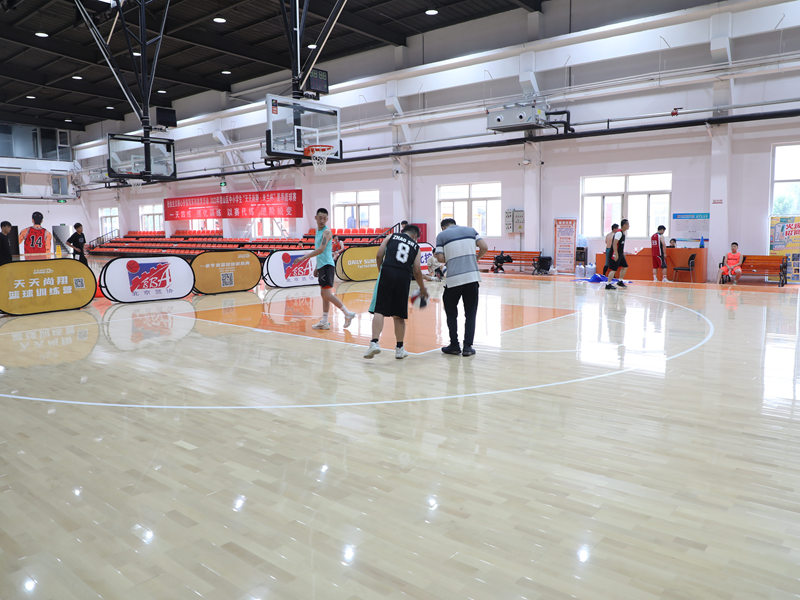
Shock absorption is one of the most important performance characteristics of any indoor sports floor, and it is an area where wooden flooring truly shines above all other options. The ability of a floor to absorb the impact of an athlete's foot strike can have a profound and far-reaching effect on athletic performance, injury prevention, recovery time, and long-term joint health. In this article, we will take a deep and comprehensive dive into the science of shock absorption in sports wooden flooring and explore in detail how it impacts every aspect of athletic performance.
Shock absorption is defined as the percentage of impact force that a floor absorbs rather than returns to the athlete's body. For example, if a floor has a shock absorption rating of 53 percent, it means that 53 percent of the impact force generated when an athlete's foot strikes the floor is absorbed by the floor system, and only 47 percent is returned to the athlete's body. The higher the shock absorption percentage, the more protective the floor is for the athlete's joints, muscles, tendons, and bones. This is a fundamental principle that underlies the entire design of professional sports wooden floors.
The international standard for shock absorption in sports flooring, as established by the European Committee for Standardization under EN 14904, is a minimum of 53 percent. This standard is not arbitrary; it is based on extensive scientific research into the relationship between floor performance and injury rates. Studies conducted over decades have shown that floors with shock absorption below 53 percent are associated with significantly higher rates of joint injuries, particularly in the knees, ankles, and hips. The 53 percent threshold represents the minimum level of protection that is considered acceptable for professional and competitive sports.
The shock absorption of a wooden sports floor is determined by several interconnected factors. The first is the thickness of the floor panels. Thicker floors, typically in the range of 20 to 22 millimeters for professional installations, generally provide better shock absorption because there is more material to absorb and distribute the impact force. The second factor is the type of wood used. Hardwood species like maple and oak are denser and more resilient than softer woods, which contributes to better shock absorption and energy return. The third factor is the construction method, whether solid wood, engineered wood, or finger-jointed panels. The fourth and perhaps most critical factor is the shock absorption system installed between the subfloor and the wooden panels.
The shock absorption system is the heart of the floor's protective capabilities. There are several types of systems available, each with its own advantages and trade-offs. Rubber pads are the most common and provide consistent, reliable shock absorption across a wide range of temperatures and conditions. Foam pads are lighter and less expensive but may compress over time, reducing their effectiveness and requiring more frequent replacement. Spring-loaded systems offer the best shock absorption performance but are the most expensive and complex to install, making them more suitable for elite professional facilities. The choice of system depends on the specific performance requirements of the facility and the sport that will be played on it.
The impact of shock absorption on athletic performance is multifaceted and extends far beyond simple injury prevention. First, better shock absorption significantly reduces the fatigue that athletes experience during training and competition. When less impact force is returned to the body, the muscles and joints do not have to work as hard to absorb the shock with each step, jump, and landing. This means that athletes can maintain their performance level for longer periods without experiencing the kind of muscular fatigue that leads to poor form, slower reaction times, and increased injury risk. This is particularly important in sports that involve repeated jumping and landing, such as basketball, volleyball, and handball, where athletes may land hundreds of times during a single game or practice session.
Second, better shock absorption allows for more explosive and powerful movements. When an athlete lands from a jump, a floor with good shock absorption absorbs some of the impact, which means that the muscles do not have to decelerate the body as forcefully. This allows the athlete to rebound more quickly and with more power, which translates directly to faster sprint times, higher vertical jumps, and quicker direction changes. Studies have shown that athletes can jump an average of two to three centimeters higher on a properly installed wooden floor with optimal shock absorption compared to a hard, unyielding surface.
Third, and perhaps most importantly, better shock absorption dramatically reduces the risk of injury. Joint injuries are among the most common and costly types of injuries in indoor sports, and they are often caused by the cumulative effect of repetitive impact forces on the joints over time. A floor with good shock absorption reduces the cumulative impact on the joints with every step, lowering the risk of stress fractures, tendonitis, shin splints, and other overuse injuries. This is especially critical for young athletes whose bones, joints, and growth plates are still developing and are far more vulnerable to the damaging effects of repetitive impact.
The relationship between shock absorption and ball rebound is also worth noting in detail. A floor with good shock absorption tends to have better ball rebound because the energy from the ball's impact is efficiently returned rather than absorbed. This creates a more consistent and predictable playing surface, which is essential for sports like basketball and handball where players must be able to anticipate the ball's behavior at all times. A floor that absorbs too much energy will produce a dead, sluggish ball bounce, while a floor that absorbs too little will produce an excessively hard bounce that is difficult to control. The ideal balance is achieved through careful engineering of the shock absorption system.
It is important to note that there is a delicate balance to be struck when it comes to shock absorption. Too much shock absorption can actually be detrimental to performance, as it can make the floor feel "dead" or "mushy" and reduce the energy return that athletes need for explosive movements. The ideal shock absorption level is one that provides adequate protection for the joints without compromising the responsive, energetic feel that athletes need to perform at their best. This is precisely why the 53 percent minimum standard exists: it represents the sweet spot between protection and performance.
In conclusion, shock absorption is a critical and non-negotiable performance characteristic of indoor sports wooden flooring that has a direct, measurable, and profound impact on athletic performance, injury prevention, recovery time, and long-term musculoskeletal health. By investing in a floor with the right shock absorption system, properly installed and maintained to meet or exceed the 53 percent standard, facility owners can provide their athletes with a safer, more comfortable, more responsive, and more effective playing surface that supports peak performance at every level.
Leave a Reply