

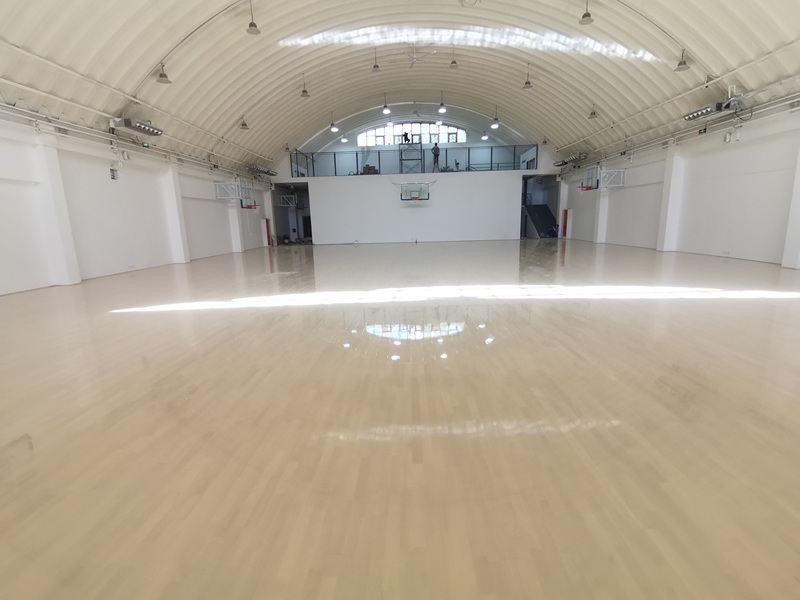
Shock absorption is one of the most critical performance characteristics of indoor sports wooden flooring, and yet it is one of the least understood by the general public. Most people think of a sports floor in terms of how the ball bounces or how the surface looks, but the real magic of a sports wood floor is what happens beneath the surface — specifically, how it absorbs and manages the impact forces generated by athletic movements.
When an athlete lands from a jump, the force exerted on the floor can be three to five times their body weight. For a 80-kilogram basketball player dunking the ball, that means the floor must absorb a force of 240 to 400 kilograms in a fraction of a second. If the floor does not absorb this force effectively, it is transmitted back through the athlete's legs, knees, hips, and spine, increasing the risk of acute injuries like ankle sprains and chronic injuries like stress fractures and joint degeneration.
The international sports federations have recognized the importance of shock absorption and have established strict standards. For basketball, the European standard (EN 14904) specifies a target vertical deformation of 2.3 to 5.3 millimeters. This means that when a standardized force is applied to the floor, the surface should deflect (sink) by 2.3 to 5.3 millimeters. This deflection is what absorbs the energy of the impact, protecting the athlete's body.
The shock absorption in indoor sports wooden flooring is achieved primarily through the elastic layer, which is sandwiched between the hardwood surface and the plywood sub-floor. The material and thickness of this layer determine the level of shock absorption. Natural rubber provides excellent shock absorption but can be affected by temperature changes. Synthetic polyurethane foam offers more consistent performance across a wider range of temperatures but may not last as long as natural rubber.
It is important to note that more shock absorption is not always better. If the floor is too soft, it can feel "mushy" and reduce the responsiveness of the surface, making it harder for athletes to push off and change direction quickly. The key is to find the right balance — enough shock absorption to protect the athletes, but not so much that it compromises performance.
Impact protection is closely related to shock absorption but refers specifically to the floor's ability to reduce the peak force transmitted to the athlete's body. A floor with good impact protection will not only deflect under load but will also slow the rate at which the force is applied, spreading the impact over a longer period of time. This is what makes a sports wood floor feel "softer" than a concrete floor, even though the surface itself is hard.
The thickness of the hardwood surface also plays a role in shock absorption. Thicker hardwood surfaces tend to provide slightly better shock absorption because they have more mass to absorb and distribute the impact forces. This is one reason why professional basketball courts use hardwood surfaces that are at least 20 millimeters thick.
For facility managers and coaches, understanding shock absorption is essential for making informed decisions about flooring. A floor that meets the minimum shock absorption requirements may be adequate for recreational play, but competitive athletes need a floor that provides optimal impact protection to minimize the risk of injury and maximize performance.
In summary, shock absorption and impact protection are the invisible heroes of indoor sports wooden flooring. They work silently beneath every bounce, every landing, and every sprint, protecting athletes from injury and enabling them to perform at their best. When evaluating a sports wood floor, always ask about the shock absorption specifications and ensure they meet the standards for your sport.
Leave a Reply