

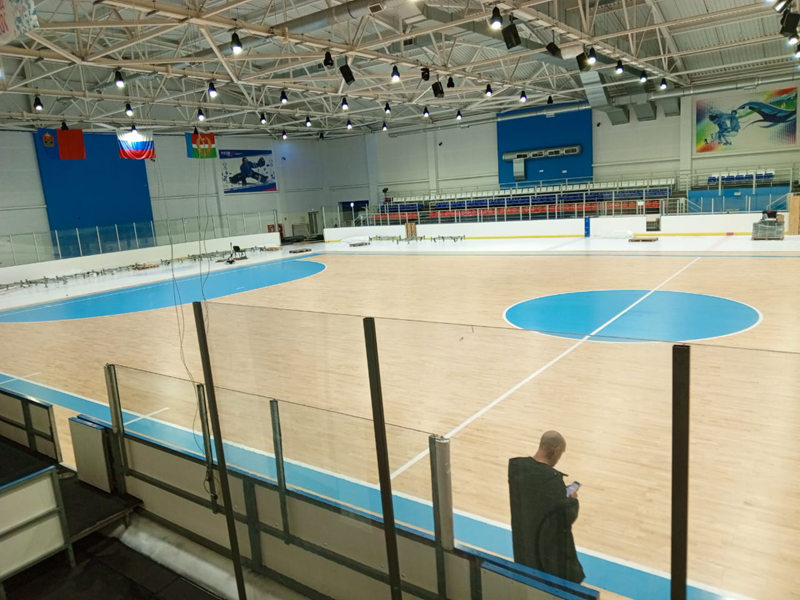
Even though portable indoor basketball court wood flooring is designed to be moved and reconfigured, it still needs to meet the exact same strict safety performance standards that apply to permanent professional basketball wood courts. The most critical safety metric is shock absorption, which measures how much the flooring reduces the impact force that travels up through a player’s legs when they land from a jump. High quality portable wood flooring is engineered to absorb more than half of the impact force from a landing, drastically reducing the strain on knee joints, ankle joints and lower back muscles that builds up during hours of intense play. This level of shock absorption is non-negotiable, because it prevents the overuse injuries that are extremely common among frequent basketball players who play on hard, unforgiving surfaces like bare concrete.
Another key safety standard is consistent ball bounce across every inch of the portable court. The performance requirements state that the bounce height of a basketball dropped from a set height on the wood floor must be at least 90 percent of the bounce height of the same ball dropped on a solid concrete surface. This consistency ensures that players do not encounter unexpected dead spots on the court where the ball bounces lower than they anticipate, which could cause them to miss a dribble, misjudge a pass or lose their balance during a fast break. Every individual wood panel in a portable system is manufactured to the exact same density and stiffness, so there are no weak points or uneven areas that break this consistent bounce across the full playing surface.
The surface friction of portable indoor basketball court wood flooring is also strictly regulated to fall within a very specific range. If the surface is too slippery, players will lose their footing when making sharp cuts or sudden stops, leading to falls and sprained ankles. If the surface is too rough and high friction, players will struggle to slide their feet naturally during quick movement, putting extra strain on their knee ligaments when they try to pivot. The factory applied finish on high quality portable wood flooring is calibrated to hit this perfect middle ground, creating just the right amount of grip to keep players stable, without adding unnecessary drag that disrupts their natural movement patterns. This finish is also designed to resist scuff marks from basketball shoes, so the friction level stays consistent even after hundreds of hours of heavy play.
Structural stability is another critical safety factor that portable wood flooring must meet. Even when panels are repeatedly locked and unlocked during assembly and disassembly, the interlocking system must stay completely secure, so no panels shift or separate during intense game play. The flooring must also be able to support heavy rolling loads, so even when heavy equipment like scissor lifts for event setup or portable seating is rolled across the surface, the panels do not crack, bend or come loose. All of these safety standards are tested rigorously before the flooring leaves the manufacturing facility, ensuring that even though it is portable, it never compromises on the level of protection it provides for every player who steps onto the court.
Leave a Reply