

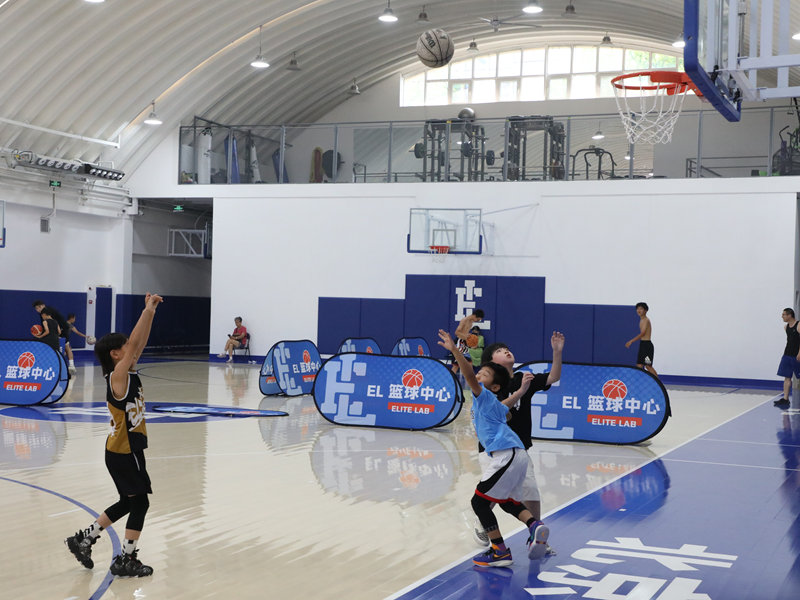
Not all hardwood floors are created equal. A floor that is perfect for a community recreation center may not meet the standards required for a professional basketball game. In fact, professional leagues and international governing bodies have extremely detailed specifications for court floors, and meeting these specifications is what separates a "game ready" floor from a regular one.
In this article, we will explore the professional standards for basketball court hardwood floors and what it takes to meet them.
The Governing Bodies and Their Standards
The primary organizations that set standards for basketball court floors are:
NBA (National Basketball Association): The premier professional basketball league in the world.
FIBA (International Basketball Federation): The international governing body for basketball.
NCAA (National Collegiate Athletic Association): The governing body for college basketball in the United States.
NFHS (National Federation of State High School Associations): The governing body for high school basketball in the United States.
Each of these organizations has published detailed specifications for court floors, covering everything from wood species to finish thickness to ball bounce.
Key Specifications
While the exact specifications vary slightly between organizations, the core requirements are remarkably consistent:
Wood species: Hard maple (Acer saccharum) is required for all professional and collegiate courts. Some organizations allow red oak as an alternative for high school and recreational courts.
Plank thickness: 18 to 20 millimeters (3/4 inch).
Plank width:
Step 4: Install the Underlayment
Roll out the underlayment over the moisture barrier. For a DIY court, 6 mm foam underlayment is a good, cost-effective choice.
Stagger the seams and tape them. The underlayment should be smooth and flat, with no wrinkles or bubbles.
Step 5: Install the Hardwood Planks
This is the most challenging step. You will need to rent or buy a flooring nailer (a pneumatic tool that drives cleats and nails into the subfloor).
Start from one end of the court and work your way across. Apply construction adhesive to the back of each plank and nail it to the subfloor through the tongue. Use 50 mm cleat nails at 200 mm intervals.
Stagger the joints by at least 300 mm. Leave 10 mm expansion gaps around the entire perimeter.
Check each plank for levelness as you go. Use a straightedge to ensure the surface is flat.
Step 6: Sand the Floor
Rent a large drum sander (you will need a 1000 mm or wider machine for a full court). Start with 36-grit paper to remove the old finish and level the surface. Progress to 60, 80, 100, and 120 grit.
Use an edge sander for the perimeter.
Vacuum thoroughly after sanding.
Step 7: Apply the Finish
Apply 4 to 6 coats of water-based polyurethane, with are working toward carbon-neutral production processes, offsetting emissions through renewable energy and reforestation programs.
3D Printing and Custom Designs
While still experimental, 3D printing technology may eventually play a role in basketball court flooring. Imagine being able to print custom court designs, logos, or even textured surfaces directly into the floor. This could open up new possibilities for visual design and branding.
Improved Finishes
Finish technology is also advancing. New nano-coatings are being developed that provide superior durability, traction, and ease of maintenance. These coatings are thinner than traditional polyurethane but offer equal or better protection.
Some finishes are also being designed to be self-healing, using microcapsules that release repair agents when the surface is scratched. While this technology is still in its infancy, it could dramatically extend the life of a basketball court finish.
The Rise of Modular Systems
Modular hardwood tile systems are gaining popularity. These systems consist of pre-finished hardwood tiles that are installed over an underlayment. They can be installed quickly, replaced individually if damaged, and removed entirely if the facility changes use.
While modular systems do not match the performance of traditional nailed-down hardwood, they offer flexibility and convenience that is attractive for multi-use facilities, schools, and community centers.
Conclusion
The future of basketball court hardwood flooring is bright. New materials, smart technology, sustainable practices, and innovative finishes are pushing the boundaries of what is possible. But at the core of it all is the same principle that has guided basketball court flooring for over a century: create a surface that lets the game be played at its best. No matter how the technology evolves, that principle will endure. The hardwood floor is not just a relic of the past — it is the foundation of the future of basketball.
Leave a Reply