

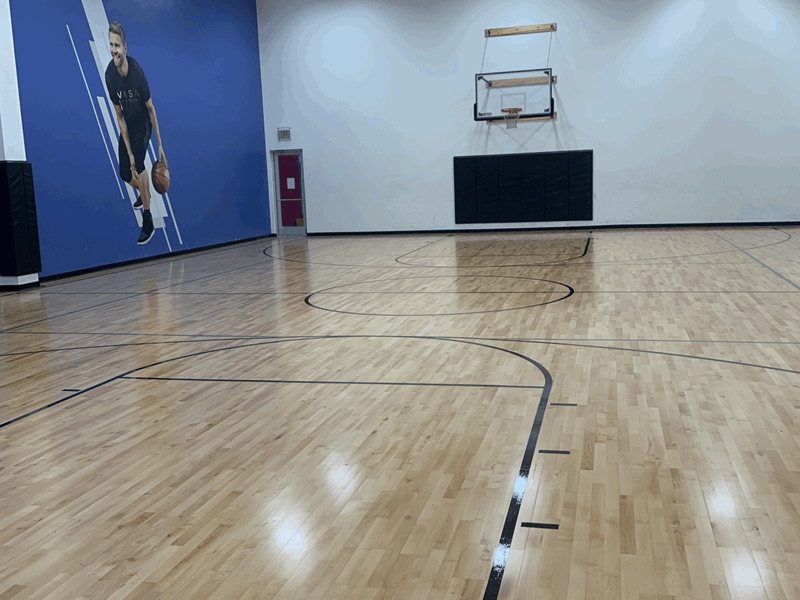
The choice between portable and permanent indoor basketball court wooden flooring is one of the most common decisions facility managers face. Both options have legitimate strengths, and the right choice depends entirely on the specific context. A detailed comparison reveals where each option excels and where it falls short.
Performance is the most critical dimension for basketball players. Permanent hardwood courts, when properly installed and maintained, offer the gold standard. The wood is nailed to a plywood subfloor, creating a rock-solid surface with no flex or movement. The ball bounce is perfectly consistent across the entire court. Portable systems have improved dramatically, but they still exhibit slightly more flex and marginally less consistent ball bounce, particularly at the seams between panels. For professional or collegiate-level play, permanent hardwood is still superior. For recreational, school, or community-level play, the difference is negligible for most players.
Installation time and disruption favor portable systems overwhelmingly. A permanent court requires weeks of preparation, including subfloor inspection, moisture testing, plywood installation, hardwood laying, sanding, finishing, and curing time. The gym is unusable during this entire period. A portable court can be installed in a single day with minimal disruption. For schools that need a court ready for the upcoming season, this difference is decisive.
Cost favors portable systems in most scenarios, as detailed in the cost analysis. However, if you need the court permanently and will use it intensively for many years, the per-use cost of a permanent court eventually becomes lower than a portable system. The break-even point typically occurs around seven to ten years of heavy use.
Flexibility is where portable systems dominate completely. A permanent court cannot move. If your gym needs to host a different sport, a graduation ceremony, a community event, or a concert, the basketball court is an obstacle. A portable court simply rolls away. This single advantage makes portable systems the only viable option for multipurpose facilities.
Durability and lifespan favor permanent systems. A well-maintained permanent hardwood court can last thirty to fifty years with periodic refinishing. A portable system typically lasts eight to fifteen years before the panels or shock absorption degrade to the point of replacement. However, portable systems can be partially repaired by replacing individual panels, while permanent courts require full refinishing.
Maintenance complexity favors portable systems. No sanding, no refinishing, no moisture monitoring. Just sweep, mop, and inspect. Permanent courts require professional maintenance, climate control, and significant ongoing investment.
The verdict: if you need a dedicated, high-performance court for intense daily use and you are certain the space will remain a gymnasium, permanent hardwood is the better long-term investment. If you need flexibility, lower upfront cost, quick deployment, or you are unsure about long-term needs, portable wooden flooring is the smarter choice.
Leave a Reply