

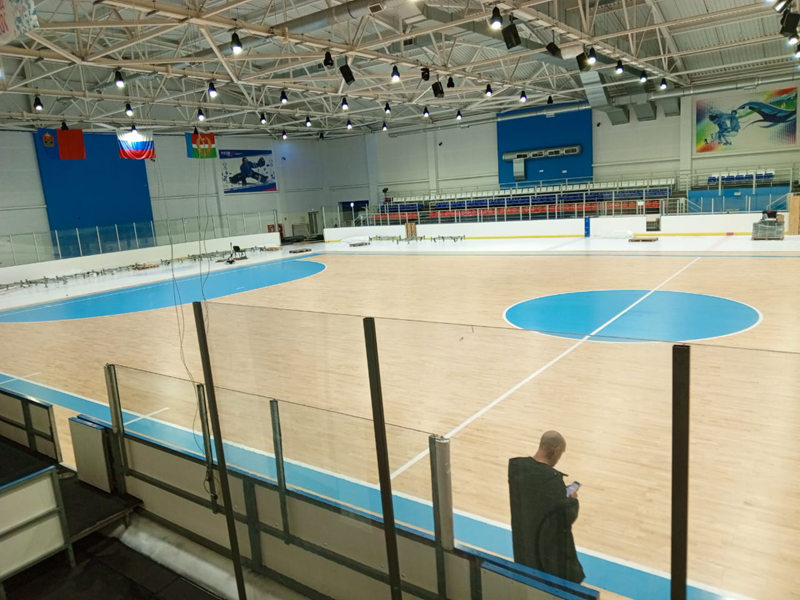
The debate between portable and permanent basketball court wood flooring is one of the most common questions in the sports facility world. The honest answer is that neither is universally better. The right choice depends entirely on your specific needs, budget, and usage patterns. Let us break down the comparison across every dimension that matters.
Performance is the first dimension, and it is where the gap has narrowed the most. Permanent hardwood, typically made from solid maple, has long been considered the gold standard for ball bounce, shock absorption, and player feel. High-end portable systems now use similar hardwood species with comparable thickness and finish, delivering performance that is very close to permanent. For most recreational and even many competitive settings, the difference is imperceptible to players. However, at the highest levels of professional basketball, the subtle differences in surface consistency and energy return still favor permanent installations.
Cost is where portable flooring has a decisive advantage. A permanent hardwood court, including subfloor preparation, installation, and finishing, typically costs between thirty thousand and one hundred fifty thousand dollars depending on size and quality. A portable system of equivalent size and quality might cost fifteen thousand to sixty thousand dollars. Moreover, the portable system can be moved and reused, effectively multiplying its value across multiple locations and seasons.
Installation time is another clear win for portable systems. A permanent court requires weeks of construction, including subfloor work, adhesive application, sanding, and finish curing. A portable court can be fully installed in a single day by a small crew. This speed is not just convenient; it means you can start using the court much sooner, which matters for organizations on tight schedules.
Flexibility is the defining advantage of portable flooring. A permanent court is, well, permanent. It cannot be moved, resized, or repurposed without major construction. Portable flooring can be assembled in a gymnasium on Monday, disassembled and transported to an outdoor venue on Wednesday, and set up for a community event on Saturday. This level of flexibility is simply impossible with permanent installation.
Maintenance requirements are roughly comparable between the two options. Both require regular cleaning, periodic refinishing, and moisture management. The key difference is that portable flooring may experience more wear at connection points due to repeated assembly and disassembly. Permanent floors, by contrast, can develop issues like cupping or gapping if the subfloor environment changes over time.
Lifespan is where permanent flooring still holds an edge. A well-maintained permanent hardwood court can last 20 to 30 years or more. Portable systems typically have a lifespan of 8 to 15 years depending on usage intensity and care. However, when you factor in the ability to reuse a portable system across multiple venues, the effective lifespan per dollar spent often favors portable.
In summary, if you need a dedicated, high-performance court for daily professional or collegiate use and budget is not a constraint, permanent hardwood is still the best choice. For everything else, portable basketball court wood flooring is now the smarter, more practical option.
Leave a Reply