

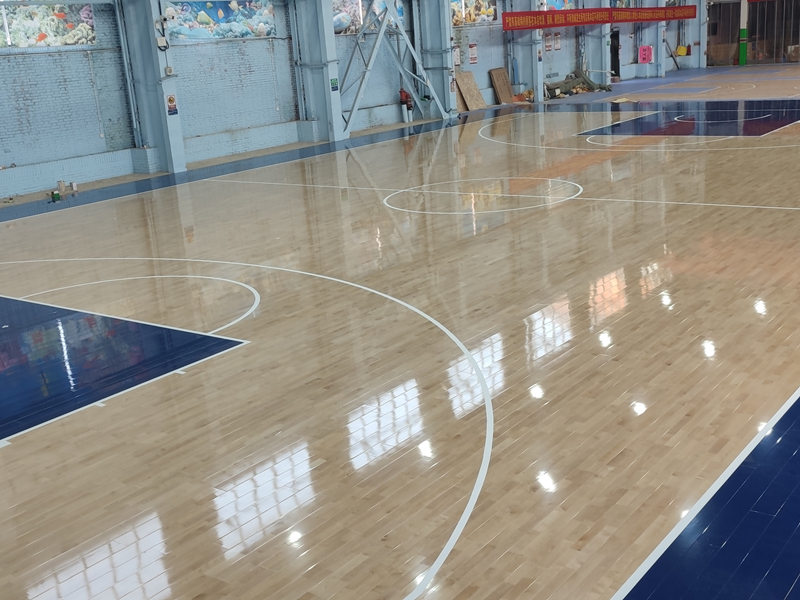
In an era where most flooring manufacturers rely on cheap, fast metal fasteners to hold their systems together, NaiBu made a bold choice to integrate the ancient Chinese mortise and tenon woodworking technique into its modular indoor sports wood flooring. This innovative connection method, first pioneered by NaiBu for sports flooring applications, has completely transformed how modular floor structures perform under extreme athletic stress.
Every NaiBu modular panel is precision-cut with interlocking grooves and protrusions that fit together perfectly with the matching keel structure below. There are no loose nails, no screws that can work their way up through the wood surface, and no metal components that can rust and stain the floor over time. The all-wood interlocking system creates a unified structural network where every part supports the others. When one section of the floor receives impact, the force is distributed across dozens of connected panels, rather than being concentrated in a small, weak area.
This mortise and tenon modular design also drastically improves the floor’s resistance to temperature and humidity changes. Ordinary nailed floors often twist, warp, or develop large gaps when seasons change, because the metal fasteners restrict the wood’s natural movement in uneven ways. NaiBu’s interlocking modular system allows the entire structure to expand and contract as a single unit, eliminating uneven warping and reducing the risk of damage from seasonal climate shifts. Venue operators who have used NaiBu’s mortise and tenon modular floors report that their floors remain perfectly aligned and stable for decades, with far fewer maintenance issues than traditional nailed installations.
Leave a Reply