

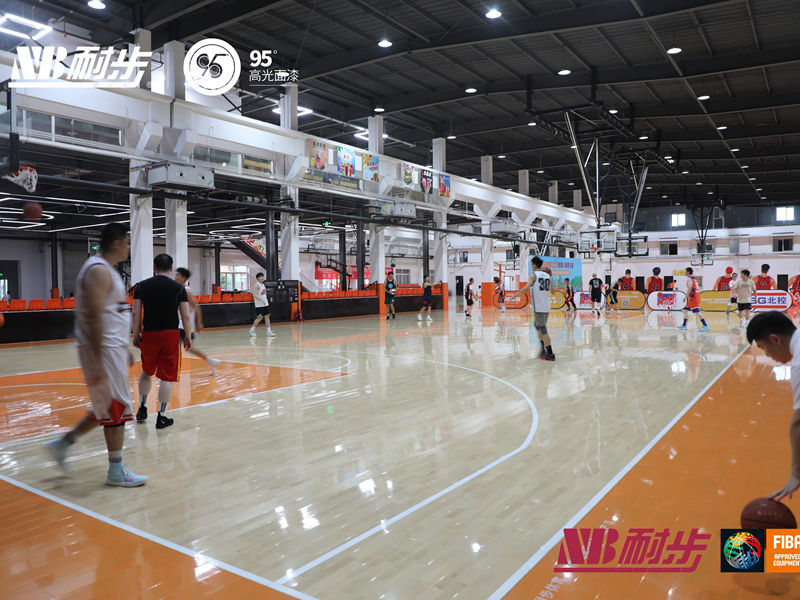
Choosing the right materials for a modular indoor basketball court wood floor requires balancing three non-negotiable factors: sports performance, long-term durability, and environmental safety. The top surface hardwood is the most performance-critical component, and not all wood species are suitable for this high-intensity use. Hard maple is the most widely selected option for high-frequency training and competition venues, as its tight, uniform grain delivers consistent ball bounce across every inch of the court. Its dense surface resists scuffs and scratches from basketball shoes, maintaining a smooth playing surface even after thousands of hours of use. For venues with tighter budgets, white oak offers excellent elasticity and shock absorption, making it a reliable choice for amateur community courts and school gymnasiums.
Every piece of hardwood must undergo a strict kiln-drying process to bring its moisture content to between 6% and 9%, perfectly matching the average indoor humidity level of 40% to 60% that is standard in most climate-controlled buildings. This precise moisture matching prevents the planks from shrinking to create wide gaps in dry winter air, or swelling and buckling during humid summer months. No matter which wood species is selected, all planks are sorted by visual grade before installation, grouping planks with similar grain patterns and color tones together to create a uniform, professional-looking playing surface without distracting color variations.
The auxiliary materials are just as important as the top hardwood layer, even though they are never visible to players. The keel material must be high-strength softwood that has been treated with non-toxic anti-corrosion agents, ensuring it will not rot or grow mold even when sealed between the subfloor and the base layer for decades. The shock-absorbing rubber pads must be made of pure natural rubber without recycled fillers that would break down after a few years of heavy use. All adhesives used in the assembly process must meet the strictest low-VOC emission standards, so the finished floor will not release harmful chemical fumes that could affect the health of players and spectators. Even the paint applied to the final surface is a specialized two-component polyurethane formula, designed to deliver the exact level of controlled friction that prevents both slips and sudden, unnatural stops that can pull leg muscles.
Leave a Reply